Carpet moths
Carpet Moth Treatment
Bald patches in wool carpet are made in the places nobody walks, lights or vacuums. That is where the work has to go.

The border strip under a rug, where a vacuum head has never been.
Carpet moth treatment is a job about geography more than chemistry. The grubs responsible cannot tolerate light, traffic or being disturbed, so they graze the wool in the strip under a bed, the border behind a robe door, the shadow beneath a bookcase that has not shifted in years, and the underside of a rug. Open floor in the middle of a lounge room stays fine while the quiet edges are chewed down to the backing.
Tim deals with this across Melbourne, in period homes with original wool carpet, in units with wool-blend broadloom and in rentals heading for an inspection. It sits under his moth control work in Melbourne alongside the wardrobe and pantry jobs, and he carries out the inspection and the treatment himself.
This page covers how the damage reads, how to separate it from carpet beetle damage, what has to happen at the edges and under the furniture for a result to hold, and what you can do about underlay and stored rugs.
The damage
What does carpet moth damage actually look like?
A thin or bare patch where the wool has been cropped to one even height, pressed up against a wall, a skirting line or the footprint of a heavy piece of furniture. Run a hand over it and the wool feels shorn rather than worn. There is usually gritty debris and fine silk left down in the pile.
Wear looks nothing like it. Traffic damage is gradual, it sits where feet land, and the pile crushes and dulls instead of ending in a clean line. Moth grazing stops abruptly where the daylight starts, which is why the patch so often traces the exact outline of the sofa you have just dragged aside.
| Spot | Why it gets hit |
|---|---|
| Under beds and sofas | Dark, still, and the vacuum head has never been in there |
| The skirting line | The tucked edge beside the gripper rod holds debris and shields the grubs |
| Robe and cupboard floors | Shaded by hanging clothes, and often carrying wool fluff as a starter food |
| Rug undersides | Never cleaned, never lit, and in contact with carpet or timber for years |
| Behind doors that stay open | A permanently shaded triangle that no one walks across |
Spring is when people find it: the discovery almost always comes with a furniture move, a rug roll-up or a pre-sale clean. The feeding itself happened over the cooler months in a closed, heated house, which is the run of conditions this pest does best in.
Look-alike
Could it be carpet beetles rather than moths?
It could, and the two are regularly mixed up because both grubs eat wool and both work in the undisturbed edges. The separation is in what you find beside the damage: silk and smooth grubs point to moths, while bristly cast skins and a hairy grub with tail tufts point to carpet beetle. The treatment overlaps, but the sources differ.
| What you find | Carpet moth | Carpet beetle |
|---|---|---|
| The grub | Smooth, cream, up to about 10mm, often inside a silk tube | Bristly and banded, with tufts of hair at one end |
| What it leaves | Fine webbing and sand-like droppings in the pile | Hollow cast skins that keep their shape, shed as it grows |
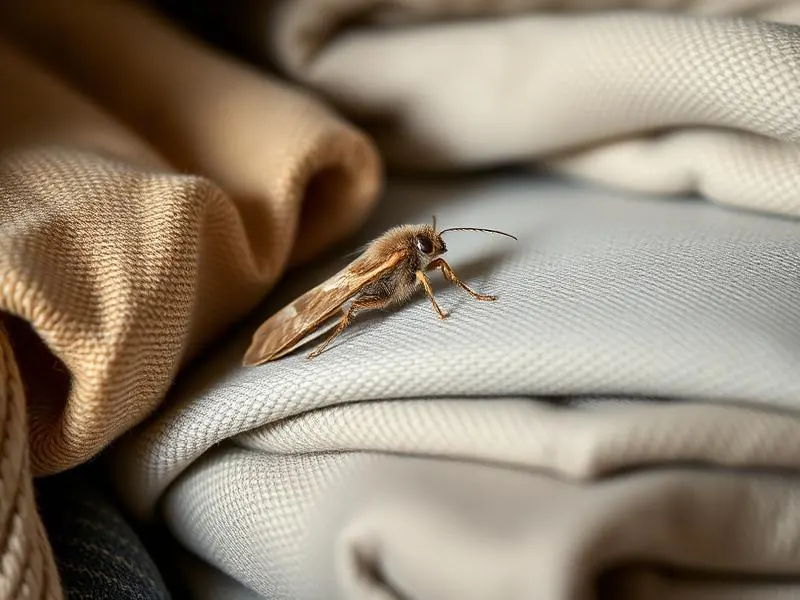
| The adult | A pale moth near 7mm that avoids light and rarely flies far | A small rounded beetle, often found on a window sill |
| Where it came from | Wool already in the house, or a second-hand rug or blanket | Frequently outdoors: flowers, a bird nest, or a dead insect in a roof |
There is one more reason to tell them apart. People regularly report itchy welts on their arms and legs where carpet beetle grubs are active and put them down to bed bugs or fleas, which sends the whole job off in the wrong direction. Sorting out the insect first avoids treating a bedroom for something that is not there.
Bring whatever you can to the first conversation. A photo of a grub next to a coin, a pinch of the debris on sticky tape, or the cast skins taped to a card will usually settle it without a second visit.
Method
Why does a carpet moth treatment live or die at the edges?
Because that is the only place the grubs are. A broad spray across open carpet treats the square metres that were never under threat and misses the 150mm border, the gripper rod line and the shaded strip beneath the furniture where every generation has fed. Moving the furniture is not an extra on this job. It is the job.
- Expose itBeds, sofas, wardrobe contents and rugs move. The perimeter, the door reveals and the floor vents all get opened up and looked at.
- Vacuum hardSlow passes with a crevice tool down the tucked edge and along the gripper rod, then the open floor. The bag or canister empties into the outside bin.
- Treat the borderProduct goes to the perimeter strip, under-furniture zones, cupboard floors and both faces of wool rugs, used to the registered label.
- RecheckThe same strips are inspected again later, since a grub tucked into underlay can finish its cycle after the first visit.
Vacuuming belongs inside the treatment rather than in place of it. Suction physically lifts eggs, debris and loose grubs out of the pile, and it tells you where the activity is concentrated by what comes up. What it cannot do is reach an egg glued near the backing or a grub living in the underlay, which is why the two steps work together.
If the sofa did not move, the part of the carpet that was being eaten did not get treated.
Products used on floor coverings are registered with the APVMA, and the approved label decides the rate, the surfaces and the time before the room goes back into normal use. Where a job calls for an insect growth regulator as well, that is named in the quote so there is no surprise on the day. [Confirm whether Tim adds an insect growth regulator to carpet moth jobs.]

Afterwards
How do you stop them coming back?
Give the quiet strips some light, movement and suction a few times a year, and sort out the underlay and stored rugs. Grubs need months of being left alone to do real damage, so the routine that breaks them is simple rather than heavy: shift the furniture when you clean, lift the rugs, and store wool in a way nothing can get into.
- Move something each clean. Rotate which piece of furniture gets pulled out so no strip goes a whole year untouched.
- Vacuum both faces of a rug. The back is where feeding concentrates, and it is the side that never gets done.
- Keep wool fluff down in robe bases and cupboard floors, since loose fibre is a starter food for a new generation.
- Empty the vacuum outside. Eggs and grubs survive a trip to the kitchen bin quite happily.
What about the underlay beneath the carpet?
Felted wool underlay and old hessian-backed underlay are food in their own right, and grubs living in them keep reinfesting the carpet above. If a lifted corner shows the underlay is powdery or chewed through, replacement is the honest answer for that room. Tim will tell you when that point has been reached instead of treating it twice.
How should a wool rug be stored?
Clean it first, because soiling and dropped food are what draw a female in. Roll it rather than folding it, wrap it in cotton sheeting or breathable paper rather than sealed plastic, and keep it up off a concrete floor. Then open it once over the year and look at the back.
Do second-hand rugs and blankets bring them in?
Often, yes. A marketplace rug, an op-shop blanket or a sheepskin out of someone's shed can arrive with eggs or grubs already in it. Vacuum both faces outdoors before it comes inside, and keep it away from the good carpet for a fortnight while you watch for debris.
Tim's guide on dealing with carpet moths room by room runs through the vacuuming sequence and the cleaning order in more detail, and it is the right starting point for a single thin patch you have only just noticed.
Pricing
What drives the cost of carpet moth work?
Floor area, how many rooms are affected, how much furniture has to come out, and whether rugs and underlay are part of it. A single bedroom where the damage sits under one bed is a contained job. Wool carpet running through a hallway and three rooms with heavy furniture on it takes longer and costs more.
One bedroom or study, furniture shifted on the day, borders and under-furniture strips treated in a single visit.
Bedrooms plus a hallway, or a lounge with rugs, generally with a follow-up look at the same strips.
Wool carpet through a level of the house, several rugs needing both faces done, or suspect underlay to assess.
Things that lengthen a visit: wall-to-wall furniture, built-in robes with fixed bases, a floor plan where the carpet runs under heavy bookshelves, and damage that has already been sprayed, because the grubs scatter and the search has to start again.
Pricing is settled in advance and stays where it was agreed, with no extras appearing on the invoice. Where carpet moth work is covered, a 3-month re-treatment guarantee applies, meaning a fresh outbreak in the same treated area inside that window brings Tim back at no cost to you. The exact terms sit with the treatment used, and he spells them out when he quotes. Indicative figures for each pest he handles live on the cost guide for Melbourne pest treatments.
Replacement is sometimes the cheaper answer. Where the pile is grazed to the backing over a large area, or the underlay has gone, treating the room protects what is left but does not bring the carpet back. Ask for that assessment in writing so you can decide between a treatment and a new floor covering.
Next step
How do you get a carpet moth job booked?
Send photos of the patch and of whatever you found in the pile, with a note of which rooms have wool and where the furniture sits. That is usually enough to confirm the insect, say how many rooms need doing and give you a figure. Most weeks there is a booking available within the week.
Useful to mention: whether the carpet is wool or a blend, the age of the underlay if you know it, how many rugs are in play, whether a can of anything has already gone down in there, and whether a pet sleeps in that room. Allergies, asthma, babies and fish tanks all change where product can be placed, so raise them at the booking rather than on the day.
Book the inspection
Describe the patch and the rooms with wool, and the quote comes back before any work is scheduled.
Request a carpet moth quoteNot sure which pest?
Moths, carpet beetles, fleas and silverfish all turn up in floor coverings and need different handling.
See the full list of pests treatedTim is licensed in Victoria, number 86488, and that number can be verified against the Department of Health register before you let anyone in the door. He is fully insured, he is the only person who attends, and he refers termites, possums, bees and bats to the right specialist instead of taking work he does not do. More on the business and the pests covered sits on the pest control page for Melbourne.

Questions
Carpet moth questions people ask first
How do I know it is carpet moths and not something else?
Look at the edge of the thin patch. Moth feeding leaves an even crop line, silk threads and sandy debris in the pile, and it hugs the shade under furniture. Wear fades gradually along walking routes. Pet damage pulls and tears rather than cropping. Cast skins with bristles mean carpet beetle instead.
Do carpet moths eat synthetic carpet?
Nylon, polypropylene and polyester carpets are not food, because there is no keratin in them to digest. Blends with wool in them are, and even a synthetic pile can hold enough wool fluff, pet hair and spilled food in the border for grubs to live on. The backing and underlay are worth checking too.
Can I just vacuum and skip the treatment?
On one small patch found early, a determined fortnight of moving furniture and vacuuming edges can be enough. It stops working when the feeding is in the underlay, under a fixed robe base or across several rooms, because suction never reaches those places. Then you are managing numbers rather than ending it.
Will the carpet grow back?
No. Wool that has been eaten does not return, so a bald patch stays bald after a successful treatment. What the work protects is the carpet that is still intact. Where a patch sits in the open, a carpet repairer can sometimes patch it in from a wardrobe offcut.
Do we have to move out or keep pets away?
Usually not. Floor work needs the treated areas left to dry and stayed off for a stated period, which Tim gives you for the product being used. Pets and children stay off those strips until then. Fish tanks get covered and pumps turned off where he advises it.
Found a thin patch when you moved the couch?
Send a photo of the patch and the pile around it, say which rooms have wool, and you will get an opinion on what has been eating it and a set figure for the work.
Sources: APVMA pesticide registration, Better Health Channel guidance on using a pest control service and the Victorian licensing register for pest control operators.