Low-toxicity options
Natural Ways to Get Rid of Ants
Nine popular home remedies, rated by the only thing that decides an ant problem. Two of them work properly, three help in a narrow way, and the rest are folklore with a tidy explanation attached.
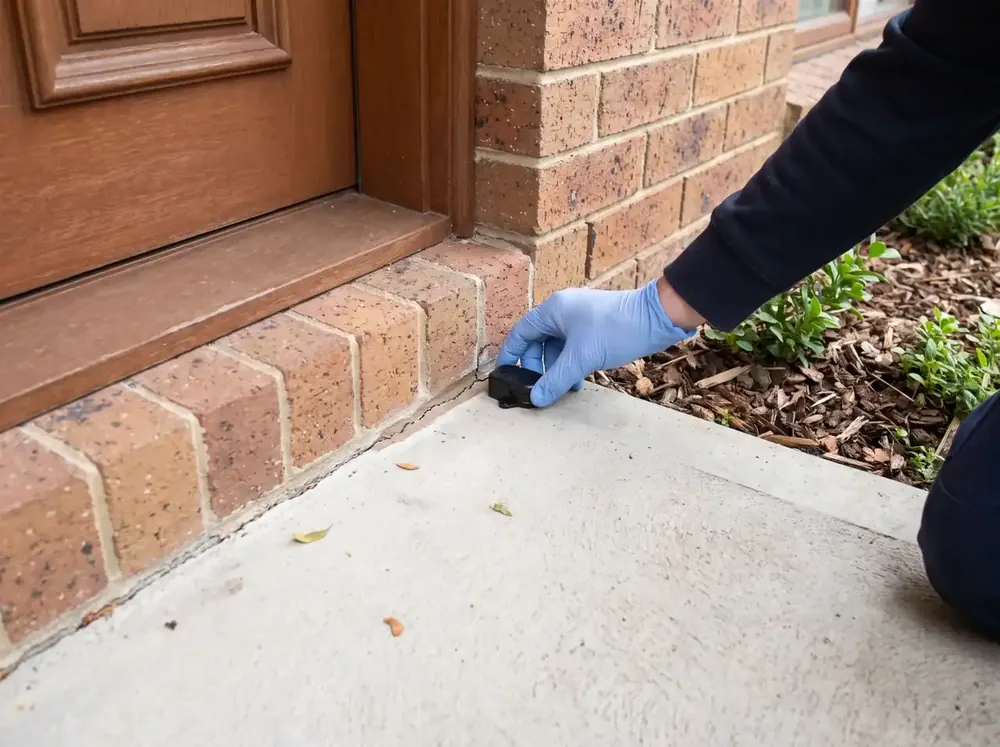
Every method below is judged against one question: can it reach the queen?
Natural ant removal appeals for good reasons. Nobody wants a residue along a skirting board where a toddler crawls, or a product in the garden that the dog walks through, and plenty of households would rather fix a problem with what is already in the cupboard than buy something with a warning label.
The trouble is that the internet treats every home remedy as equally promising, and they are not. Some of these methods end colonies. Some buy you a quiet night and change nothing. A few have no effect at all and survive purely because the ants happened to move on by themselves a week later.
So each method here gets rated against a single question: can it physically reach the nest, the queen and the brood? Along the way, two warnings that rarely get mentioned. Natural does not mean harmless, borax is genuinely toxic to a dog that laps it up, and a kettle of boiling water does real damage to anything growing nearby. The same honest rating approach runs through every one of Tim's pest control guides.
The standard
What does natural ant removal have to beat?
Three things at once: it has to kill the queen and the brood, keep working for longer than the colony takes to replace its workers, and avoid alarming the nest into splitting. Almost every popular remedy fails the first of those, because it can only act on the ants you can see, and foragers are the most replaceable members a colony has.
It is worth being clear about the word itself. There is no legal definition of a natural pesticide. Borax is mined, which makes it natural and also makes it a poison. Pyrethrins are extracted from a daisy and are still insecticides. Clove and peppermint oils are chemicals that happen to come from plants, and any product sold here for killing insects has to be registered with the national regulator no matter what it is made from.
- Low-toxicity approach
- Choosing methods that put the smallest possible amount of active material in the smallest possible place, and leaning on moisture, food and entry control to do most of the work. That is a more useful goal than chasing the word natural.
Season decides how much any of this will achieve. Through a hot dry Melbourne stretch, colonies push indoors hunting moisture and will take a bait quickly, which is the best window a home method ever gets. After heavy rain floods a ground nest, whole columns arrive at once and a single jar of syrup is simply outnumbered. Judge a remedy by what it does over a fortnight in settled weather, not by what happens on the evening you put it down.
Before any remedy, three jobs cost nothing and remove the reason a colony is interested in your house at all. They are not glamorous and they are the reason some households never need a product.
Take the water away
Fix the dripping washer, dry the sink and shower base at night, empty saucers under pot plants and lift the pet bowl. In a dry Melbourne spell, water is what a trail is chasing.
Close the road in
Silicone the gap at the end of a bench, fit a brush seal to the back door, collar the pipe under the sink and cut the shrub touching the wall. Every one of those is a permanent fix.
Remove the payment
Decant sweet dry goods into sealed jars, wash the bin lid, pull out the toaster, and deal with aphids on the plants outside the window. A trail with nothing at the end of it fades out.

The one that works
How do you make a borax bait that gets carried home?
Mix it far weaker than feels right, offer it in a covered container on the trail, and leave it completely alone for a week. A borax bait works because sodium borate acts slowly on an insect's gut, so a worker survives long enough to walk home and share the meal through the colony. Make it strong and the worker dies on your bench, which achieves nothing at all.
- Mix weakRoughly one part borax to ten parts sugar, dissolved in warm water until it is a thin syrup. If ants die beside it, halve the borax and start again.
- Soak and coverSoak cotton wool in it, sit that inside a small jar or container with a lid, and pierce two or three ant-sized holes near the base.
- Place and waitSet it directly on the run, not near it. Refresh every three or four days as it dries out, and give it seven to ten days.
The second version matters as much as the first. A colony's appetite moves with the season and with what the larvae are being fed, so a trail working the pet bowl or the grill plate will walk straight past syrup. For those, stir borax through a teaspoon of peanut butter or a little oil and tinned fish, and put it out in the same covered way.
| Bait | Suits ants seen on | Sign you chose wrong |
|---|---|---|
| Sugar syrup | Fruit bowl, honey jar, cordial spills, sweet pantry goods | Untouched after 24 hours while the trail keeps running |
| Oil or protein | Pet bowl, barbecue, bin, meat scraps, greasy splashback | Ants cluster at it then stop returning after one day |
| Either, too strong | Any trail | Dead ants piled around the bait within minutes |
Borax is not a safe-because-natural ingredient. Swallowed, it is toxic to dogs, cats and children, and a sweet syrup is exactly the sort of thing a dog will finish. Keep every bait inside a closed container with holes too small for a snout or a finger, write down where you put them, collect them all at the end, and do not leave a saucer of it on the floor. Homemade mixes are also unregistered, so the responsibility for anything that happens sits with you.
One more habit to break. People check a bait, decide it is not working on day two because the ants are swarming it, and throw it out. That swarm is the mechanism doing its job: the colony has recruited to a food source and is carrying it underground. Numbers should climb, hold, then drop away sharply through the following week.
Rated honestly
Do vinegar, diatomaceous earth and essential oils do anything?
Vinegar cleans a trail and treats nothing, diatomaceous earth genuinely kills ants but only while it stays bone dry, and essential oils repel briefly before they evaporate. Only the powder can reach into a nest void, and even then it has to be a dry one, which rules out every garden bed and most of the places people sprinkle it.
Acid breaks down the scent chemistry the ants are following, so the line falls apart for a few hours. Genuinely useful for wiping a bench once baiting has finished, and useless as a treatment because the nest never knows it happened.
Fossilised algae, milled fine. It scratches the waxy layer that holds an insect's moisture in, so ants dry out over a day or two. Use food grade, never the heat-treated pool filter type, put down a film you can barely see rather than a heap, keep it dry, and wear a mask while you puff it in.
Strong enough to kill the individuals you spray and to push a line sideways for an afternoon, then the volatile part evaporates and the trail re-forms. Tea tree and several other oils are also toxic to cats, so a kitchen floor is the wrong place for an oil spray.
Diatomaceous earth is worth a little more detail because it is the only one of the three that belongs in a plan. It works where it will never get wet: the kickboard void, a wall cavity through an existing gap, the subfloor, the back of a roof space. Spread on a garden bed or a damp path it does nothing at all, and piled in a visible heap it just becomes an obstacle the ants walk around. A thin dusting into a dark dry gap is the whole technique.
Boiling water gets grouped in here too, and it has one narrow use. Poured into a shallow nest in a paver joint it kills what it reaches on the way down. Poured on a lawn or into a bed it scalds roots, cooks the soil organisms that keep the ground healthy, and still leaves a queen chambered too deep to feel it. There is also the obvious risk of carrying a full kettle across a wet garden.

Folklore
Which natural ant remedies are simply myths?
Chalk lines, coffee grounds, cinnamon, cucumber peel and ultrasonic plug-ins do not control ants. Four of them are barrier ideas that assume a colony will accept a two centimetre detour as the end of the matter, and the fifth is a device with no independent evidence behind it. None of them touch a nest, and most are abandoned within a week when the trail reappears a hand span to the left.
The barrier logic is where this all comes from, and it is not completely silly. Ants dislike crossing some textures and smells, and a fresh line of powder really can turn a trail aside for a while. The problem is scale. A colony has an entire building's worth of gaps to work with, workers map alternatives constantly, and a powder line stops being a barrier the moment debris, humidity or a few hundred crossings wear a path through it.
Do coffee grounds repel ants?
There is no good evidence that they do. Used grounds are damp organic matter, which in a garden bed is closer to an invitation than a deterrent, and in a kitchen they simply get tracked around. Compost them and use the time on something that works.
Does a chalk line stop ants crossing?
Briefly, and only while the line is unbroken and dry. Ants route around it, bridge it with grit, or wear it down. A chalk line on a bench also tells you nothing about where the nest is, which is the information you actually need.
What about cinnamon and other strong spices?
Cinnamon, chilli, pepper and talc all interfere with a scent trail for a short time. That makes them trail disruptors rather than treatments. If you want the line gone for one evening they will do it, at the cost of making the trail harder to follow when you decide to deal with the nest properly.
Do ultrasonic pest repellers work on ants?
Nothing from independent testing backs up what the packaging claims. Ants find their way by chemical trails, not by hearing a plug-in device, and a nest inside a wall is not listening either. Save the money and the power point.
Two products sold in hardware aisles sit awkwardly between the honest methods and the folklore. Granular ant sands are meant to be sprinkled across a paved area, which spreads a small amount of insecticide over a wide surface where pets walk and rain washes it away, and they rarely reach a nest. Plug-in and spray repellents aimed at keeping ants out of a room have the same flaw as the powders: a colony with a reason to come in will simply find another way.
If a method cannot be carried underground by a worker, or applied into the void where the nest sits, it is housekeeping rather than pest control.
There is one more piece of bad advice that deserves naming, because it does harm rather than nothing. Pouring petrol, kerosene or another fuel into a nest hole is unlawful as a pesticide use, creates a fire risk and leaves contaminated soil you will be living with long after the ants have gone. The same goes for any adhesive trap outdoors: setting one that could hold an animal breaches the Victorian rules on cruelty, and a sticky band around a trunk catches skinks and small birds just as readily as ants.
The handover
What do you do when the gentle route runs out?
Give a correctly made bait a fortnight, with the right food type and no spraying over the top of it. If the trail has not thinned by then, the problem is the species, the number of nests or a nest you cannot reach, and no home remedy changes any of those. That is the sensible point to hand it over rather than the point to try a tenth idea.
- Both bait types refused. Some species bait poorly, and some are feeding on something better inside your walls.
- New trails on new walls. A colony that has split under pressure needs the whole structure treated at once.
- A nest you cannot open. Wall cavity, subfloor, under a slab or inside a retaining wall.
- Anyone reacting to stings. Treat that as a health matter first and a pest matter second.
A low-toxicity preference is worth saying out loud when you book, because it changes the plan rather than ending the conversation. Baiting is already the smallest-volume method available, dusts can go into closed voids instead of open surfaces, and the outside work can be kept to the wall line and the nest openings rather than broadcast across a garden where you grow food. Ask what is going where, and read the label if you want to.
What a professional adds is not a bigger drum of something. It is identification, access to the voids, products that transfer between ants instead of killing on contact, and a result that is checked rather than assumed. Tim works under Victorian licence No. 86488, carries full insurance, and backs covered work for three months, so ants returning to the same treated spots inside that window bring him back at no cost.
When you reach that point, the ant control service in Melbourne page goes through the method, the pricing and the preparation, or you can book a pest control treatment and send through a photo of the trail with your suburb.
Questions
Questions about natural ant control
Is borax safe to use around pets and children?
Only if nobody can get to it. Borax is toxic when swallowed, and a sugar syrup is appealing to a dog. Use closed containers with ant-sized holes, keep them behind cupboard doors or under a weighted cover outside, note every location, and pick them all up when the job is finished.
What is the most effective natural method?
A weak borax or boric acid bait, matched to whether the colony wants sugar or protein, placed on the trail and left alone for a week. It is the only common home method that a worker carries back to the queen, which is the thing that decides whether a trail ends.
Does diatomaceous earth kill ants?
Yes, by drying them out rather than poisoning them, and only while it stays completely dry. Use the food grade product, apply a barely visible film into dry voids and gaps, and wear a dust mask. On damp ground or an open bench it does nothing useful.
Do peppermint or tea tree sprays get rid of ants?
They kill the ants they land on and keep a line away for a few hours, then the scent fades and the trail returns. Nothing reaches the nest. Several of these oils are also poisonous to cats, so think twice before spraying floors in a household with one.
Do ultrasonic ant repellers work?
There is no independent evidence that they do. Ants find food and their way home using chemical trails, not sound, and the devices have no effect on a nest in a wall or under paving. Spend the money on sealing the gap the ants are using instead.
Is a homemade bait as good as a shop-bought one?
For a small sugar-feeding trail it can be, if you make it weak and leave it undisturbed. Commercial baits hold their moisture longer, come in matched sweet and protein versions, and are registered for the job, so they tend to win on consistency rather than on principle.
Done everything gentle and still have a trail?
Send a photo and your suburb. Tim will tell you what the species is, what is left to try and what a treatment costs.
Reviewed October 2026 by Tim, licensed pest control operator (Victorian licence No. 86488). Pesticide registration and label conditions: APVMA. Choosing and questioning a pest control service: Better Health Channel.