Identification guide
Carpenter Ants vs Termites: How to Tell
A one minute test using the waist, the antennae and the wings, then the two kinds of debris that settle it, and the point where this stops being an ant question entirely.
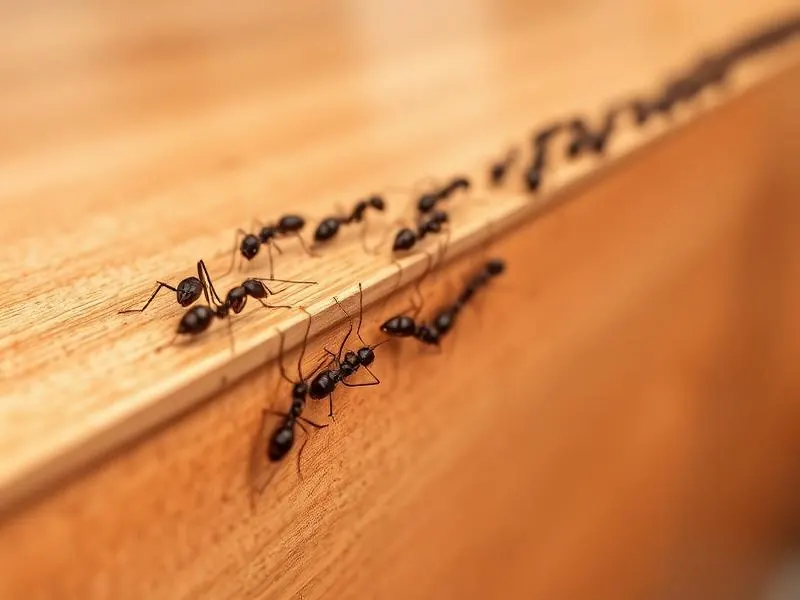
Dark, hard bodied and walking in the open. A termite worker does neither of those things.
Almost nobody searches carpenter ants vs termites out of curiosity. They search it because something has appeared in a window frame, a deck post or a skirting board, and the next twenty minutes will decide whether this is an irritation or a problem that costs money. So here is the quick reassurance before the detail: Victorian health guidance is clear that ants are a separate order of insect to termites and cannot damage sound timber.
What follows is an identification page rather than a sales page. It works through the three body features that settle the question in under a minute, the two kinds of debris the insects leave behind, the damage each one produces, and the one instruction that matters if the answer comes back the wrong way. It is part of Tim's set of pest identification and treatment guides.
One thing to say plainly at the top. Tim is licensed for general pest work and does not treat termites. If what you have is a timber pest, this page sends you to the right trade rather than selling you an ant job, and that is the honest outcome for both of us.
The one minute test
Carpenter ants vs termites: what actually separates them?
Three features do it: the waist, the antennae and the wings. An ant pinches sharply in the middle, carries elbowed antennae with a bend part way along, and if it has wings the front pair is longer than the back pair. A termite is straight sided from head to tail, has beaded antennae that run straight out, and carries four wings of equal length.
Hold the insect up against those three and the answer arrives quickly. You do not need a hand lens for the first two, although a phone camera on macro gives you a picture worth keeping.
An ant has a clear narrowing between its middle and rear sections, like a wasp. A termite is broad and even along its whole length, with no visible nip. This is the single fastest check and it decides most cases on its own.
Ant antennae have a long first segment and then a distinct bend, so they look like a bent arm. Termite antennae are short, straight and made of small round beads, with no angle in them anywhere.
On a winged ant the forward pair is noticeably longer than the rear pair, and both sit folded over the body. A winged termite has four wings of the same size and shape, which are shed easily and turn up in loose drifts on sills and in cobwebs.
Ants are usually black, brown or reddish with a hard shell and they walk about in the open. Termite workers are creamy white, soft and almost translucent, and they avoid light so completely that seeing one means something has been opened up.
- Petiole
- The narrow joint that gives an ant its pinched waist. Termites have no equivalent, which is why their outline reads as a single even tube rather than three linked beads.
Melbourne adds a seasonal wrinkle that sends a lot of people looking this up in the first place. Warm, still evenings bring winged forms of both groups out at once, usually after a spell of rain, so a scatter of flying insects at a lit window in late spring could honestly be either. That is the moment the wing test earns its keep: pick one off the sill, look at whether the four wings match, and you have your answer before anyone gets worried.

The evidence
Is that frass or a mud tube you are looking at?
Timber nesting ants push their waste out of the gallery, so you get a loose heap of coarse pale shavings with insect fragments through it, sitting below a neat opening. Termites do the opposite: they seal themselves in, packing tunnels with mud and soil and building covered runways across anything they cannot tunnel through.
This is the check that works when the insect itself has gone into hiding, which is most of the time. You are reading the housekeeping rather than the animal.
| What you found | Points to a timber nesting ant | Points to a timber pest |
|---|---|---|
| Loose material below a hole | Yes, pale gritty shavings that pile up again after sweeping | No, nothing is pushed out |
| Mud packed in a tunnel | No, galleries are left open and clean | Yes, tunnels are lined and filled with soil |
| A covered runway on brick or concrete | No | Yes, a pencil wide lead running up a surface |
| Shed wings in drifts | Occasionally, and the pairs are unequal | Commonly, in piles of identical wings |
| Tiny hard pellets | No | Sometimes, from species that eject dry pellets |
| A hollow, papery note when tapped | Possible in badly affected damp timber | Very common, with paint still intact over it |
- Mud lead
- A covered tunnel of soil and saliva built across a hard surface so the insects inside can travel without being exposed to light or dry air. Finding one is a stop sign rather than a clue to weigh up.
Do not break open a mud lead to see what is inside. It tells you nothing you can use and it scatters the workers away from the spot an inspector would want to examine. Photograph it, leave it exactly as it is, and get a timber pest inspection booked.
One more clue is free and often overlooked. Put your ear close to a suspect frame on a quiet night. An ant colony working in soft timber makes a faint dry rustle as material is shifted. Tapping along a member with the handle of a screwdriver and listening for the note to change from solid to papery is the oldest test there is, and it still works.
Inside the wood
What does each one actually do to the timber?
Ants chew to make space and throw the debris out, so galleries are smooth, open and usually confined to wood that had already gone soft with damp. Termites eat the timber itself for the cellulose in it, will work through dry sound framing, and leave the outer skin of paint or veneer in place over the hollow.
That difference in motive is why the two produce such different outcomes from the same starting point. One is a tenant that found a soft spot. The other is an animal eating the building.
Where it starts
Ant galleries begin in timber that is already wet: a window sill on the weather side, a deck joist end, a post sitting in ponding concrete, a bearer above a blocked subfloor vent. Dry framing in a dry wall holds no interest for them.
How far it goes
Because they are only making room, the damage tends to stay shallow and local, following the soft wood and stopping where it turns hard. Victorian guidance notes these ants rarely cause structural damage for exactly that reason.
Why the other one is different
A timber pest feeds on the wood, keeps going into sound material, and hides the work behind an intact surface. That is why damage is so often found only when something is removed or a floor flexes underfoot.
There is a trap sitting inside all of this, and it catches sensible people. Finding timber nesting ants and feeling relieved is only half the result, because the ants were a symptom. The damp that softened the wood is still there, and damp timber is also the condition that makes a building attractive to the thing you were actually worried about. Repairing whatever is wetting that timber, whether it is a blocked downpipe, a tired shower seal or a buried air vent, is the part that protects the house.
- Find the water first. Follow the stain, not the insect. Nine times out of ten the source is above the damage rather than beside it.
- Check the whole weather side. Window reveals, door jambs, the bottom plate behind a wet wall and the deck ledger are the four spots worth probing.
- Open the subfloor vents. Garden beds, paving and renovations cover them constantly, and a subfloor that cannot breathe stays damp all winter.
- Photograph before you clean. Sweeping the heap away removes the evidence, and whether it comes back in a week is the test that matters.
The decision
What should you do with the answer you have got?
If it is an ant, you are dealing with a nest in damp timber and a water problem behind it, and both get handled together. If anything points to a timber pest, stop. Do not spray it, do not disturb it and do not wait to see what happens. Arrange a timber pest inspection and let that report decide what comes next.
- Confirm itWaist, antennae, wings. Keep a specimen in a jar and keep the photo of where it came from.
- Protect the evidenceNo spray, no sweeping, no pulling the frame apart. Leave the spot alone until someone has seen it.
- Call the right tradeAnts in timber are a general pest job. Termites, borers and decay fungi belong to a licensed timber pest inspector.
It is worth being clear about why the referral exists rather than treating it as a dodge. Reporting on termites, borers and decay fungi needs its own qualification and its own inspection standard behind it, and nothing sold for ants has any effect at all on a termite colony. An operator who quietly treats the ants and says nothing about the mud lead has sold you a false sense of safety, which is the most expensive thing anyone in this trade can hand over.
Where the identification comes back as an ant, the work is carpenter ant control: the colony is located and dusted through its own galleries, the night time routes are treated at the same time, and the damp timber and its likely water source are written down for you to act on. Check him on the Victorian register before booking: the number to look up is 86488. The business is insured, Tim does every visit himself, and a guarantee of three months sits over whatever area was treated, so the same species active there again in that time brings him back at no cost. You can book a pest treatment with a photo attached and he will tell you before the visit whether it is his job at all.
For buyers, this question has a deadline attached to it. If the timber in question belongs to a house you are about to bid on, the report has to exist beforehand, and the guide to what a building and pest inspection covers explains how the three different inspections fit together and which one looks at termites.
Relief is not a diagnosis. Get the name of the insect in writing before you decide how worried to be.
Questions
Questions about ants, termites and timber damage
Do carpenter ants eat wood?
No. They chew it out to make nesting space and push the debris back out of the opening, which is why you find shavings below the hole. Termites eat the timber for the cellulose in it. That difference is also why ant damage usually stops where the wood turns dry and hard.
How do I tell the two apart quickly?
Look at the waist, the antennae and the wings. Pinched waist, bent antennae and a long front wing pair means an ant. Straight sides, straight beaded antennae and four identical wings means a termite. The body also helps: ants are hard and dark, termite workers are soft and creamy white.
I think they are termites. Who do I call?
A licensed timber pest inspector, and before you touch anything. Tim holds a general pest licence and refers all termite work out, in the same way possums go to a licensed wildlife handler and bees go to a beekeeper. Leave the mud leads intact so the inspector can see where the activity is.
Are winged ants a sign of termites?
No, although they set off a lot of these searches. A winged ant has two pairs of wings of different lengths and the familiar pinched waist. Both groups fly on warm still evenings after rain, which is why they turn up at the same window on the same night and get confused.
Does the damp matter if it is only ants?
It matters more than the ants do. These colonies move into wood that has already softened, so the insects are telling you where water is getting in. Treat the nest and leave the leak and you will have the same conversation next year, with more rotten timber to replace.
Can I just spray the hole and move on?
Not usefully. A surface spray reaches the few workers at the opening and leaves the colony sitting inside the gallery, and if the insect turned out to be a timber pest you have destroyed the evidence as well. Identify it first, then treat the nest through its own tunnels.
Photographed something in the timber and want it named?
Send the picture with your suburb and Tim will tell you what it is, and if it turns out to be a timber pest he will say so and point you to the right trade.
Reviewed October 2026 by Tim, licensed pest control operator (Victorian licence No. 86488). Ant biology and the distinction from termites: Victorian Department of Health. Registered products and label use: APVMA.