Outdoors
How to Get Rid of Ants in the Garden and Lawn
Most ants in a Melbourne garden are doing no harm at all. This guide separates the nests you can leave alone from the few that need dealing with, and explains why the wall line is the one that counts.

Outside, the question is not how to kill every ant. It is which nests are worth touching.
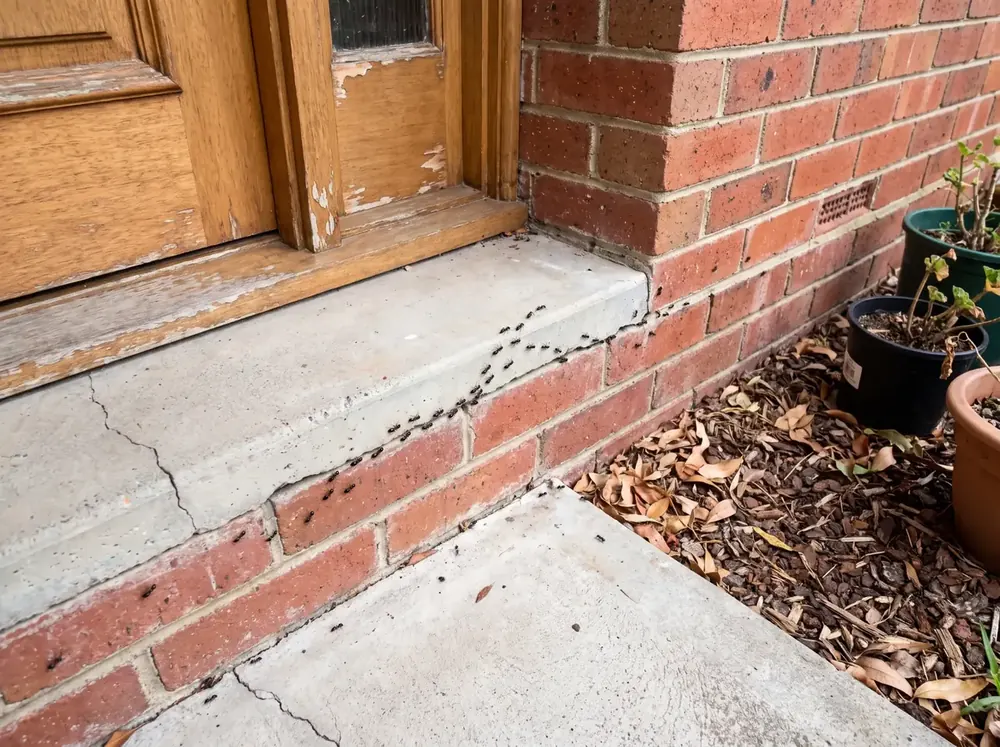
Almost everyone looking up how to get rid of ants in the yard has the same picture in mind: craters of fine soil in the lawn, grey spoil pushed up between pavers, and a line of workers marching along the mortar of the back wall. The reasonable assumption is that all of it has to go.
It does not. A garden holds thousands of ants that never cause anyone a problem, and clearing them is neither possible nor useful. They break down dead material, shift seeds, turn over soil and eat other insects, including some that would otherwise chew your plants. A yard with no ants in it is not a goal worth having.
So this guide does something slightly different from the rest of Tim's pest control guides. It sorts outdoor nests into leave, watch and treat, shows you how to read the soil, and then deals honestly with the three situations that genuinely warrant work: a trail running indoors, a colony farming sap-suckers on your roses and citrus, and a stinging species near a doorway or a play area.
The verdict
Do ants in the lawn actually do any harm?
In most Melbourne gardens, no. Lawn ants do not eat grass and do not chew roots, and the damage people blame on them is nearly always the mound rather than the colony. Fine soil heaped over a lawn can smother the blades beneath it and leave a bare patch, and a mound hardens enough to scalp under a mower, but the turf itself is not being attacked.
Where the lawn is coarse couch or kikuyu, the grass grows straight back through a brushed-out mound within a fortnight. Fine fescue and new turf are less forgiving, so the sensible response there is to brush the spoil flat with a stiff broom after mowing rather than to treat anything.
Small craters out in the grass, nests under a stump or deep in a bed, ants on the compost. No action needed.
Spoil between pavers or along a path edge. Worth watching: those nests sit closest to the house.
A trail into the building, sap-suckers being farmed on prized plants, or a stinging nest near a door or play area.
That third column is the honest version of this whole topic. An outdoor nest only matters once it is feeding something: a line through a weep hole into the kitchen, an aphid colony on a lemon tree, or a sting risk where children play barefoot. Everything else is a garden doing what gardens do.
One exception, and it is not a treatment question. Red imported fire ants are a declared biosecurity threat and are not established in Victoria. If you find a dome-shaped mound of loose soil with no clear entry hole and the ants swarm aggressively and sting, do not disturb it and do not treat it. Report it to Agriculture Victoria, because an early report is what keeps them out.
Reading the ground
Where are the nests, and what does the soil tell you?
Follow a trail outwards at dusk and it will take you to the nest, usually within ten or fifteen metres. The spoil is the giveaway: ants excavate from below and tip the diggings out at the entrance, so a cone or ring of very fine, loose granules means an active colony directly beneath it. Coarse sawdust or pellets mean something else entirely.
Likely sites in a Melbourne back yard, in rough order of how often they turn up: between and under pavers, along the mortar joints of a retaining wall, under the lip of a concrete path, beneath pot plant bases and saucers, in dry mulch against the wall, inside a hollow stump or sleeper, under the meter box, and in the warm sand bed below a slab edge.
| What you can see | Likely cause | Does it need anything? |
|---|---|---|
| Fine grey granules between pavers | A colony under the bedding sand, often coastal brown ants, which have several queens | Only if a trail runs from it to the house |
| Low crater in the lawn | A ground nest excavating straight up through turf | Brush it flat and leave it |
| Gravelly mound with a wide open hole | Bull ants or jack jumpers, which are solitary foragers by day | Yes if it is near a path, door or play area |
| Soil piled against a weep hole or brick course | A nest working into the cavity wall | Yes, this is the one that gets indoors |
| Coarse sawdust and shed wings | Not excavated soil: damp timber being hollowed out, or termites | Stop and have the timber looked at |
Timing helps as much as looking. The big banded ants forage after dark, so a torch walk at ten at night finds trails that are invisible at noon, while bull ants are out in daylight and will come at you if you stand over the entrance. Activity also lifts noticeably in the hours before rain arrives, which is a free chance to map things.
Follow every line to its end, including the ones that leave your property. A trail that crosses the fence tells you the nest is next door, and that changes what a treatment on your side can realistically achieve.
Method
How to get rid of ants in the yard: which nests do you treat, and how?
Treat the nest, not the lawn. Bait placed at the entrances of the few nests that matter will do more than any product spread across the whole garden. Broadcasting granules over a yard wastes most of the product, puts it where pets and birds forage and leaves the colonies you care about untouched, because the workers simply ignore food they did not find on their own runs.
- Pick the nestOnly the ones feeding a trail indoors, farming sap-suckers on a plant you value, or sitting where someone could be stung.
- Bait at the openingsA granular or oil-based bait right at the entry holes and along the active run, in the evening, on dry ground.
- Re-check at day threeGone from the holes means it is being taken home. Untouched means the wrong food type, so switch sweet for protein or the reverse.
Outside, bait beats spray for a plain Melbourne reason: with rain arriving every few days through much of the year, a surface band laid on soil, mulch or paving stops doing much very quickly, while bait that has already been carried underground is unaffected. Dusts have the same problem and worse, since they only work while completely dry.
Honest notes on the other outdoor methods people try. Digging a nest out moves part of it and often triggers a budding species to split, so you end up with two mounds a few metres apart. Flooding with a hose pushes the colony sideways rather than killing it. Petrol and other fuels in a nest hole are illegal to use as a pesticide, dangerous and a soil contamination problem you will own for years.
Boiling water is the one worth a warning. It kills whatever it reaches, and on a shallow nest in a paver joint that can be most of it. It also cooks the roots of anything growing within half a metre, sterilises a patch of soil and will not travel far enough down to touch a queen in an established nest. Keep it for paving, never use it in a bed or on a lawn, and accept that a deep colony will shrug it off.
Hold your nerve after baiting. Activity at the entrance climbs for a couple of days while the colony feeds, then fades over the following week. Treating again on day two, or spraying the trail because it looks busier, undoes the only thing that was working.
Plants and pets
How do you protect vegetable beds, roses and pets?
Deal with the sap-suckers rather than the ants on roses and citrus, keep baits out of edible beds entirely, and put anything you place outdoors inside a weighted cover that a dog or a bird cannot get into. Ants on a rose cane or a lemon tree are usually a symptom: they are there for the honeydew that aphids, scale and mealybug produce, and they will defend those insects from ladybirds and lacewings to keep the supply going.
Clear the aphids and the ant trail loses its reason to exist. A firm hose down, a soap or horticultural oil spray used to its label on a cool day, pruning the worst-infested tips and encouraging predators all work, and sooty mould on citrus leaves is the sign you have left it too long. Watering deeply and less often helps as well, since drought-stressed plants push out the soft new growth that sap-suckers want.
Vegetable beds
No bait, no granules and no spray inside a bed you harvest from. Work at the bed edge or at the nest, lift mulch back off stems, and wash produce as a matter of course.
Dogs, cats and chooks
Put any outdoor bait under an upturned pot or paver with a weight on top, note where each one is, and collect them all when the job is done. Chooks will eat anything you leave loose.
Bees and flowers
Never treat a plant in flower. Bees forage on it, and a swarm or hive is a beekeeper's job rather than a pest control one, which is how Tim handles every bee call.
One product category to avoid outside altogether: adhesive bands and sticky traps. Under Victoria's animal cruelty regulations it is an offence to set a glue trap capable of trapping an animal, and a sticky band around a trunk or a post catches skinks, geckos and small birds as readily as it catches ants. There is no version of that approach worth using in a garden.
Bull ants deserve their own line here. Their nests sit below ground behind a wide open hole ringed with coarse grit, and that entrance is treated in the evening rather than baited. If anyone in the household has had a bad reaction to a sting before, do not stand over the hole at all: read the Better Health Channel guidance on bites and stings, keep an adrenaline injector to hand if one has been prescribed, and get medical help for anything beyond local pain and swelling.

The limit
When is an outdoor ant problem worth a professional visit?
When the nest is under something you cannot lift, when baiting the openings has made no difference after a fortnight, when trails keep refilling from a neighbouring property, or when the species stings and the nest sits where people walk. Those four cases need access, product range and a boundary-wide plan that retail granules do not provide.
- Under a slab, path or driveway. The entrances are visible and the colony is not, so treatment has to work through the few openings there are.
- Refilling from next door. Victorian guidance notes that ants can recolonise from a neighbouring area within a fortnight, and that a whole block sometimes needs treating.
- Many queens, many nests. Species that run linked nests exchanging workers cannot be beaten one mound at a time.
- Stinging species at a doorway. Treated at the nest, in the evening, with the area kept clear afterwards.
A proper outdoor visit looks different from a lap of the house with a spray wand. It should include the species named, the trails followed to their ends, bait or direct treatment at the nests themselves, attention to the wall line and the weep holes where the colony gets inside, and a note of the things in your garden that keep inviting them back. Covered treatments carry a three month re-treatment guarantee, Tim is fully insured, and his licence number, 86488, sits on the public Victorian register for anyone who wants to check it.
If the trail from the garden keeps arriving in the house no matter what you do outside, that is the point to hand it over. The ant control service for Melbourne homes page explains how the inside and outside halves of the job are done together, which is the part that stops the cycle. You can also book a pest control treatment straight away with a photo of the mound and the wall it runs to.
Questions
Garden and lawn ant questions
Do lawn ants damage grass?
They do not feed on grass or roots. What people see is the excavated soil smothering the blades beneath a mound, plus the hard crown that a mower can scalp. Brush the spoil out with a stiff broom after mowing and coarse lawns grow back through it within a couple of weeks.
Does boiling water kill an ant nest?
It kills the part it reaches, which on a shallow nest in a paver joint can be worthwhile. It will not reach a queen chambered well below the surface, and it cooks plant roots and soil life around it, so keep it for paving and never pour it in a bed or on a lawn.
Is outdoor ant treatment safe around pets?
It can be, if placement does the work. Baits go under an upturned pot or paver with a weight on top, are recorded so none are forgotten, and are collected at the end. Keep animals off treated ground until it is dry, and tell the technician about dogs, chooks, fish and birds first.
Why are ants all over my roses and lemon tree?
They are collecting honeydew from aphids, scale or mealybug on the soft new growth, and they will chase off the ladybirds that would otherwise eat those insects. Treat the sap-suckers with a hose down, an oil or soap spray to its label and some pruning, and the ants lose interest.
Will the ants come back from the neighbour's yard?
Often, yes. Several local species keep linked nests and will move back into treated ground quickly, which is why a single mound treatment can look like it failed. The answer is to treat your whole boundary and the wall line rather than one hole, and to talk to the neighbour if the nest is theirs.
Should I treat ant mounds between my pavers?
Only if a trail runs from them into the house or across a doorway you use barefoot. Spoil between pavers is untidy rather than harmful, and the sand will need brushing back either way. If you do treat, bait the openings rather than spraying the whole paved area.
Outside nest feeding a trail into the house?
Send a photo of the mound and the wall it runs to, and Tim will tell you what it is and what the treatment costs.
Reviewed October 2026 by Tim, licensed pest control operator (Victorian licence No. 86488). Biosecurity reporting for fire ants: Agriculture Victoria. Bites and stings: Better Health Channel.