Flagship guide
How to Get Rid of Moths
Three different insects share one name and need three different jobs. Work out which one you have from what has been damaged, then do the work that matches it.
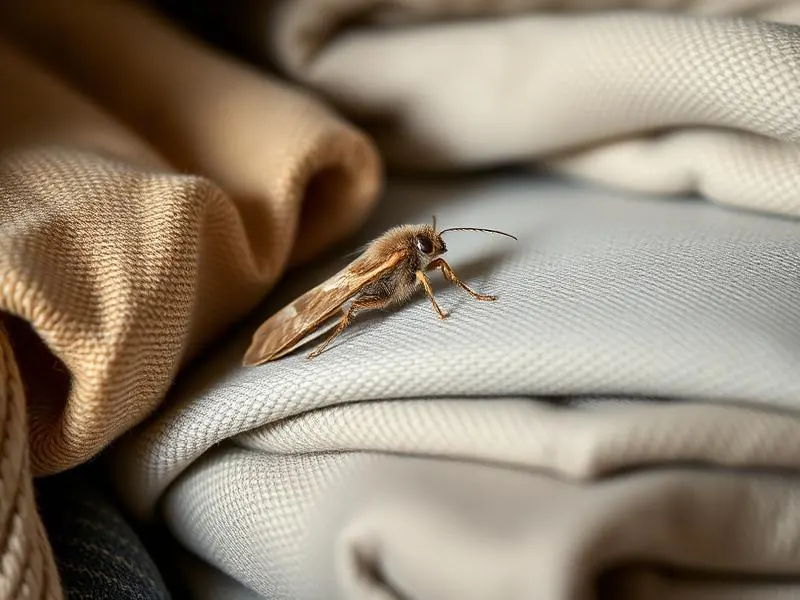
The adult on the wool is not eating it. Something smaller is, further down in the pile.
Almost every search for how to get rid of moths is really three searches wearing one coat. A moth in a food cupboard, a moth in a wardrobe and bald patches in wool carpet are caused by different insects doing different things in different rooms, and the method that clears one does nothing for the others. Buying the wrong traps is the most common outcome of not sorting that out first.
So this page starts with identification, and it uses the damage rather than the insect, because the adult you saw is the least informative part of the whole problem. Once the species is settled, the page gives the shape of each of the three jobs, explains the one principle that decides whether any of them works, and sets out the point where a household has genuinely run out of options. The detailed, step by step versions of each job sit in their own guides, linked where they belong.
This is part of Tim's library of pest guides, written from job experience in Melbourne homes rather than from a product label. Expect honest ratings, including of the things people sell for this.
Start here
Which moth have you got?
Let the damage answer it. Webbing and clumped grains in flour, rice, nuts or pet food means a pantry moth. Irregular holes in wool, cashmere, silk or felt means a clothes moth. Grazed patches in wool carpet under furniture means the same family feeding on the floor instead. Moths only at a window, with nothing damaged, came in from outside.
Work from the evidence inwards. People naturally describe the adult, because it is the thing that flew past them, but adults of these species are small, drab and easy to confuse, while the damage is specific and unmistakable.

Pantry moth
Fine silk webbing that glues grains, nuts, dried fruit, seed and kibble into stiff clumps. The adult is around eight millimetres with a two-tone wing and flies openly across the room towards a light. It came home in a packet.
Clothes moth
Ragged holes in animal fibre, often several together and more on hidden faces than on the front of a garment. The adult is smaller, plain straw gold, avoids light and drops into a fold when disturbed instead of flying at the window.

Carpet feeder
Patches of wool carpet or rug worn right down so the weave shows through, with silk and a sandy residue left among the fibres. The damage stops abruptly at the line where a bed or a sofa ends, which is the giveaway that it is not wear.
A fourth possibility saves people money whenever it applies. Big drab moths drift indoors during the warmer months, circle a ceiling light for an evening and die overnight near the window. No breeding happens inside and nothing you own is at risk. Patch the flyscreen and the episode is over.
There is also a look-alike that is not a moth at all. Carpet beetle larvae chew the same kinds of material and leave similar damage, and their shed hairs can cause itchy welts that people take for bites. If the damage looks right but you keep finding small bristly larvae rather than smooth ones in silk tubes, say so when you ask for advice, because it changes what gets used.
Before any of the three jobs starts, one fact reorganises everything: the adult moth does not eat. Damage is done entirely by larvae, which hatch from eggs laid weeks earlier and feed hidden inside the food, the fabric or the pile. Swatting an adult removes one future egg layer and leaves every larva and pupa exactly where it was.
- Larva
- The caterpillar stage of a moth, and the only stage that feeds on your belongings. For these species it is small, pale and usually hidden inside the food packet, the fabric fold or the base of the carpet pile, often inside a silk tube it has spun around itself.
Pupation is where most home attempts come undone. Once feeding is over, the larva abandons the food and crawls off to somewhere dry and narrow to become an adult: the shelf-pin holes and jar lid threads in a kitchen, a seam or a skirting gap in a bedroom. This is why a householder can bin every affected item, scrub the whole space, and go on seeing adults for another two weeks.
What a result looks like: expect to keep seeing the occasional adult for two to three weeks after you have removed the source, because larvae already pupating will still emerge. Numbers should fall steadily over that period. A count that stays level means a second feeding site is still active somewhere.
Melbourne adds a seasonal pattern worth knowing. Pantry problems rise through the warm months and again after Christmas, when bulk baking supplies have been sitting in a cupboard. Wardrobe damage is usually discovered in autumn, when woollens come out of storage. Floor damage tends to be found in spring, when furniture gets moved for a clean. None of those are when the damage happened. They are just when somebody looked.
Job one
What does the food cupboard job involve?
Find the one item that started it, get it out of the building, then treat the cupboard rather than the food. Almost every pantry problem arrives inside a packet of dry goods, spreads along the shelf, and leaves pupae in the joinery. Clearing the shelf without dealing with those hiding places is the reason it restarts a fortnight later.
The search has a predictable shape. Shake out every container and one item is usually far worse than the rest, normally something elderly and seldom opened. A part used bag of flour. Seed for the budgie. A sack of dog biscuits on a shelf in the garage. Whatever that item is, it is the engine driving everything else on the shelf.
- Empty it completelyEvery packet out onto the bench. Check each one in good light, including the sealed ones.
- Remove the sourceSeal the affected packets inside a bag, then carry that bag outside to the wheelie bin rather than the tidy under your sink.
- Work the joineryVacuum the shelf-pin holes, the panel joins, the shelf lips and the kickboard gap, then wipe.
Two details decide whether it holds. Thin plastic and cardboard are not barriers, because larvae chew through a bag and into the packet beside it, so anything you keep goes into glass or metal with a proper seal. And anything you are not sure about can be sealed and frozen for several days, which kills whatever is inside the packet without throwing out an unopened bag of rice.
The full order of work, including what is worth keeping, how long to freeze things for and where the pupae hide in a modern flat-pack cupboard, is in the guide to running a pantry moth clear-out properly.
Job two
What does the wardrobe job involve?
Launder or freeze the affected items, empty and clean the space they lived in, and store the rest so nothing can reach it. Clothes moth larvae eat keratin, the protein in animal fibre, so wool, cashmere, alpaca, felt, fur and wool blends are food. Spraying the air in a wardrobe achieves nothing, because the adults you hit do not feed on fabric at all.
The uncomfortable part of this job is that it feels like a hygiene failure and is nothing of the sort. A dark, quiet wardrobe holding clean wool is exactly the target. Garments in regular rotation rarely suffer. Harm collects in whatever has sat still since the last cold season.
- Very little has to be thrown out. Wash or tumble as hot as the care label permits, send what cannot take water to a dry cleaner, or bag small pieces and freeze them for a few days.
- The holes stay, the problem goes. Treating an item stops it being a food source even though the damage is permanent.
- Empty the space, not just the garments. The wardrobe floor, the back corners and the carpet underneath hold as much as the clothes do.
- Store clean. A jumper put away with a food or sweat stain on it is far more attractive than the same jumper washed.
Synthetics and pure cotton are not on the menu, with one exception that catches people out: a larva will graze a synthetic that carries sweat, milk or food residue. It explains why the ruined item is so often the single piece that was packed away without a wash.
The detail on laundering temperatures, freezing times, what to do with a built-in robe and the honest truth about cedar sits in the guide to dealing with clothes moths in a wardrobe.
Job three
What does the floor job involve?
Move the furniture, get the vacuum into the edges and the under-furniture strips, and treat the borders rather than the open floor. Feeding happens in the dark, still, never cleaned strips, so walked on carpet stays intact while the hidden band loses its pile entirely. Lifting and turning wool rugs matters as much as anything you apply.
Wool floor covering is everywhere in this city, particularly in period homes and older brick places. Shut those houses up for a Melbourne winter, run the heating, and the larvae get months of steady warmth with nobody disturbing them.
- Shift heavy furniture before vacuuming. Failing that, get a crevice tool right into the skirting line on every pass.
- Flip a wool rug over twice a year and clean its reverse face, since that side is where feeding goes unnoticed.
- Open the robe and do its floor, its rear corners and the space beneath a fitted seat, which nothing ever reaches.
- Tip the vacuum contents into a wheelie bin outside the moment you finish, never into a kitchen tidy.
Separating this from ordinary wear is easy once you have seen it. Feeding crops the pile to one even height, leaves grit and fine silk among the fibres, and stops dead along the line a bed or bookcase used to sit on. Wear fades in gradually and appears where feet go.
Which sprays are worth using, what happens about underlay, and how a rental bond dispute over carpet damage usually turns out are covered in the guide to treating carpet moths.
The search
How to get rid of moths when the source is not obvious
Follow the material rather than the insect. Work out what the larvae could be eating in the room where moths are appearing, and search every item made of that material which has not been moved in a year. The source is nearly always something stored, forgotten or hard to reach rather than something in daily use.
Monitors earn their place here, provided you are honest about what they do. Males alone are drawn to the lure, which makes a catch into a reading rather than a remedy, because females go on laying and larvae go on feeding regardless. Use them as instruments. Put several out, number each one, check them every week, and go and search whichever room produces the biggest count.
In the kitchen
Behind the baking tins, the back of the top shelf, the laundry cupboard, the pet food bag and the bird seed in the garage. Anything bought in bulk and opened once.
In the bedroom
Suit bags, storage boxes under the bed, a drawer of folded knitwear, a sheepskin rolled up in the shed, and felt in a piano or a pool table.
Around the house
Under a bookcase nobody has shifted since the house was bought, beneath a hall runner, inside aged wool underlay, and across the carpeted base of a fitted robe.
The hard cases are the ones where the feeding site is somewhere that cannot be emptied: a wall cavity with wool insulation, a fixed base under a built-in robe, the underlay beneath a nailed-down carpet, or stored textiles in a garage feeding the house next to it. Those are the jobs where a household can keep the numbers down for months without ever ending it, and recognising that early saves a lot of frustration.
Resist the insect bomb. A total release fogger settles on open horizontal surfaces, which is the one place these larvae are not. It leaves residue across a kitchen or a bedroom, achieves nothing in a shelf-pin hole or a carpet edge, and sets back the actual work.
The limit
When should you hand a moth problem over?
Hand it over when two or more rooms are active at once, when the feeding site is somewhere you cannot empty, when a full clear-out has already failed once, or when the item at risk is valuable enough that a second failed attempt costs more than a visit. Those four do not resolve with another round of traps.
- Two rooms at once. A pantry and a wardrobe going together usually means two separate sources, and finding both is the work.
- A space you cannot open. Fixed joinery, underlay, a wall cavity or a sealed robe base. Treatment has to reach it through the gaps that exist.
- A clear-out that already failed. The remaining pupae are now scattered rather than concentrated, which makes the second attempt harder than the first.
- Valuable textiles or stock. Rugs, heirloom knitwear, costume, a shop or a food business. The cost of guessing wrong is the deciding factor.
General Victorian advice on household pests is a sensible test to apply before anyone opens anything: identify the pest before you buy a product, try the non-chemical measures first, and use the least toxic option designed for that specific insect. On a moth job the non-chemical measures carry most of the result, which is why this page spends so long on searching, laundering and vacuuming before it mentions a treatment at all.
Where it goes past that, the work is moth control in Melbourne: the species is named, the feeding site is found and removed, and the harbourage around it is treated rather than the food or the clothing. Tim is insured in full and licensed in this state under number 86488, and a three month guarantee sits over the rooms he worked in, so activity returning there before those months are up means another visit at no cost. To get it looked at, request a quote and include a photo of the damage.
Nobody ever solved a moth problem by catching moths. The job is finding what the larvae are eating.
Questions
Questions people ask about moths in the house
Where are the moths coming from?
Something indoors is feeding the larvae. In a kitchen that is nearly always dry goods that arrived with eggs already in the packet. In a bedroom it is undisturbed wool, silk or felt. Adults at a window with nothing damaged anywhere flew in from the garden.
Do pheromone traps get rid of them?
No. The lure attracts males, so a catch confirms that breeding continues somewhere and hints at which part of the house, while females and larvae are untouched by it. Set several out, read them weekly, and search the room with the highest count.
How do I work out which type I have?
Look at what has been damaged rather than at the insect. Webbing and clumped grains in dry food means a pantry moth. Ragged holes in wool, cashmere or felt means a clothes moth. Thin or bald patches in wool carpet under furniture means the same family feeding on the floor.
Why do I still see them after a big clean-out?
Because larvae leave the food to pupate in dry tight spots such as shelf-pin holes, jar lid threads, seams and skirting gaps, so those stages survive the clean. Expect stragglers for two to three weeks with numbers falling. A count that does not fall means another source is still active.
Can moths damage synthetic clothing?
Not as food, because these larvae feed on the protein in animal fibre. The exception is a synthetic carrying sweat, food or milk residue, which a larva will graze. That is why damage so often turns up on the one item that went into storage without being washed first.
Are moths in the house a health risk?
Not in the way cockroaches or rodents are. The damage is to property rather than to people. The one thing worth knowing is that carpet beetle larvae, which cause similar damage, shed bristly hairs that can irritate skin and get mistaken for insect bites, so an itchy rash near damaged carpet is worth mentioning.
Not sure which moth you are dealing with?
Send a photo of the damage and say which room it is in, and Tim will name the insect and tell you whether it needs a treatment or a weekend.
Reviewed October 2026 by Tim, licensed pest control operator (Victorian licence No. 86488). Identifying a pest and choosing the least toxic option: Better Health Channel. Pesticide registration and label use: APVMA.