
Preschool in St Ives: 4 to 5 Years
Your child's last year before school should leave them curious, confident and ready for a classroom, without you giving up full working days to get there. Lead offers preschool St Ives families can fit around full working days: a room for four and five year olds in their final year before kindergarten, open from first thing until 6:00pm right through the year, with university-qualified early childhood teachers guiding our School Readiness Program, with meals, sunscreen and extracurricular sessions included in the daily fee.
If you are a St Ives, Pymble, Turramurra or Wahroonga family weighing up preschools for next year, this page covers what matters: the room, how a preschool program works inside long day care, who teaches it and at what ratio, the School Readiness Program, literacy, numeracy and independence, a sample day, the move to kindergarten, and what preschool costs once the Child Care Subsidy and NSW Start Strong fee relief are taken off.
Preschool is the last of our four rooms. To see how it follows Nursery, Toddlers and Pre-Kindy, visit our overview of age groups at Lead, or call (02) 7238 8668 with a question.
Our preschool room
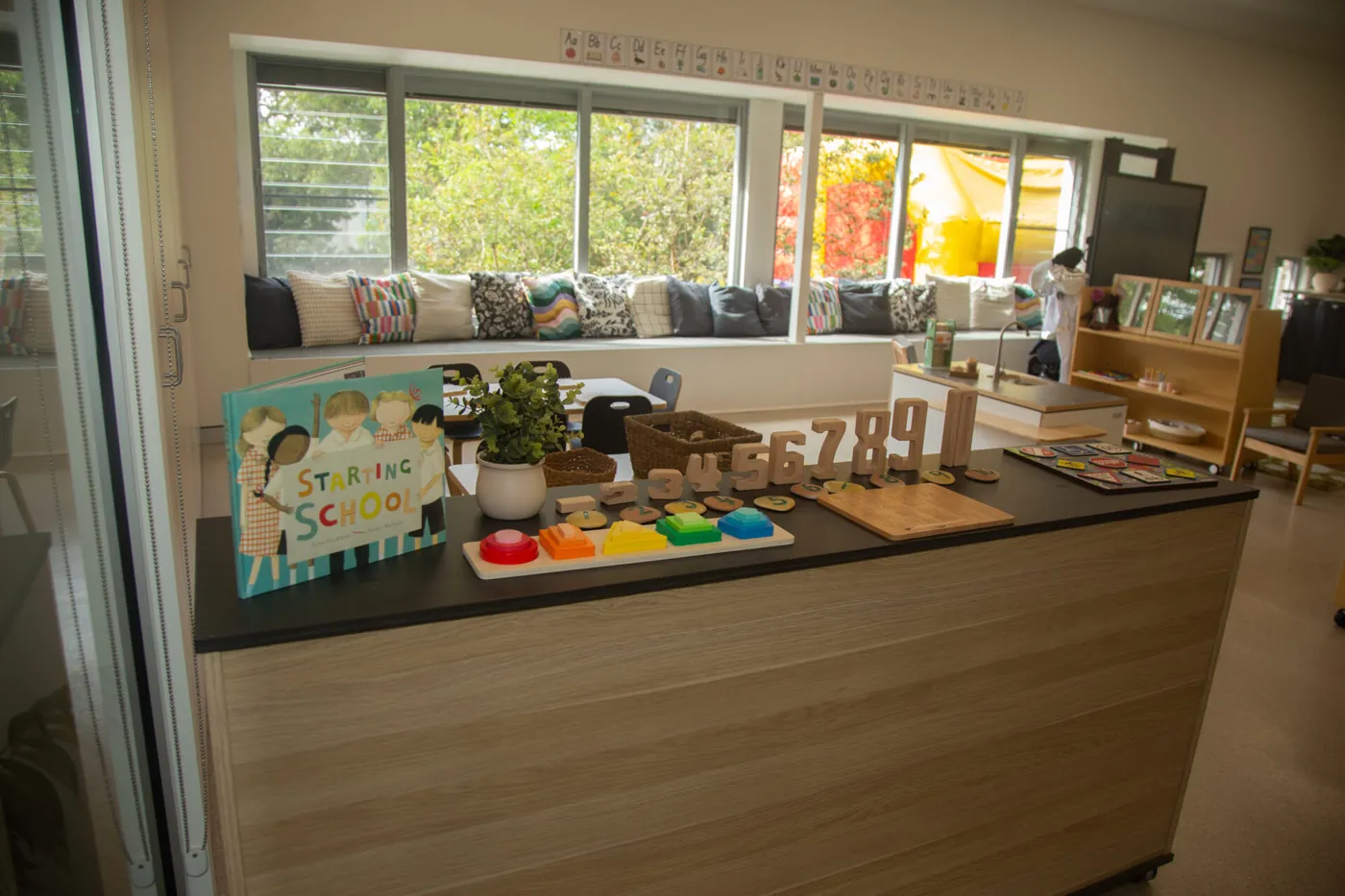
Our preschool St Ives room is set up for four and five year olds who are ready for more challenge: longer projects, a well-stocked writing table, maths and science materials, a well-used book corner and space for group discussions. It looks and feels like a step toward a classroom, while keeping the freedom to learn through play.
Children have more say in how the day runs. They help plan projects, vote on group decisions and take turns leading parts of the morning meeting.
The room gives children practice with the small routines of school, like finding their own name, looking after their belongings and packing up when a session ends.
Work is displayed at child height, often with the child's own explanation written beside it. Children love showing families what they made and why.
Group sizes feel bigger than in the younger rooms, which is deliberate. Learning to listen, wait and contribute in a larger group is exactly what a kindergarten class will ask of your child.
Outdoor time stays a daily priority. Preschoolers need to run, climb and dig as much as they need to write, and the playground is used for learning too.
Extracurricular sessions, including sport, yoga, cooking and languages, are part of the week and covered by the daily fee.
Preschool at a glance
- Ages
- 4 to 5, the year before kindergarten
- Led by
- Degree-qualified early childhood teachers
- Program
- School Readiness Program, EYLF V2.0
- Open
- Early till late, every week of the year
- Included
- 5 meals, sunscreen, extracurricular
Preschool inside long day care, what that means
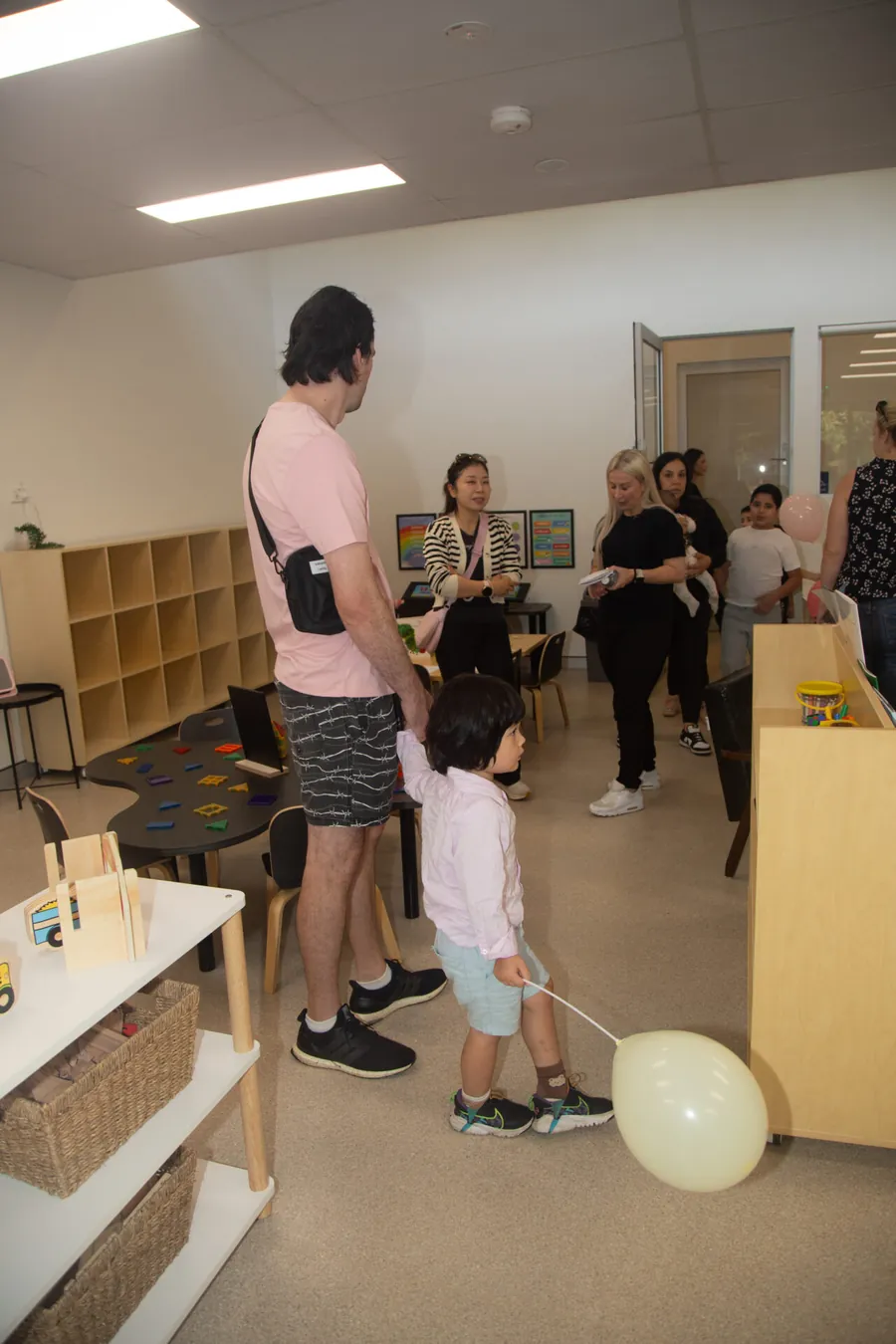
Preschool inside long day care means your child gets a planned, teacher-led preschool program during the core of the day, while the centre keeps working-family hours all year round. A standalone preschool usually runs shorter days during school terms only, which can leave working families juggling care around it.
In NSW, the words matter. Preschool describes the one or two years leading up to school, while kindergarten is the name for a child's opening year at primary school, unlike some states where kinder means a preschool program.
Both models deliver a quality preschool program under the same national framework and rules. The difference is mostly about hours, holidays and how fees are funded.
Families in long day care can usually claim the Child Care Subsidy, which community preschools do not attract. Start Strong fee relief applies to both, at different rates.
Quality is checked the same way for both. Every approved service in NSW is assessed against the National Quality Standard, so you can compare ratings side by side on the national register.
For many St Ives families, the deciding factor is simple: a preschool year that fits around two working parents, without extra care before and after.
A full side-by-side comparison is in our guide to preschool vs daycare in NSW.
Long day care preschool vs standalone
- Hours
- Full day here, vs shorter sessions
- Weeks
- 52 weeks here, vs school terms
- CCS
- Claimable here, not at community preschools
- Program
- Same framework: EYLF V2.0
 All year round
Educator to child ratio and our early childhood teacher
Preschool is staffed at a ratio of 1:10, which is what NSW requires from age three until school, and university-qualified early childhood teachers plan and lead the learning. Under the national regulations, long day care centres must have university-qualified early childhood teachers in attendance, with more required as a centre grows.
An early childhood teacher holds an approved university degree in early childhood education, covering child development, literacy, numeracy and how to plan and assess learning.
Diploma and Certificate III educators work alongside the teacher. Together they observe each child, plan the next steps and share progress with you.
Our School Readiness Program is delivered by early childhood educators who specialise in preparing children for primary school.
NSW's 1:10 ratio for this age is tighter than the 1:11 used in several other states, and we roster so it holds all day, including breaks and the late afternoon.
Every educator keeps first aid, CPR, asthma and anaphylaxis training current and holds a Working With Children Check. Meet the people behind the program on our team page.
Questions worth asking any preschool
- Who plans the program?
- Is the teacher in the room daily?
- How is the ratio kept at lunch?
- How is progress shared?
 Teacher led
The School Readiness Program
The School Readiness Program is the backbone of the preschool year. It develops the five things kindergarten teachers most hope to see, namely reading and writing foundations, number sense, looking after oneself, concentration and ease with other children, through play, projects and short group sessions, and it is included in the daily fee rather than sold as an extra.
Each child's progress is tracked against the Early Years Learning Framework outcomes, so educators can see who needs more challenge and who needs more time, and plan small groups to match.
Resources include Reading Eggs and Prep School workbooks, used alongside hands-on play rather than instead of it.
The program builds across the year, starting with settling and observation, then stretching skills as children grow more confident, and finishing with the move to school.
Links with nearby primary schools help each child's move to school, and we share progress with families through learning journals and written summaries.
Everything about the program, from its five skills to the term-by-term plan, is set out on our School Readiness Program page.
Printable readiness checklist
A one-page checklist of the skills that help most in kindergarten.
Download the Checklist Five skills, one year

Early literacy and writing
Preschool literacy moves children from enjoying stories to understanding how print works. Four and five year olds learn letter names and sounds, hear the beginning sounds in words, write their own name, and try writing words for real reasons, like labelling a drawing or writing a card.
Reading Eggs gives children short, playful practice with letters and sounds, balanced with plenty of real books.
Writing starts with purpose. Children write shopping lists for the home corner, signs for a block city and notes to friends.
Pencil grip gets gentle attention, built up through playdough, threading and drawing rather than drills.
Children retell and invent stories, which builds the vocabulary and sequencing that make reading easier later.
Numeracy and STEM
Numeracy in preschool builds a solid feel for numbers to ten and beyond: counting accurately, recognising numerals, comparing amounts, adding one more, and using the language of size, shape and position. STEM experiences add the habit of asking a question, making a prediction and testing it.
Children count, measure and compare during cooking sessions, when setting tables and while tracking plant growth in the garden.
Prep School workbooks give short, focused practice that children often ask for, because it feels like big school.
STEM might mean colour mixing with droppers, building ramps to race cars, or testing which objects float.
Sustainability is part of it too, from sorting waste to caring for plants, giving maths and science a real-world reason.
Digital tools are used sparingly and with purpose. Short sessions with an educator alongside keep screens a small part of a very hands-on day.
Educators ask children to explain their thinking: "How do you know?" matters more than the answer.
Number skills by the end of the year
- Counts objects to 10 or more
- Recognises numerals to 10
- Knows which group has more
- Names common 2D shapes
- Continues a simple pattern

Independence and self-help
Independence is one of the skills kindergarten teachers value most, and preschool is where children practise it every day. By the end of the year we aim for children to manage their own belongings, eating and toileting, follow a simple routine, and ask an adult for help when they need it.
Looking after me
- Uses the toilet alone
- Opens food containers
- Puts on shoes and a jumper
Getting along
- Waits for a turn
- Asks an adult for help
- Plays in a small group
Learning ready
- Sits for a short story
- Follows two-step directions
- Recognises their name
Use this quick check as a conversation starter, not a test. Most children tick some boxes early and others late in the year, and that is exactly what the preschool year is for.
If several boxes are still unticked early in the year, that is normal and gives educators a clear place to start. They will share what they are working on and suggest small ways to practise at home, so progress happens in both places at once.
Resilience sits underneath all of it. Children learn to try again when a zip gets stuck, cope when a game does not go their way, and feel proud of doing something hard on their own.
Lunch is good practice. Children serve themselves, open containers and clean up, which prepares them for the school lunchbox.
Children also learn to recognise when they are hungry, tired or need a break, and to say so, a skill that matters in a class of twenty or more.
At home, let your child dress themselves and carry their own bag, even when it is slower. It adds up.
A typical preschool day
A typical preschool day has a steady, school-like shape, with a morning meeting, a focused learning block, outdoor play, lunch, a rest, and afternoon projects, all within long day care hours. Children know what comes next, which builds the confidence to handle a school timetable.
- 7:00am
Drop-off and breakfast
Breakfast for early arrivals, then free play while friends arrive.
- 8:45am
Morning meeting
A child leads the calendar and news, and the group agrees on the day's jobs.
- 9:15am
School readiness block
Small group literacy and numeracy, with Reading Eggs or workbook time.
- 10:15am
Morning tea and outdoors
Fruit and a drink, then active play, gardening or sport.
- 11:45am
Lunch
Children serve themselves and practise opening containers.
- 12:30pm
Rest and quiet time
A shorter rest, with quiet books or drawing for non-sleepers.
- 1:30pm
Projects and STEM
Group investigations, cooking, science or a languages session.
- 3:00pm
Afternoon tea and free play
A snack, then play indoors or out until pick-up, with a late snack for late stayers.
Rest looks different in the final year. Many four year olds no longer need a sleep, so rest time is shorter and quieter, and it tapers off during the year so the day feels more like school by the final term. Families who want their child to keep a nap can tell us, and we will make room for it.
What to pack stays simple: a named water bottle, a hat, spare clothes and bedding for rest. Meals come from our kitchen, and we are Nut Aware, so outside food stays at home unless we have arranged it together.
Times vary with the group and season. Because the room runs until 6:00pm, you can collect at the time that suits your work, and your child never misses the core learning of the day.
Transition to kindergarten
From our preschool, children head to kindergarten, where NSW primary school begins. A child who has turned five on or before 31 July may start that January, and every child has to be at school once they reach six. We help each child and family through the move with visits, conversations and information shared with the new school.
Most NSW schools run kindergarten orientation sessions late in the year before school starts, which we talk about with children beforehand.
Because we keep in touch with local primary schools, we can share information about your child's learning and strengths with you to pass on.
Many NSW services complete a Transition to School Statement, which gives the school a picture of each child's strengths, interests and how they learn best. Ask us about yours and how your family's own view is included.
In the last term, the room practises school-like routines: lunchbox days, a longer group time and packing bags independently.
If your child's birthday is close to the cut-off, we will share our observations to help you decide whether to start this year or next.
More on how kindergarten works, from enrolment to the first week, is in our guide to kindergarten in NSW.
NSW school start rules
- Eligible
- Five on or before 31 July
- Compulsory
- From age six
- First year
- Called kindergarten in NSW
 Off to big school
Preschool fees and funding in NSW
Preschool at Lead is charged as a daily long day care fee, which covers the full day, meals and extracurricular sessions. Most families then receive two kinds of help: the Australian Government Child Care Subsidy, based on family income, and NSW Start Strong fee relief for children aged three and over at eligible long day care services.
In 2026, Start Strong for long day care provides up to $1,783 a year for children who are four by 31 July. The maximum rate of $2,563 applies to Aboriginal and Torres Strait Islander children and to services in disadvantaged, regional or remote areas.
As a worked example, $1,783 averages out to about $34 a week across a year, taken off your fees on top of your Child Care Subsidy.
The Child Care Subsidy works alongside it. Your percentage depends on family income, it applies up to an hourly rate cap, and it covers up to 42 absence days a year, which is worth knowing for family holidays.
To receive it, you complete a fee relief declaration form and nominate one service. Ask us whether it applies to your child and how it shows on your statement.
For your own numbers, try our preschool cost estimator, or read how fees at Lead work, including what the daily rate includes.
Start Strong for long day care, 2026
- Age 4 and over
- Up to $1,783 a year
- Maximum rate, 4+
- Up to $2,563 a year
- Age 3
- Up to $423, or $769 maximum
Source: NSW Department of Education, Start Strong for families.
 Help with fees
Preschool, answered
Is this a preschool or a daycare?+
It is both: a teacher-led preschool program delivered inside a long day care centre. Your child follows a structured School Readiness Program in the year before school, while the centre keeps full-day hours all year, so you are not limited to school hours or terms.
Do you have a qualified teacher?+
Yes, university-qualified early childhood teachers plan and guide our preschool program, holding approved degrees in early childhood education. They are supported by diploma and Certificate III educators, and the School Readiness Program is delivered by educators who specialise in preparing children for primary school.
What hours does preschool run?+
Preschool sits within our full long day care day, opening at seven each weekday morning and closing at six, all year except public holidays. The core learning happens during the middle of the day, so children get the full program whatever time you drop off and collect.
Is preschool free in NSW?+
Preschool in long day care is not free, but it is heavily subsidised. Most families receive the Child Care Subsidy, and NSW Start Strong gives up to $1,783 a year in 2026 for children aged four and over at eligible long day care services, or up to $2,563 at the maximum rate.
When do children start school?+
A NSW child can begin kindergarten in the January after turning five, as long as that birthday falls by 31 July, and school becomes compulsory at six. If your child's birthday is close to the cut-off, we are happy to share our observations to help you decide.
Places for next year's preschool group
Tour the Preschool room on a weekday morning, then join the waitlist for the days you need.