
Our Age Groups and Rooms
Wondering which room your child would join, and what their days would feel like? Our childcare age groups run from 6 weeks to 6 years across four rooms: Nursery, Toddlers, Pre-Kindy and Preschool. Each room has its own educator team, routine and ratio, set for the age and stage of the children in it. This page is the overview for parents comparing rooms or planning a start date, with a link to the full guide for every room. For fees, hours and everything else about the centre, visit our St Ives long day care and preschool.

How we group children by age
We group children into four rooms by age and developmental stage, because a baby, a busy two year old and a five year old about to start school need very different days. Grouping childcare age groups this way lets each room plan routines, spaces and learning for the children actually in it.
The age bands are a guide, not a rule. A child sits in the room that suits where they are right now.
Every room follows the same national framework, the Early Years Learning Framework, adapted for its age group.
Educators are assigned to one room, so your child sees the same familiar adults each week.
There is no single right age to start. Some families begin in the Nursery as parental leave ends, while others join at two or three, and every room is ready to welcome a child who is new to care.
The four rooms also follow the NSW ratio bands closely, which keeps staffing simple and predictable. You can see how the rooms connect to our wider early learning programs as well.
Four rooms at a glance
- Nursery
- 6 weeks to 2 years
- Toddlers
- 2 to 3 years
- Pre-Kindy
- 3 to 4 years
- Preschool
- 4 to 5 years, the year before school
 One room for every stage

Nursery, 6 weeks to 2 years
The Nursery cares for babies and young toddlers from 6 weeks to 2 years, with the smallest group sizes in the centre and one educator for every four children. The day follows each baby's own rhythm for sleep and feeds rather than a fixed timetable.
Babies sleep in a dedicated cot room, away from the noise of play.
Learning here is about trust, movement and the senses: tummy time, crawling, first steps and first words.
Nappies and wipes are included in the daily fee, so there is less to pack.
Everything about bottles, solids and settling in is on the nursery room guide for babies.
Toddlers, 2 to 3 years
The Toddler room is for children aged 2 to 3, a year of huge growth in language, movement and independence. NSW sets a ratio of one educator to five children at this age, and the room is set up with open floor space for children who would rather climb than sit.
Words arrive quickly now. Educators name, describe and chat through everything, all day long.
Toilet learning usually begins here, always in step with your family and your child's readiness.
Big feelings are normal at two. Educators help children name them and find calm again.
Read more about routines and the toddler program in our toddler room guide.

Pre-Kindy, 3 to 4 years
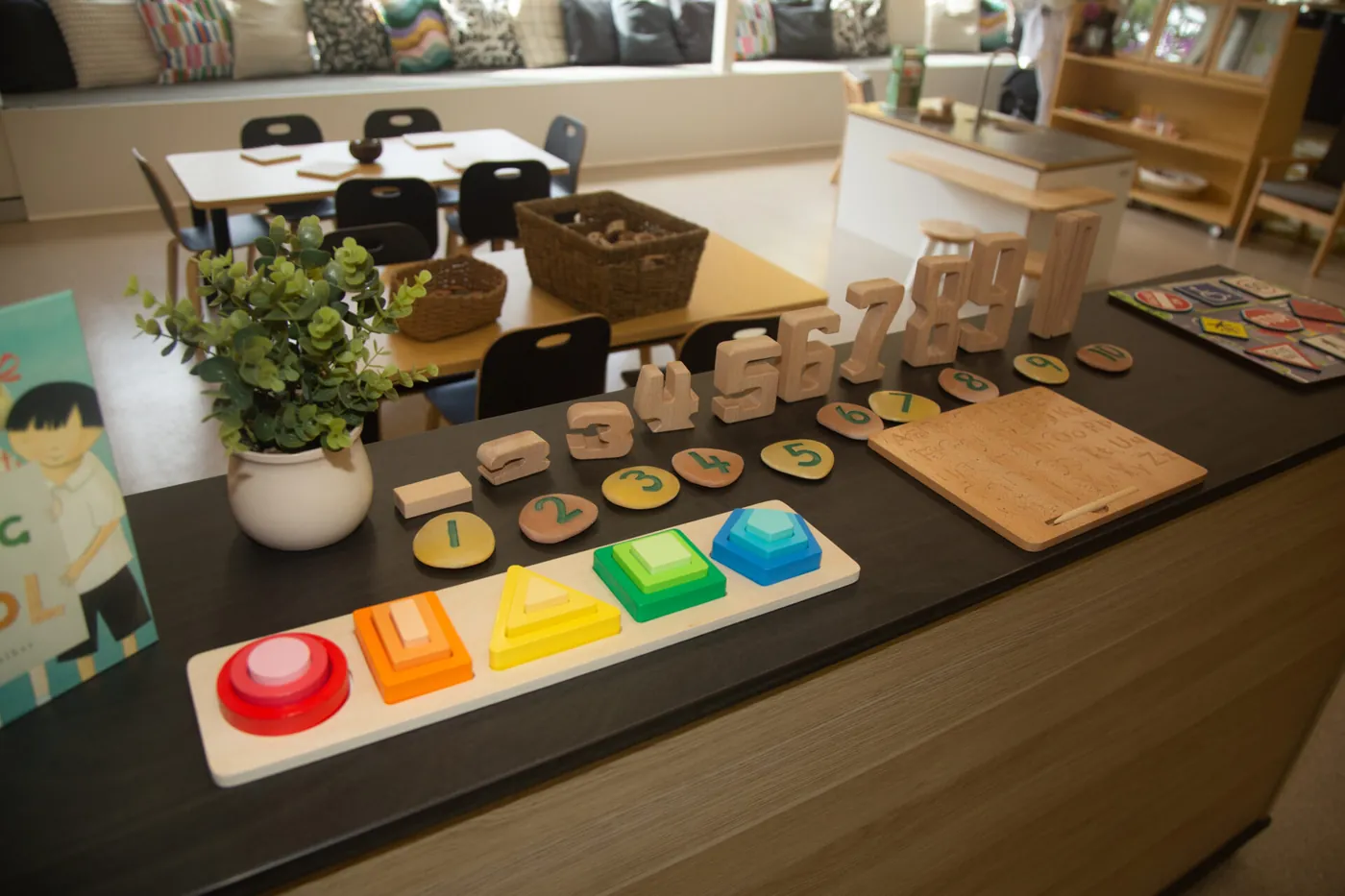
Pre-Kindy is for three year olds, the age when friendships deepen and children can stay with one idea for much longer. The NSW ratio moves to one educator for every ten children, and the program shifts toward longer projects, storytelling and early number sense.
Group projects can run for weeks, following a question the children care about.
Children start to play together rather than side by side, taking turns and sharing roles.
Mark-making, counting and sorting appear in everyday play, never as worksheets.
See how a three year old's week unfolds in the Pre-Kindy room guide.
Preschool, 4 to 5 years
Preschool is for children aged 4 to 5 in the year before they start school. In NSW, kindergarten is the first year of school, so preschool is the year that prepares children for it, and ours runs inside long day care hours so working families do not have to choose.
The School Readiness Program shapes this room, building literacy, numeracy, self-help and confidence.
Degree-qualified early childhood teachers lead the program.
Children take more charge of their own belongings and routines, a habit kindergarten teachers value.
Hours, teaching and funding are covered in our preschool room guide for 4 to 5 year olds.

Educator to child ratios in NSW
In NSW, the Education and Care Services National Regulations require one educator for every four children under 2, one for every five children aged 2 to 3, and one for every ten children from 3 to preschool age. These are minimums, and our rooms are staffed to meet them at every point of the day.
| Room | Ages | NSW minimum ratio | In practice |
|---|---|---|---|
| Nursery | 6 weeks to 2 years | 1:4 | A group of 8 babies has at least 2 educators |
| Toddlers | 2 to 3 years | 1:5 | A group of 15 toddlers has at least 3 educators |
| Pre-Kindy | 3 to 4 years | 1:10 | A group of 20 has at least 2 educators |
| Preschool | 4 to 5 years | 1:10 | Led by an early childhood teacher |
Only educators working directly with children count toward a ratio, a rule set out on the national ratio requirements page published by ACECQA. We plan rosters so the numbers still hold during lunch breaks and at the end of the day, not only at drop-off.
Ratios differ a little between states. How NSW compares, and what to ask any centre, is explained in our guide to childcare ratios in NSW.
How children transition between rooms
Children move up to the next room when they are ready, not automatically on a birthday. We look at age, development and how settled your child is, talk it through with you first, and then build up time in the new room gradually so the move feels familiar before it becomes permanent.
A conversation
Your child's educator talks with you about readiness and timing.
Short visits
Your child visits the new room with an educator they already know.
Longer stays
Visits stretch to a meal, a play session, then most of a day.
Moving up
Once settled, your child joins the room full time and educators share notes.
The biggest move of all comes at the end of Preschool, when children leave us for kindergarten. That transition is planned across the whole preschool year, with visits, routines and conversations that make the first day of school feel like the next step rather than a leap.
A typical day in each room
A typical day runs from 7:00am to 6:00pm, with five meals, active play, rest and a planned learning program in every room. The shape of the day changes with age: babies follow their own sleep and feed times, while older children follow a steady group routine with longer stretches of project work.
| Time | Nursery | Toddlers | Pre-Kindy and Preschool |
|---|---|---|---|
| 7:00am | Arrivals, cuddles and breakfast | Arrivals and breakfast | Arrivals, breakfast and free play |
| 9:30am | Morning tea, then sensory play | Morning tea and group time | Morning tea, then project work |
| Late morning | Outdoor play and naps as needed | Outdoor play, climbing and songs | Outdoor play and extracurricular sessions |
| 11:30am | Lunch and bottles | Cooked lunch | Cooked lunch at the table together |
| Midday | Sleep in the cot room | Rest time | Rest or quiet activities |
| 3:00pm | Afternoon tea | Afternoon tea | Afternoon tea |
| Late afternoon | Calm play and a late snack | Play and a late snack | Games, reading and a late snack |
Each room guide walks through its own day in more detail, from bottles and nap times in the Nursery to the school readiness sessions in Preschool.
Age groups, answered
What age can my baby start?+
Babies can start in our Nursery from 6 weeks old. Many families begin a few days a week around the end of parental leave, and because baby groups are small, we suggest touring and joining the waitlist several months before you need a place.
What are the ratios?+
NSW requires one educator for every four children under 2, one for every five children aged 2 to 3, and one for every ten children aged 3 and over. Only educators working directly with children are counted, and we roster so these ratios hold across the whole day, including breaks.
How does my child move up a room?+
Your child moves up when they are ready, which we decide together with you. They visit the new room with a familiar educator, stay a little longer each time, and move permanently once settled. Readiness, development and available places all matter as much as age.
Can siblings be in the same room?+
Siblings share a room only when they fall in the same age group, such as twins. Brothers and sisters of different ages are in different rooms, because each room is planned for one stage. For twins, we talk with you about whether sharing a room or being apart suits them best.
See the rooms for yourself
Tours take about 20 minutes on weekday mornings, and children are welcome to come along.