
Preschool vs Daycare
The main difference in preschool vs daycare is hours. In NSW, long day care (daycare) runs all day and all year for children from babies to school age, while a community preschool mostly caters for three to five-year-olds with shorter days that follow the school calendar. Both teach to the same national framework, and many long day care centres run a preschool program inside the day.
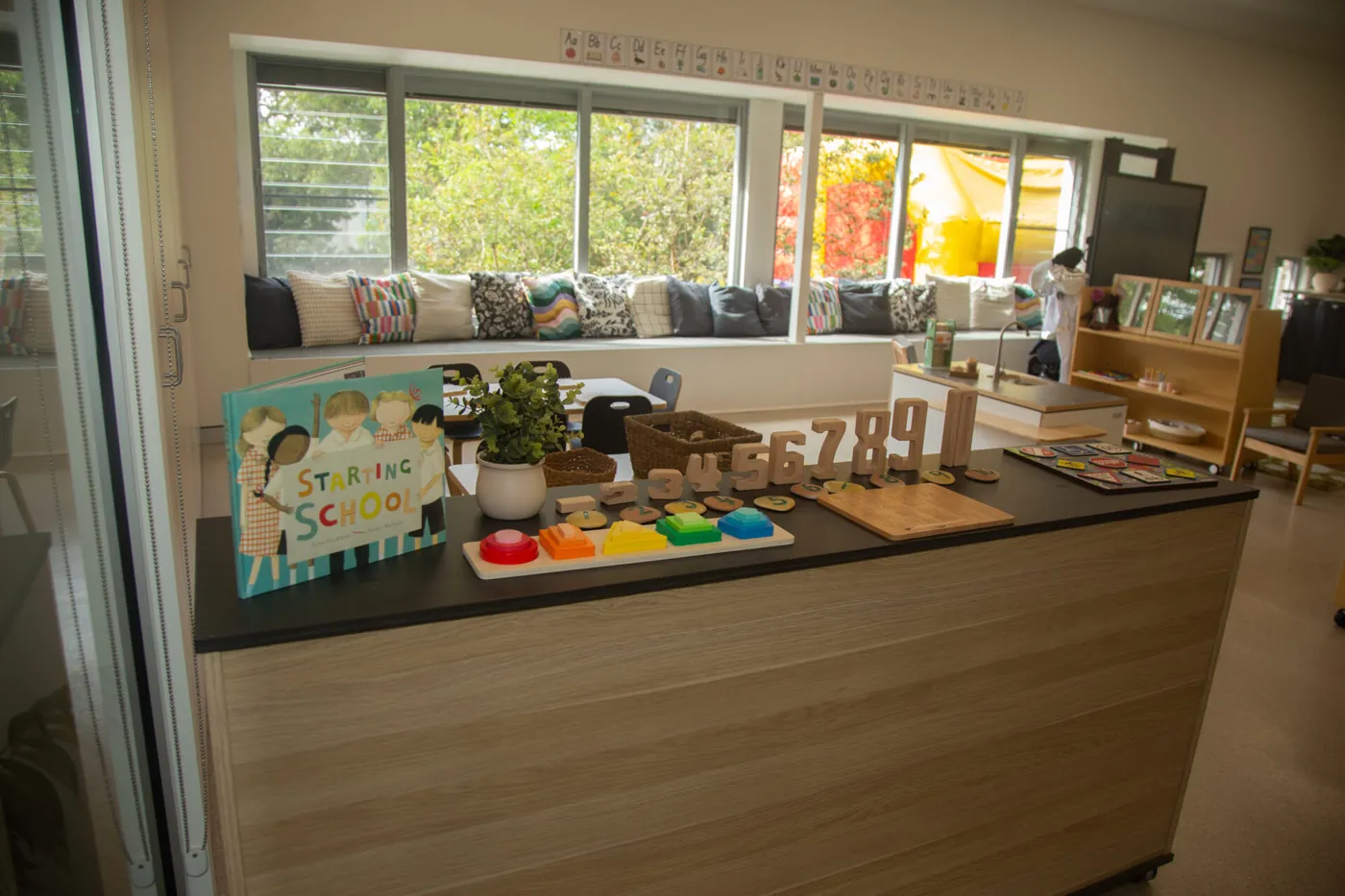
Few parenting terms cause as much confusion as these. Preschool, kindy, daycare, long day care, childcare and early learning centre are used almost interchangeably in conversation, but in NSW they mean specific things, and the differences affect your hours, your costs and the funding you can get.
Adding to the confusion, "kindergarten" means different things in different states. Here in NSW, Kindergarten is where primary school begins, not a preschool program, while in some other states "kinder" is the year before school.
This guide untangles the terms, compares hours, fees and funding side by side, and explains which option tends to suit working families. Our own service in St Ives is long day care with a preschool room, so we will explain how a preschool program inside long day care works too. More guides are in our NSW parent resources.
The three terms explained
In the preschool vs daycare question, three terms matter. Long day care is centre-based care open all day, all year, for children from babies to school age. Community preschool is an early education program, usually for three to five-year-olds, running shorter days in school terms. Early learning centre is simply another name many long day care centres use.
All day, all year
Centre-based care and education for babies to school age, typically open around 10 to 12 hours a day, most weeks of the year.
School-style days
An early education program mostly for three to five-year-olds, often open shorter days and closed in school holidays.
A name, not a type
A term many long day care centres use to highlight their education focus. The licence is usually the same as long day care.
These are not just labels. They tell you roughly when a service opens, which government funding applies, and which children it is designed for, so it pays to know which one you are looking at.
"Daycare" and "childcare" are everyday words, usually meaning long day care.
All three are approved and regulated under the National Quality Framework, assessed against the National Quality Standard and required to follow an approved learning framework, the Early Years Learning Framework.
Whatever the name, the quality rules are identical. Every service must meet the same educator ratios for its age groups, employ qualified educators and teachers, and be assessed by the NSW regulator.
The NSW Department of Education also runs preschools at some public schools, which operate on school terms and have their own enrolment rules.
Family day care, where an educator cares for a small group in their own home, is a separate option again, covered in our guide to long day care versus family day care.
Long day care
Long day care is centre-based education and care for children from babyhood to school age, open for long days through most of the year to suit working families. Children are grouped into age-based rooms, the program is built on the Early Years Learning Framework, and families can usually claim the Child Care Subsidy to reduce fees.
Hours are the headline. Plenty of centres run from around 7am until 6pm each weekday, closing only for public holidays and, in some cases, over Christmas.
Children can start as babies and stay until school, moving through rooms as they grow.
Babies and toddlers are the main reason many families choose long day care early. Community preschools rarely take children under three, so long day care is often the only centre-based option for younger children.
Meals, nappies and extras are sometimes included in the fee, depending on the centre.
The Child Care Subsidy applies, so families pay a gap rather than the full fee.
Long day care is also where most Australian children in formal care spend their days. Government data shows NSW families using centre-based day care averaged about 34 hours a week in early 2026.
Our centre is long day care: open 7am to 6pm, 52 weeks a year except public holidays, for children from six weeks to school age.
Long day care at a glance
- Ages
- Babies to school age
- Hours
- Long days, most of the year
- Subsidy
- Child Care Subsidy applies
- Suits
- Families working full or part-time
 All day, all year
Community preschool
A community preschool is a not-for-profit early education service, usually for children aged three to five, that runs school-style days during school terms. In NSW, preschool means the years before school, and Kindergarten is the first year of school. Community preschools are funded by the NSW Government rather than the Child Care Subsidy.
Days are often shorter, around school hours, and many preschools close in the school holidays.
Children often attend two or three days a week, and 600 hours a year is the benchmark government funding is built around.
Because the Child Care Subsidy does not apply, fees are reduced through NSW Start Strong funding instead.
Some community preschools offer longer days, extended hours or holiday programs, so it is worth asking each one about its actual timetable rather than assuming.
Many community preschools are run by parent committees or not-for-profit organisations, with families closely involved.
Community preschools often have a strong local identity, with long-standing ties to nearby primary schools and families who have attended for generations.
Families often describe the atmosphere as smaller and more intimate, though that really depends on the individual service rather than on the type of service.
Enrolment works differently too. Many community preschools take enrolments for the following year months in advance, with priority rules set by the service and its funding agreement.
For families with flexible work or a parent at home, the shorter hours can fit well.
Community preschool at a glance
- Ages
- Usually 3 to 5
- Hours
- Often school hours, school terms
- Funding
- Start Strong, not the CCS
- Suits
- Flexible or part-time work
Early learning centre
"Early learning centre" is a name, not a separate type of service. Most centres that use it are licensed as long day care, with the same hours, the same subsidy and the same national rules. The name signals an emphasis on education, which quality long day care should offer anyway.
In practice, a family searching for an "early learning centre" and one searching for "long day care" are usually looking at the same kind of service, just described differently.
Look past the name. A centre's quality rating, educators and program tell you far more than what it calls itself.
Some early learning centres run a structured preschool program in their older rooms; others blend education through the whole day.
What should matter to you is what happens in the rooms: how educators plan learning, how they document it and share it with families, and how the program prepares older children for school.
Our own name, Lead Early Learning Centres, follows the same pattern: we are a long day care centre with a strong education focus and a preschool program in our oldest room.
Some early learning centres are part of large national groups; others, like ours, are single local services. Either can be excellent, and the rating and people matter more than the size.
To check what a centre is licensed as, search it on StartingBlocks.gov.au, where the service type is listed alongside its quality rating.
Hours, fees and funding compared
Long day care offers longer hours all year, with fees cut by the federal Child Care Subsidy and, for children aged three and four, by the NSW Start Strong program. Community preschool offers shorter school-term days, with fees reduced by larger Start Strong amounts but no Child Care Subsidy. Which is cheaper depends on your income and the hours you need.
| Feature | Long day care | Community preschool |
|---|---|---|
| Ages | Babies to school age | Usually 3 to 5 |
| Typical hours | Long days, often 10 to 12 hours | Shorter days, often around school hours |
| Weeks open | Most of the year | Usually school terms only |
| Federal subsidy | Child Care Subsidy | Not available |
| NSW Start Strong (2026) | Up to $1,783 for 4-year-olds, $423 for 3-year-olds | Up to $3,565, or $4,456 at the maximum rate |
| Learning framework | Early Years Learning Framework | Early Years Learning Framework |
| Quality rating | National Quality Standard | National Quality Standard |
| Meals and nappies | Sometimes included | Usually packed from home |
A useful exercise is to cost a whole year of each option for your family, including holidays, and compare the totals, not just a single day.
Start Strong long day care amounts shown are the standard rates. Higher maximum rates apply only to services in areas of greater disadvantage, regional or remote services, Aboriginal community-controlled services, and Aboriginal and Torres Strait Islander children.
Community preschool Start Strong amounts apply to children enrolled for 600 hours or more a year, as set out on the NSW Department of Education's Start Strong for families page.
For long day care, the order matters: the federal subsidy comes off the fee before the state's Start Strong amount is deducted from what is left.
Most community preschools do not provide meals, so families pack lunch and snacks; most long day care centres either include food or set a menu that families pay for through the fee.
Remember that hours are not the same as value. A longer day costs more in total, but may save on other care, such as a nanny for afternoons or holiday programs.
Hours and weeks vary between individual services, so always check the specific centre or preschool you are considering.
Which one suits working families
For most working families, long day care suits best, because it covers a full working day and stays open through school holidays. Community preschool can suit families with flexible work, a parent at home, or reliable help from grandparents for pick-ups and holidays, since its hours and weeks are shorter.
The good news is that the learning is comparable. Whichever you choose, a quality service will follow the national framework and help your child grow in confidence, curiosity and friendship.
Work out the gaps. If preschool finishes at 3pm and closes for twelve weeks a year, who covers those hours?
Some parents worry that long day care means "just care" and preschool means "real learning". Under the national framework, both are expected to deliver a planned, play-based educational program.
Consider siblings. A long day care centre can take a baby and a four-year-old in one place; a preschool usually takes only the older child.
Think about your own energy too. A full-day service with one drop-off and one pick-up can make weekdays calmer for everyone, especially with more than one child.
Think about transport. One drop-off at 8am and one pick-up at 5:30pm is simpler than a mid-afternoon collection.
Think about the long run as well, over several years rather than one. A child who starts long day care as a baby can stay in the same place right through to school, with familiar educators and friends.
Some families combine the two, using preschool on some days and long day care or grandparents on others. It works, but adds logistics.
Compare the full cost, including holiday care and any extra hours. Our guide to childcare costs in NSW shows how.
Questions to ask yourself
- What hours do we need covered?
- Who covers school holidays?
- Do we have a younger child too?
- How flexible is our work?
Preschool inside long day care
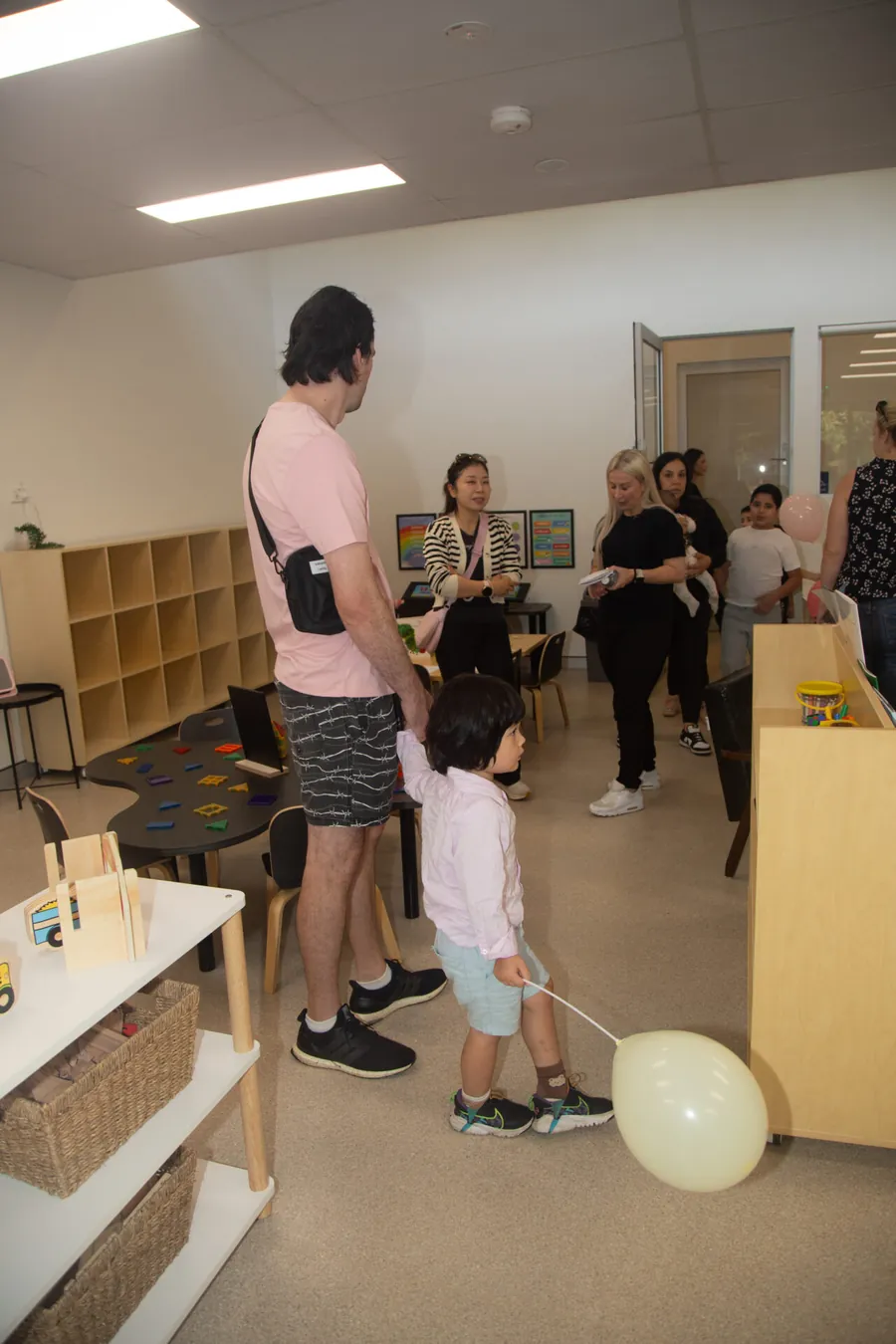
Many long day care centres run a preschool program in their oldest room, giving children the education of a preschool year within the hours of a full working day. In NSW this is sometimes called a preschool program in long day care, and it is taught to the same Early Years Learning Framework.
Children in long day care preschool programs also benefit from continuity: the same friends, the same building and educators who have watched them grow since they were small.
The preschool year usually refers to the year before Kindergarten. At our centre, that is the Inventors room, for four to five-year-olds.
That final year before school is when our School Readiness Program runs, covering early literacy and numeracy, resilience, social skills and independence, with Reading Eggs and Mathseeds.
Preschool programs in long day care often mirror the rhythm of a school day inside the longer day: group times, focused learning in the morning and more relaxed play later.
Children get the same long day: 7am to 6pm, all year, with meals included, so families do not have to choose between education and hours.
Degree-qualified teachers play a central role in the preschool year, and national rules require centres to employ them according to how many children attend.
Starting in long day care earlier also means the move into the preschool year is simply a move up the corridor, with educators who already know your child.
Read about the room on our preschool room page, or the program on our School Readiness Program page.
How NSW funding differs between them
NSW funding differs because long day care families receive the federal Child Care Subsidy plus a smaller Start Strong amount, while community preschool families receive a larger Start Strong amount and no Child Care Subsidy. In 2026, Start Strong in long day care is up to $1,783 a year for four-year-olds at standard rates.
| Setting and age | Standard | Maximum rate |
|---|---|---|
| Long day care, aged 4 by 31 July | $1,783 | $2,563 |
| Long day care, aged 3 by 31 July | $423 | $769 |
| Community or mobile preschool, 600+ hours | $3,565 | $4,456 |
In long day care, Start Strong is paid to the service and passed on as a fee reduction, spread across the weeks the centre operates. At a centre open 50 weeks, that is about $35.66 a week for a four-year-old at the standard rate.
Start Strong is not something you claim from the government yourself. The service applies the fee relief, which appears as a reduction on your statements.
Children must meet the age rules on 31 July of the year. A child who is three on that date attracts the three-year-old amount for the whole year, even after turning four.
A family nominates one service to receive Start Strong at a time, using a fee relief declaration form from that service.
Keep the Child Care Subsidy in view. For many families on low and middle incomes, it covers most of the long day care fee, which narrows or reverses the gap with community preschool fees.
Which setting costs less overall depends on income, days and hours. A family on a lower income may pay little in either; a higher-income family with limited subsidy may find the preschool fee lower, but only if the shorter hours work for them.
Read the full details in our Start Strong guide for families, or run your numbers in the childcare cost estimator.
Preschool or daycare, answered
Is preschool better than daycare?+
Neither is automatically better; both follow the same national learning framework and are rated against the same quality standard. The difference is mainly hours and funding. A high-quality long day care centre with a preschool program can offer the same education as a community preschool, within a full working day.
Can I get preschool hours in long day care?+
Yes, many long day care centres run a preschool program in their oldest room, so your child gets preschool learning during the full day. At our centre, the Inventors room is where the preschool year happens, and families still get our full 7am to 6pm day, all year round.
Which is cheaper?+
Which is cheaper depends on your income and the hours you need. Community preschool fees are reduced by larger Start Strong amounts but no federal subsidy; long day care gets the Child Care Subsidy plus a smaller Start Strong amount. Compare the gap you would actually pay, including school holidays.
See a preschool room inside long day care
Visit our Inventors room and see how the preschool year works.