
Toddlers: 2 to 3 Years
Two year olds want to climb everything, name everything and do everything themselves, usually all before morning tea. Our Toddler room is the toddler daycare room at Lead in St Ives, built for that energy. It cares for children from their second birthday until they turn three, with one educator for every five children, a program shaped around language, movement and independence, and patient support for the big firsts of this age, from toilet learning to sharing a toy.

This guide is for parents of two year olds, whether your child is moving up from our Nursery, starting care for the first time, or switching from another centre. Below you will find how the room is set up, what the 1:5 ratio means day to day, how educators support the rapid jump in language at this age, why so much of the day happens on the move, how toilet learning works between home and the centre, how we help with tantrums and biting, a sample day, and how children move up to Pre-Kindy.
Comparing rooms for siblings, or not sure which group suits your child? See our overview of every age group and room at Lead, or call (02) 7238 8668 to talk it through.
Our toddler room
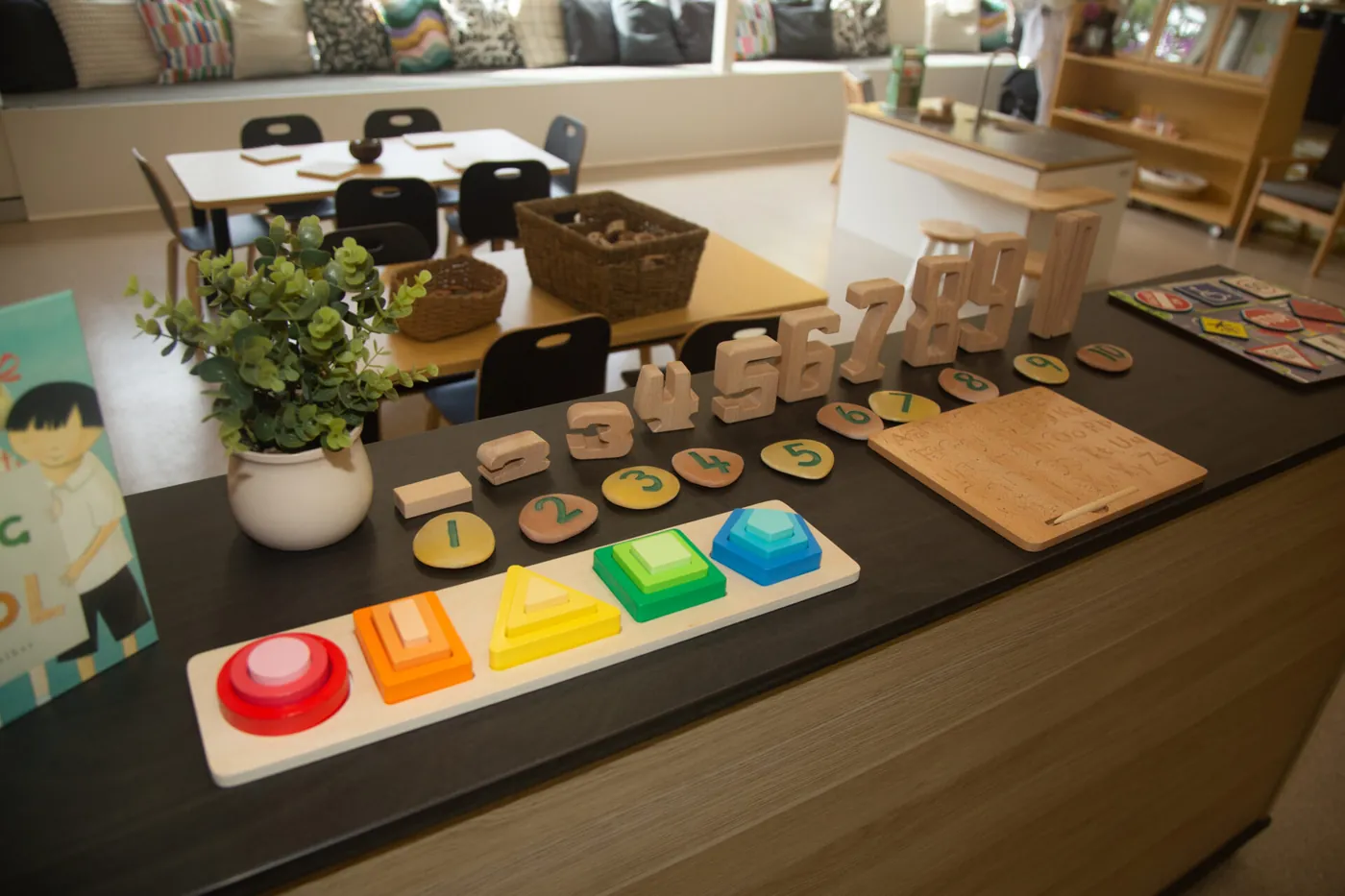
Our toddler room is a spacious, hands-on room for two year olds, arranged in small play areas so children can move freely between building, books, art, pretend play and sensory trays. Good toddler daycare gives children room to explore safely, and the space is set up so they can reach, choose and tidy most things themselves.
Toddlers learn with their whole bodies, so furniture is low and open floor space is generous. There is room to push a trolley, build a block tower and knock it over, which is half the fun.
Materials change often. When a group gets hooked on trucks or bugs, educators bring in more of it, and play grows from there. A child fascinated by pouring might find jugs, funnels and coloured water the next day, picking up early maths words like full, empty and more along the way.
Independence is built into the room. Children hang up their own bags, find their own water bottles and wash their hands before meals, with an educator nearby to help.
Outdoor time is a big part of every day. The playground has shade sails, climbing equipment and space to run, and toddlers are out in it every morning and afternoon, weather permitting.
Parents sometimes look for preschool for 2 year olds. In NSW, preschool usually means the year or two before school starts, so for a two year old the Toddler room is the right fit. The learning is still real: it is simply planned for how two year olds think and play.
Extracurricular sessions such as sport, yoga and languages are adapted for this age and included in the daily fee. For two year olds they look like movement games and songs rather than lessons.
Toddler room at a glance
- Ages
- 2 to 3 years
- Ratio
- 1 educator to 5 children
- Focus
- Language, movement, independence
- Included
- 5 meals, nappies, wipes, sunscreen
- Updates
- Daily, through the KinderM8 app
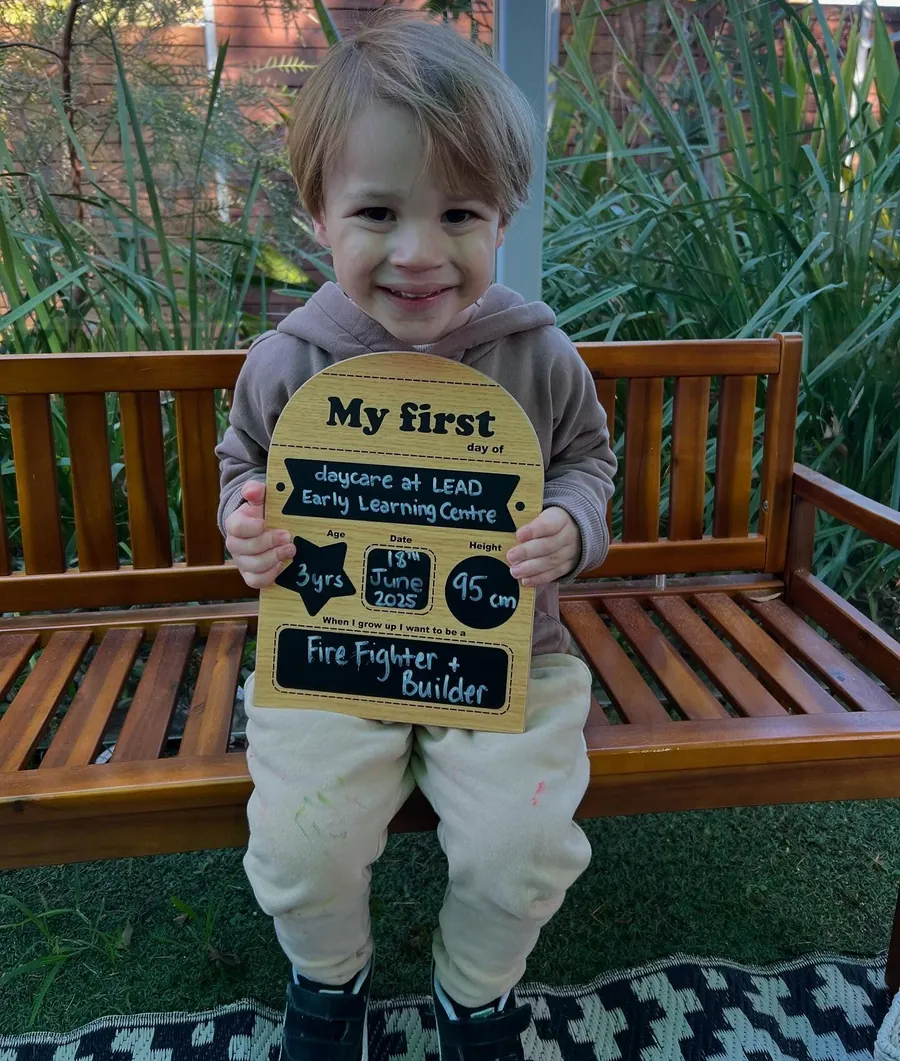
Educator to child ratio
The Toddler room runs at one educator to every five children, the ratio required under the national regulations in NSW for children over 24 months and under 36 months. It sits between the 1:4 of the Nursery and the 1:10 that applies once children turn three.
Why is it tighter than the rooms for older children? Two year olds move fast and still need a lot of hands-on help, with meals, nappies, handwashing, sleep and settling.
Five children per educator means someone can sit on the floor and read with a small group while another educator helps with nappy changes, and a third is outside with the climbers.
The ratio counts educators who are actively with the children. The cook, the office team and anyone on a break are not included.
We roster so the ratio holds through the parts of the day where it is hardest to keep, such as lunch breaks, rest time and the late afternoon.
Our educators are permanently based in the room, so children see the same adults each week. At two, that familiarity makes separation at drop-off far easier.
How this compares across rooms and states is set out in our table of ratios by room.
What 1:5 looks like
- 10 toddlers
- At least 2 educators
- 15 toddlers
- At least 3 educators
- 20 toddlers
- At least 4 educators
Ratio checked against the national ratio table from ACECQA.
 Plenty of hands
Language explosion and how we support it
Between two and three, most children move from two-word phrases to sentences of three or more words, and their vocabulary grows almost daily. Educators support that growth by talking with toddlers constantly: naming what they see, adding a word to what the child says, reading and singing every day, and waiting long enough for a reply.
| Skill | Around 2 years | By 3 years |
|---|---|---|
| Sentences | Puts 2 or 3 words together, like "red apple" | Uses sentences of 3 or more words |
| Grammar | Mostly naming words | Starts using past tense and plurals, with fun mistakes like "goed" |
| Being understood | Strangers understand about half | Strangers understand at least three quarters |
| Following directions | Simple one-step requests | Familiar two-step instructions |
Every child's timeline is different, and the table is a guide rather than a test.
In the room, educators use what speech pathologists call expansion. If a child says "car go", the educator replies "Yes, the red car is going fast", modelling one step further.
Questions start to arrive too. Toddlers begin asking who, what and where, and educators treat every question as a chance for a short conversation rather than a quick answer.
Books are everywhere, and story time happens more than once a day. Toddlers love the same book again and again, and repetition is exactly how new words stick.
Everyday routines are full of language. Nappy changes, handwashing and lunch are all chances to chat, count and name, one to one. Those small moments add up to hundreds of conversations a week.
Songs and rhymes do quiet work too. Clapping out a rhyme builds the listening skills children later need for reading, and toddlers soon join in with the actions and the last word of each line.
Children who hear two languages at home may mix them for a while, which is normal. If an educator notices a child is not yet combining words by around two and a half, they will raise it gently with you. Early advice from a speech pathologist can make a real difference.
Source for the milestones above: Raising Children Network, language at 2 to 3 years.
Movement, climbing and gross motor play
Toddlers need to move, a lot, and our program gives them hours of active play every day, indoors and out. Climbing, running, balancing and throwing build strength and coordination, and they also help children concentrate better when it is time to sit for a story.
Climbing
Low climbing frames, ramps and steps let toddlers test their limits with an educator close by. Learning to judge a safe height is a skill in itself.
Ball play
Kicking, rolling and throwing soft balls builds hand and eye coordination, plus early turn-taking with a friend.
Music and dance
Action songs, stomping, marching and freeze games combine movement with listening and following simple directions.
Toddler yoga and sport
Our included extracurricular sessions, adapted for two year olds: animal poses, obstacle courses and simple running games.
Risky play, in small doses, is good for toddlers. A wobbly balance beam or a slightly steep slope teaches them to assess risk, with an educator standing close.
Movement also helps toddlers settle. A child who has run, climbed and dug in the sandpit all morning usually sleeps better and finds sitting for lunch much easier.
Fine motor skills get attention as well. Playdough, pegs, chunky crayons and pouring water between jugs all strengthen the small hand muscles that later hold a pencil.
Dress your toddler for movement: comfortable clothes, closed shoes they can run in, and a hat for outdoor play. Sunscreen is applied by educators and included in the fee.
Educators position themselves where they can see the whole play space, and equipment is checked every morning before children head outside.
Messy play is part of it, which is why we ask for two or three spare sets of clothes each day.
Beginning toilet learning
Toilet learning in the Toddler room starts when your child shows they are ready, usually from around two years, and always in step with what you are doing at home. We agree on the approach with you, use the same words and routine, and treat accidents calmly so your child never feels in trouble.
Signs of readiness
Dry nappies for two hours or more, telling you about a wee or poo, and interest in the toilet.
Agree together
We talk about the words you use at home, timing and what your child will wear.
Build a routine
Regular reminders, especially after meals and sleep, with praise for trying.
Calm about accidents
Accidents are expected. We change your child quietly and try again later.
There is no set age, and no race to finish. Some children are ready soon after two, others closer to three, and the Raising Children Network notes there is no big difference between boys and girls.
Seeing friends use the toilet is often the best motivation. Many toddlers who resist at home are keen to try at the centre because their friends are doing it.
Big changes can slow things down. If a new baby or a house move is coming, it can be worth waiting a few weeks before starting. Starting when life is calm usually means a quicker, happier result.
Dress for success. Elastic-waisted pants your child can pull down alone work far better than overalls, belts or tricky buttons.
Nappies and wipes stay included in the daily fee while your child is learning. Pack extra spare clothes during the first weeks, as accidents are part of the process.
Tell us when things change at home, such as a switch to undies on weekends, so we can match it on your child's days with us.
Our guide to toilet training and daycare covers how to get started at home and keep it consistent.
Managing big feelings
Tantrums, biting, snatching and tears are a normal part of being two, because toddlers feel strongly but do not yet have the words or self-control to manage it. Educators respond calmly, keep everyone safe, name the feeling for the child, and then show them what they can do instead.
Naming feelings is the starting point. "You are cross because Ava has the digger" gives a toddler a word for what is happening inside.
Sharing is hard at two, and we do not expect toddlers to hand over a toy on request. Instead, educators teach turn-taking, often with a sand timer or a simple "your turn, then Max's turn", and make sure popular toys come in multiples.
Choices help. "Do you want to wait for the digger or use the dump truck?" gives some control back to a child who feels they have none.
A quiet corner with cushions and books gives toddlers a place to settle, never as a punishment and always with an educator nearby.
Biting is common at this age, often from frustration, excitement or teething. When it happens, the child who was bitten is comforted first, the bite is treated, and the child who bit is told simply, "Biting hurts. Teeth are for food."
Both families are told the same day. Under Regulation 86 of the National Regulations, families must be notified of an incident as soon as practicable and within 24 hours, although we never share the other child's name.
If biting keeps happening, educators watch for patterns, such as a crowded area or a tired time of day, and change the room or the routine to prevent it.
Our calm response, step by step
- Keep everyone safe
- Comfort the hurt child first
- Name the feeling in simple words
- Show what to do instead
- Tell families the same day
 Words for feelings
A typical toddler day
A typical toddler day follows a steady group routine across our 7:00am to 6:00pm hours, including five meals, a long stretch of outdoor play each morning, a rest after lunch and plenty of stories and songs. Predictable routines help two year olds feel secure, because they know what comes next.
- 7:00am
Hello and breakfast
Early arrivals eat breakfast together, then choose from quiet play while friends arrive.
- 9:00am
Group time and morning tea
A short song and story circle, then fruit and a drink at the table.
- 9:30am
Outdoor play
Climbing, sandpit, bikes and ball games, with sunscreen and hats on.
- 10:45am
Indoor projects
Art, sensory trays, building or an extracurricular session such as yoga or sport.
- 11:30am
Lunch
A cooked lunch, with toddlers practising spoons, cups and serving small portions.
- 12:15pm
Rest time
A sleep or quiet rest on beds, with bedding and comfort items from home.
- 2:30pm
Afternoon tea and play
A snack as children wake, then indoor and outdoor play.
- 4:30pm
Late snack and wind down
A light snack, books and puzzles until families arrive.
Times are a guide and shift a little with the group and the season. Nappy changes and toilet visits happen right through the day, and your daily update in the app shows what your child ate, how long they rested and what they played.
Not every two year old still sleeps in the day. Children who do not fall asleep rest quietly for a while and then move to calm activities such as puzzles or books, so they are not lying awake for long. We follow your lead on whether your child needs a nap to cope with the evening.
All five meals, nappies, wipes and sunscreen come out of one daily fee. To see what that works out to after the Child Care Subsidy, try our toddler daycare cost estimator.
Moving up to Pre-Kindy
Children move from the Toddler room to Pre-Kindy around their third birthday, when they are ready for longer group times, more complex play and a room that runs at one educator to ten children. The move happens gradually, with visits alongside a familiar educator, and we plan the timing with you.
This move is often easier than the first start in care, because the building, the playground and many of the faces are already familiar.
Readiness matters as much as age. We look at how your child manages separation, joins group activities and communicates their needs.
Toilet learning does not need to be finished. Plenty of children are still learning when they move up, and the Pre-Kindy team carries on the same routine.
The Pre-Kindy room brings longer projects, early mark-making and counting woven into play, and more time working in small groups with friends.
Toddler educators hand over what they know, from favourite activities to the best way to comfort your child.
What changes next is set out in our Pre-Kindy room guide for 3 year olds.
Toddler room, answered
What ratio is the toddler room?+
The toddler room runs at one educator to every five children, the NSW requirement for children aged over 24 months and under 36 months. Only educators working directly with children count, and we roster so the ratio holds all day, including lunch breaks, rest time and the late afternoon.
Do you help with toilet training?+
Yes, educators support toilet learning once your child shows signs of readiness, usually from around two years. We agree the approach with you so home and the centre use the same words and routine. Accidents are handled calmly, and nappies and wipes stay included while your child learns.
How do you handle biting or hitting?+
We respond calmly: comfort the hurt child first, tell the other child simply that biting or hitting hurts, and show them another way to express the feeling. Both families are told the same day without naming the other child, and educators look for patterns to prevent it happening again.
Can my toddler start if they have never been in care?+
Yes, many children start care for the first time in the Toddler room. We plan a personalised orientation with short visits where you can stay, so your child gets to know the room and educators first. Two year olds can find separation hard at first, and a gradual start makes a big difference.
See the Toddler room in full swing
Morning tours show the room at its busiest. Bring your two year old and let them explore.