
A Drop-Off Routine That Actually Works
The most reliable daycare drop off tips come down to three words: short, warm and consistent. A predictable routine, the same goodbye every day, and a confident exit help most children separate faster than long, wavering farewells. This guide shows how to build that routine, with word-for-word scripts for the hard mornings.
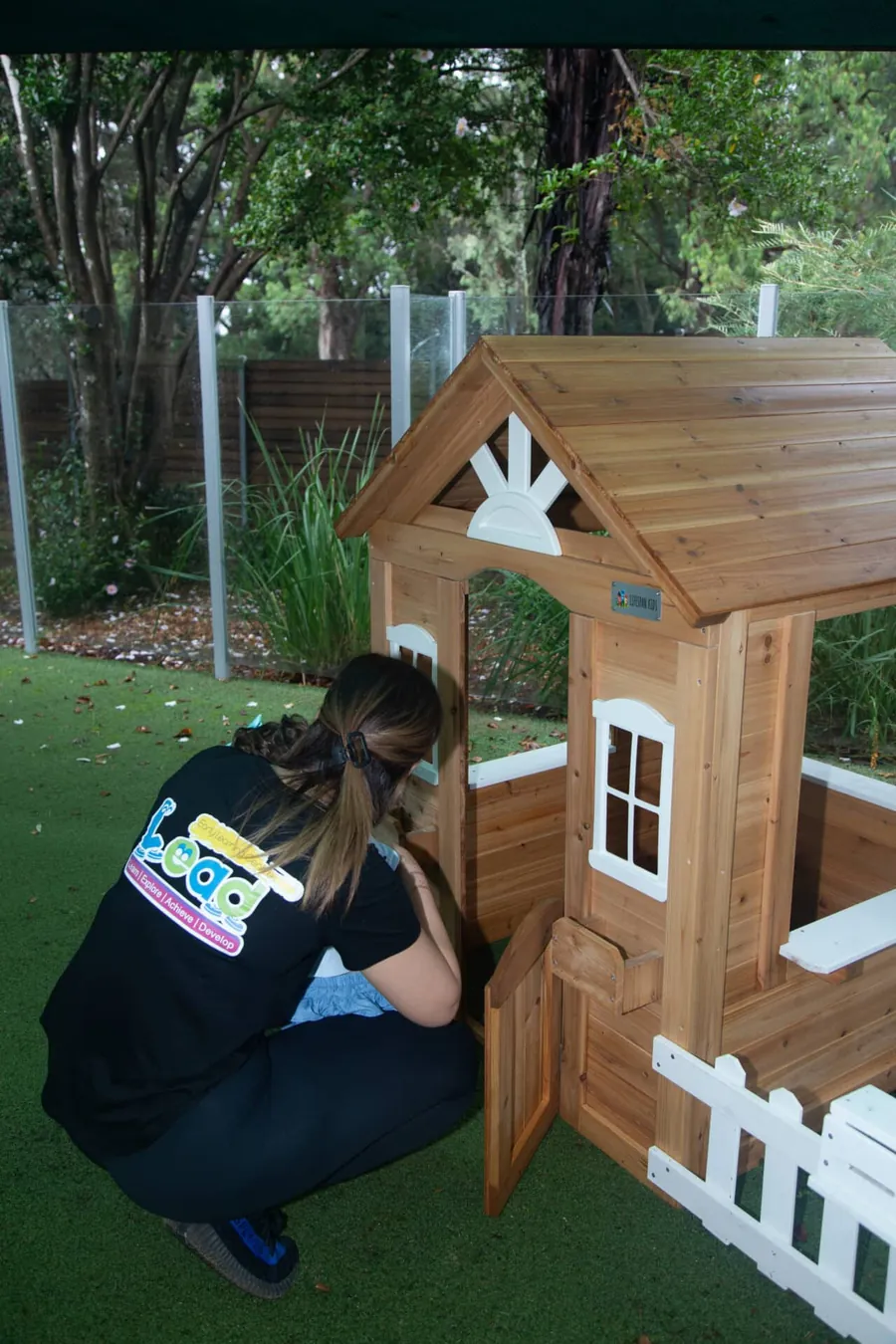
Drop-off is often the hardest few minutes of a parent's day, and these daycare drop off tips are designed for real, rushed mornings. The good news is that it is also one of the most fixable. For the first weeks of care, see our guide to settling into daycare. This page is about the everyday routine that follows, and more parent guides are in our resources library.
Why routines beat improvisation
Young children cope with separation far better when they know exactly what will happen. A routine turns drop-off from an unknown into a sequence they can predict: bag on the hook, wash hands, say hello to an educator, one hug, a wave at the window. When every step is familiar, there is less room for worry.
Predictability lowers stress hormones in children and adults alike.
A routine gives your child jobs to do, which feels better than waiting for you to leave.
It also stops each morning becoming a new negotiation.
Every family's routine can look different. What matters is that it stays the same. Pregnancy, Birth and Baby also recommends a regular drop-off routine and a brief goodbye.
A routine gives
- Predictability
- A job to do
- A clear ending
- Fewer negotiations
 Same steps daily
Short, warm, consistent: the formula
Short means a few minutes, not twenty. Warm means a real hug, a smile and a clear "goodbye, I'll see you after rest time". Consistent means the same steps, in the same order, whoever does drop-off. Use the builder below to choose your family's steps, then copy the routine to share with anyone who does drop-off.
The goodbye ritual
A goodbye ritual is a short, special action you do every time you part: a secret handshake, three kisses, a phrase you both say. It signals clearly that you are leaving and that you will come back. Children find comfort in its sameness, and it gives the goodbye a satisfying end.
Keep it under a minute, so it cannot stretch into a delay.
Let your child help invent it. Ownership makes it more meaningful.
Tie your return to the day's routine, not the clock: "after afternoon tea", not "at 4:30".
Share the ritual with grandparents, partners and anyone else who takes your child in, so it never changes.
What prolonging does
Staying longer when your child is upset feels kind, but it usually makes separation harder. Each extra minute tells your child the goodbye is negotiable, and coming back after leaving restarts the whole process. Most children settle within minutes of a parent leaving, once they are engaged by an educator and an activity.
If you have said goodbye, go, even if there are tears.
Ask educators to message or photograph your child once they have settled. KinderM8 updates can show you the tears did not last.
You are welcome to call the centre later if you need reassurance. Call (02) 7238 8668.
Never sneaking out, and why
Slipping away while your child is distracted avoids tears in the moment, but it costs trust. A child who looks up to find you gone may become clingier and more watchful at future drop-offs, afraid you will vanish again. A clear, calm goodbye, even a tearful one, teaches your child that you leave, and you come back.
Always say goodbye, however brief.
Hand over to an educator so your child has someone to turn to.
Tears after a goodbye are a healthy sign of attachment, not failure.
Our guide to separation anxiety explains the emotional side.
A clear goodbye
- Builds trust
- Shows you return
- Hands over to an educator
 Say goodbye, always
Scripts for hard mornings
On a tough morning, having the words ready helps you stay calm and brief. These scripts name the feeling, state what will happen and hand over to an educator. Adapt the words to your child, but keep the structure: acknowledge, reassure, go.
Clinging at the door
You wish I could stay. I'm off to work now. Your educator is here with you, and I'll see you when afternoon tea is finished.
"Don't go!"
It's hard to say goodbye. I always come back. Let's do our three kisses, then your educator will show you the playdough.
Refusing to get out of the car
We can walk in together, or I can carry you. You choose. Then we'll say goodbye inside.
After a bad night
You're tired today. The educators know, and you can have a rest if you need one. See you after lunch.
Use your child's educator's real name in place of "your educator". Hearing a familiar name is part of the reassurance.
When drop-off suddenly regresses
It is common for a child who has been happy at drop-off for months to suddenly start crying again. Regression often follows illness, holidays, a new sibling, a house move, a room change, or a developmental leap. It usually passes within a week or two if you keep the routine steady and stay calm.
Go back to basics: the same routine, the same goodbye, the same handover.
Talk to educators. They can tell you how your child is once you have left, and look for anything at the centre that has changed.
If distress continues for weeks, or your child seems unhappy during the day too, ask for a meeting to make a plan together.
A room move can trigger regression. See our guide to moving rooms.
Drop-off, answered
How short is short?+
Aim for about five minutes from arriving in the room to leaving. That is enough to sign in, hang up the bag, greet an educator and say goodbye. On a hard morning, keep the goodbye itself under a minute. Longer stays usually make separating harder, not easier.
What if I am the problem?+
You are not a problem, but your feelings do show. Children read our faces and voices, so a worried, hesitant goodbye can make them anxious too. Practise a calm, confident script, save your own tears for the car, and trust the educators. It gets easier for parents as well.
Does a comfort item help?+
Often, yes. A soft toy, blanket or small item from home can help a child feel secure, especially at rest time. Comfort items are welcome at our centre. Label it clearly, and consider a spare at home in case it goes missing or needs washing.
See where the morning begins at our St Ives centre.
Warm welcomes every morning
Tour our rooms and meet the educators who greet your child.