
Meals and Nutrition
Good childcare nutrition means regular, balanced meals that keep children fuelled through a busy day of play and learning. At our St Ives centre, five meals and snacks are prepared fresh on site every day and served in our children's dining room, all included in the fee. We are a Nut Aware service with a plan for every child with an allergy.
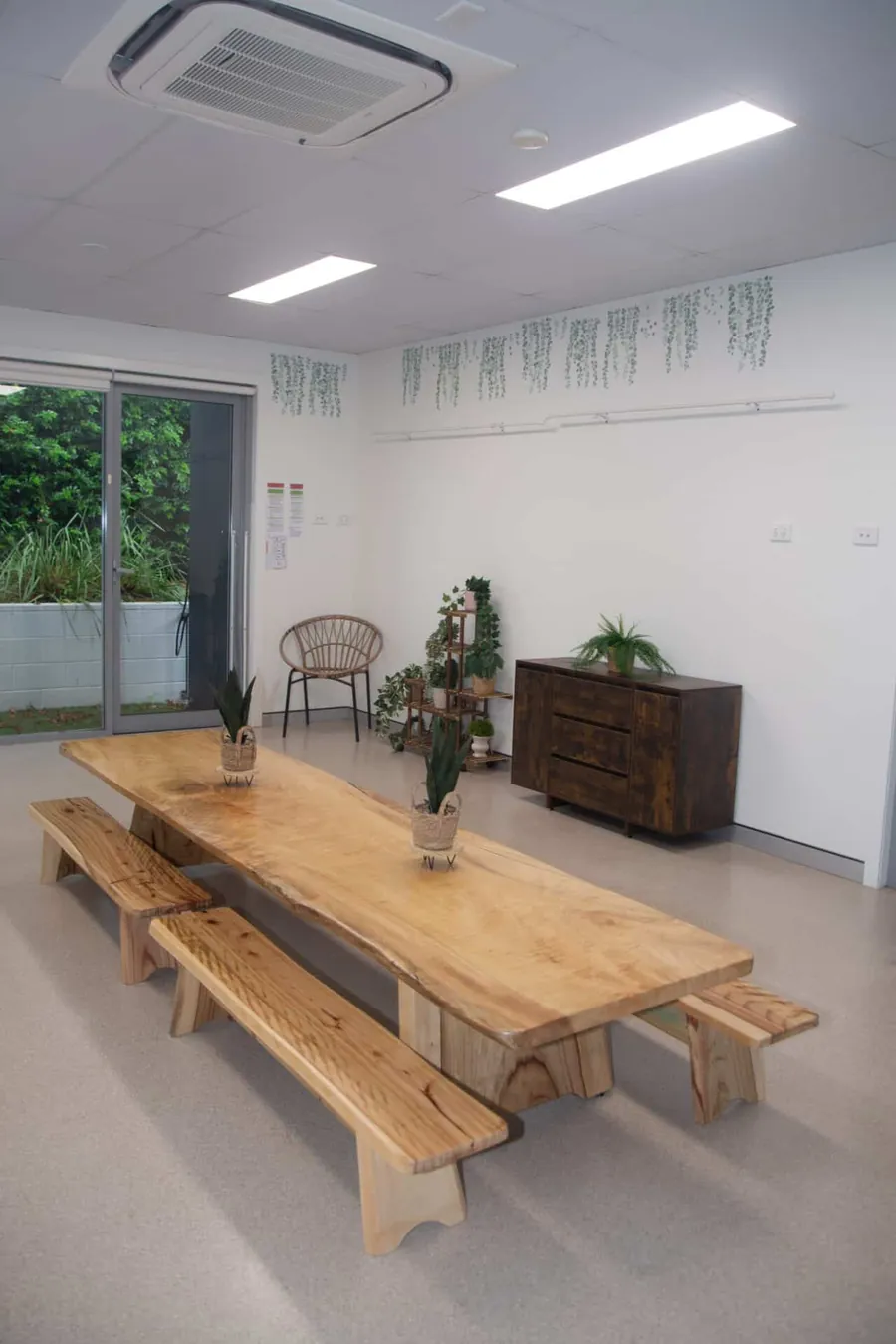
Food is a big part of a day in care. A child who arrives at seven and leaves at six may eat most of their meals with us, so what is on the plate, and how mealtimes feel, matters a great deal. Mealtimes are also learning time: trying new tastes, serving, pouring, talking with friends and practising table manners.
This page explains how meals work at our centre, how we keep children with allergies safe, how we handle cultural and dietary needs, and what we do for fussy eaters. For more guides on everyday care, visit our resources for families.
Five meals and snacks every day
Our kitchen serves five eating times a day, starting with breakfast for children who arrive early and ending with a light snack before pick-up, with morning tea, a hot midday meal and afternoon tea in between. Everything is made fresh on site and covered by the daily fee.
Meals are served in our dedicated children's dining room, where children sit together at shared tables.
Water is available all day, and children bring their own labelled bottle to refill.
Babies eat to their own routine. Families supply formula if needed, and solids are introduced in step with what you do at home.
Portions suit each age group and appetite, and mealtimes are unhurried, giving children time to chat, try things and finish at their own pace.
The late snack means children collected at six are not starving on the drive home, which helps evenings too.
How our menus are planned
Our menus are planned around the five food groups in the Australian Dietary Guidelines: vegetables, fruit, grains, protein foods and dairy or alternatives. Meals are cooked fresh on site and planned so children meet a wide range of foods over the weeks.
Strong childcare nutrition is about patterns across the week rather than any single meal. A child who eats lightly at lunch may make up for it at afternoon tea.
Variety matters. Children often need to see a food many times before they will try it, so favourites and new foods appear side by side.
Sometimes-foods are kept for occasions. Everyday meals focus on whole foods rather than packaged snacks.
Ask for the current menu at any time, so you can plan dinners that complement what your child ate that day.
That care was recognised in 2026 with a nomination for Food, Nutrition and Menu Design at the national early childhood awards.
The five food groups
- Vegetables and legumes
- Fruit
- Grain foods, mostly wholegrain
- Meat, fish, eggs, tofu and legumes
- Milk, yoghurt, cheese or alternatives
 Colour on every plate
Nut aware and allergy management
As a Nut Aware service, we do not serve nuts, and we manage every known allergy with an individual plan agreed with the family. "Nut Aware" rather than "nut free" is deliberate: allergy experts advise that no setting can guarantee it is completely free of an allergen, so the focus is on careful, consistent practice.
Tell us about any allergy before your child starts. We build a management plan with you and share it with everyone who cares for your child.
We ask families not to send food from home unless we have agreed it together. That includes birthday treats, which we plan so every child can join in safely.
Educators are trained in allergy and anaphylaxis management, and kitchen practices are set up to avoid cross-contact.
Children are encouraged not to share food, and hands are washed before and after eating.
For trusted information on allergies, see the Australasian Society of Clinical Immunology and Allergy (ASCIA).
Anaphylaxis and medical plans
Children at risk of anaphylaxis need a current ASCIA Action Plan from their doctor and their adrenaline injector at the centre every day they attend. The national regulations require centres to have a medical conditions policy and staff trained in anaphylaxis management on site, and we build a risk-minimisation plan with each family.
Bring the action plan, signed by your child's doctor, before the first day.
Adrenaline injectors must be in date, so keep an eye on the expiry and replace them before they lapse.
We also plan for asthma, diabetes, epilepsy and other conditions with the same care, using your child's medical plan.
Update us whenever a plan changes, so every educator has the latest version.
Bring before day one
- ASCIA Action Plan, signed by a doctor
- Adrenaline injector, in date
- Any other medical plans
- Emergency contact details
 A plan for every child
Cultural and dietary requirements
Cultural, religious and dietary requirements are welcome, and the best first step is to talk to us before your child starts. Tell us what your child does and does not eat and why, and we will work out together what our kitchen can provide, so your child can share mealtimes with their friends.
Families often share cultural traditions with us, and food is a lovely way to bring those traditions into the room.
Some families bring particular foods for festivals or celebrations. Talk to us first, so the room can plan how to share them safely with everyone.
Medically required diets, such as coeliac disease, are treated like allergies, with a written plan.
Vegetarian and other family food choices can be discussed too. Let us know early so the menu can accommodate them where possible.
If a requirement changes, tell the room and the kitchen straight away, and we will update your child's plan and let every educator in the room know.
Supporting fussy eaters
Fussy eating is common in young children, especially toddlers. We support fussy eaters by offering new foods alongside familiar ones, never forcing or bribing, and letting children serve themselves and decide how much to eat. Eating with friends who enjoy a food is often the nudge a hesitant child needs.
Children decide how much they eat; adults decide what is offered. That simple split takes pressure off everyone.
Tastes change fast in the early years. A toddler who refuses everything green may happily eat broccoli a few months later, so we keep offering without fuss.
Repeated exposure works. A food refused ten times may be tried on the eleventh.
Many parents are surprised by what their child eats at care. Peer example is powerful.
We tell you how your child ate each day, so you can balance meals at home. If growth or appetite worries you, your GP or a child and family health nurse can help.
What helps
- New foods beside familiar ones
- No pressure, no bribes
- Children serve themselves
- Eating together with friends

Children learning to cook
Children at our centre take part in weekly cooking classes as part of the extracurricular program included in the fee. They wash, measure, mix and taste, learning where food comes from, practising maths and fine motor skills, and often becoming more willing to try foods they have helped make.
Recipes are chosen to be safe and simple for small hands, with plenty of fruit and vegetables to chop, peel and taste.
Cooking is a sneaky maths lesson: counting spoonfuls, comparing amounts and watching things change.
Children also talk about where ingredients come from, which links cooking to our sustainability program and to the garden and the seasons.
It builds independence too. Children who can spread, pour and stir at care often want to help at home.
Cooking activities follow the same allergy precautions as our kitchen.
Read more about the weekly sessions on our extracurricular activities page.
Questions parents ask about food
Do I need to pack food?+
Leave the lunchbox at home: our kitchen prepares every meal and snack your child eats with us, and it is all part of the fee. Families bring a labelled water bottle, and formula for babies who need it. Outside food only comes in by arrangement, to protect children with allergies.
How do you manage allergies?+
We manage allergies with an individual plan for each child, agreed with the family, as part of our Nut Aware practice. Our educators hold allergy and anaphylaxis training, the kitchen works to prevent cross-contact, and children at risk of anaphylaxis have their ASCIA Action Plan and adrenaline injector on site.
Can you cater for dietary requirements?+
Talk to us before your child starts, and we will work out together what our kitchen can provide for cultural, religious or medical dietary needs. Medically required diets are managed with a written plan. Our aim is for every child to share mealtimes happily with their friends.
What if my child is a fussy eater?+
Fussy eating is very common, and we never force or bribe children to eat. New foods sit alongside familiar ones, children serve themselves, and eating with friends often encourages them to try something new. We let you know how your child ate so you can balance meals at home.
See our St Ives early learning centre.
Come and see the dining room
Ask for this term's menu when you visit.