
Inclusion and Additional Needs
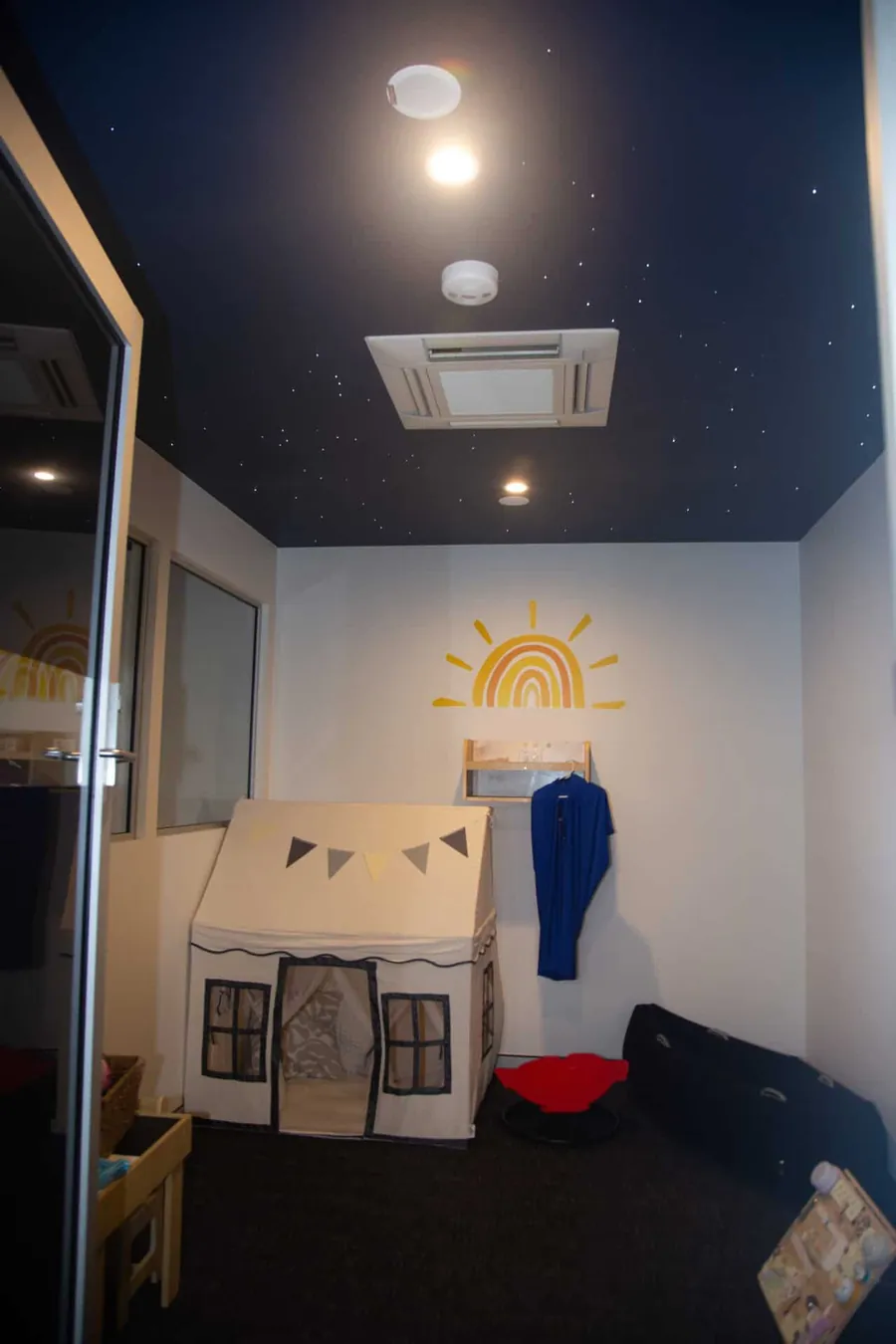
Good inclusion support childcare families can rely on means every child takes part fully in the day, with extra help where they need it. At our St Ives centre, educators work alongside speech pathologists, occupational therapists and early intervention teams, and a dedicated therapy room gives visiting professionals a quiet space to work with children on site.
Many families come to us with a question they are not sure how to ask. Perhaps their child has a diagnosis, is on a waiting list for an assessment, or simply seems to need a little more help with speech, movement, feelings or play. Whatever the situation, the answer starts the same way: tell us about your child, and we will work it out together.
This page explains how inclusion works at our centre, how we collaborate with therapists, what individual planning looks like, how the government's Inclusion Support Program can help, and how we keep you informed. More guides for families are in our parent resources section.
Our approach to inclusion
Our approach to inclusion starts from the belief that every child belongs in the room and can learn alongside their peers. We adapt the environment, routines and activities so each child can take part, rather than expecting the child to fit a fixed program. Inclusion support childcare works best when it is built into everyday practice.
Inclusion is also a legal and quality expectation. The national framework expects every service to be inclusive, and the Early Years Learning Framework puts equity and high expectations for every child at its heart.
We look at what helps each child participate: a visual timetable, a quiet corner, a movement break or a different way to join group time.
Our Reggio Emilia inspired program suits this well. Learning grows from each child's interests and strengths, and children express ideas in many ways, not only through words.
Families are partners, not visitors. We invite you to share what works at home, from the words your child uses to the things that help when they are overwhelmed.
Every child in the room benefits. Children learn empathy, patience and different ways to communicate when they grow up alongside friends with a range of abilities.
Inclusion in practice
- Adapting the room, not the child
- Visual supports and clear routines
- Quiet spaces and movement breaks
- Learning built on strengths
- Working closely with families
 Every child belongs
Working with speech pathologists and occupational therapists
We work with speech pathologists and occupational therapists by welcoming them into the centre, sharing what we see in the room, and building their strategies into your child's day. Our dedicated therapy room gives visiting therapists a quiet space for one-on-one sessions, so children do not always need to miss care for appointments.
Many families find on-site sessions easier to fit around work, and children often feel more relaxed in a space they already know.
Therapists often visit to see a child in their everyday setting, which gives them a far truer picture than a clinic room.
Educators learn the goals and techniques the therapist is using, such as a way of modelling words or a sensory strategy, and use them through the day.
With your consent, we share observations with your child's therapists, and they share recommendations with us.
Speech and language support is one of the most common needs in early childhood. Our events calendar has also included a parent masterclass with a speech pathologist; see our events and community page.
Occupational therapists often help with fine motor skills, sensory needs and self-care, such as holding a spoon, managing noise or getting dressed. Speech pathologists help with understanding, talking, social communication and sometimes eating and swallowing.
Keeping everyone on the same page is the goal. A short note after a session, or a quick meeting each term, helps educators and therapists work as one team.
If you do not yet have a therapist, we can talk with you about what we are noticing and where families usually start.
Early intervention in the room
Early intervention means support given as early as possible when a child has a developmental delay or disability. In the room, it looks like educators working with your child's early intervention team so strategies continue between sessions, turning ordinary moments such as meals, play and group time into chances to practise.
The early years are when support makes the biggest difference, which is why acting on a concern early is worthwhile.
Through the NDIS early childhood approach, children younger than nine with developmental delay or disability can access early supports through local early childhood partners.
Your GP, a child and family health nurse or a paediatrician can also advise on next steps if you are worried about development, and some families start there before talking to us.
A diagnosis is not needed to begin a conversation with us, or to start adapting the room for your child.
Many supports are simple and cost nothing: a consistent routine, pictures that show what comes next, time to finish an activity, or a smaller group for a tricky task.
Educators notice patterns over weeks, not just moments, and can share those observations to help with referrals or assessments.
Individual learning plans
An individual learning plan sets out a child's strengths, goals and the supports that help them, agreed between the family, educators and any therapists. It turns general inclusion into specific steps, such as how the room will help a child join group time, communicate a need or manage transitions between activities.
Plans are written in plain language, so you can see exactly what educators are working on and what you might try at home too.
Plans are practical. They list what educators will do, how progress will be noticed and when the plan will be reviewed.
Goals are small and specific, such as asking a friend to play, or using a picture to say they are hungry, so progress can be seen and celebrated.
Goals link to the Early Years Learning Framework, so they sit naturally within the program.
Plans are reviewed regularly, and whenever a therapist's recommendations change.
Progress shows up in learning stories in the KinderM8 app and in your child's learning journal, alongside formal progress summaries.
A plan usually covers
- Strengths and interests
- Two or three clear goals
- Supports educators will use
- Therapist recommendations
- A review date
 Goals that fit
Inclusion Support Program funding
The Inclusion Support Program is an Australian Government program that helps childcare services include children with additional needs. It offers free professional advice through state Inclusion Agencies, access to specialist equipment libraries, and funding, including for an additional educator where other supports cannot remove a barrier.
Professional support
Free advice from the NSW Inclusion Agency to help the centre identify and remove barriers.
Specialist equipment
Loans from a Specialist Equipment Library, such as ramps, standing frames or seating aids.
Funding
The Inclusion Development Fund, which can cover an additional educator or other solutions.
Support is tailored. Some children need a short period of extra help while they settle; others benefit from ongoing adjustments. The program is designed to be flexible for both.
Services apply for support, not families. If the program might help your child, talk to us and we will contact the Inclusion Agency.
Physical access matters too. If your child uses mobility equipment or needs particular seating, tell us early so we can plan the room and, if needed, borrow specialist equipment.
Children receiving support through the program must meet Child Care Subsidy eligibility requirements.
Read the details on the Department of Education's Inclusion Support Program page.
Families facing hardship or caring for a child at risk may also be eligible for the Additional Child Care Subsidy.
Communicating with families
We communicate with families through daily updates and learning stories in the KinderM8 app, conversations at drop-off and pick-up, parent-teacher meetings and formal progress summaries. For children with additional needs, we also agree how often to meet and how to share information with therapists, always with your consent.
You know your child best. We ask what works at home and build on it in the room, and we check in regularly to see whether the supports are making a difference for your child.
Tell us about changes at home, too, such as a new therapy goal, medication or a big family event, because they often show up in how a child feels at care.
We share good days and hard days honestly, so nothing comes as a surprise.
Before starting, we like to hold a planning meeting with you, and your child's therapist if possible, so the first days are shaped around what helps your child most.
Information about your child is kept confidential and shared only with the people you agree to.
If you ever feel something is not working, tell your child's educator, the Nominated Supervisor or the Approved Provider, and we will look at it together.
Starting a conversation with us
Starting a conversation is simple: send us a note through the enquiry form below, mentioning that you would like to talk about inclusion, or call (02) 7238 8668. We will arrange a time to hear about your child and show you the room and the therapy space.
Inclusion, answered
Can therapists visit the centre?+
Yes, therapists can visit the centre, and we have a dedicated therapy room where they can work with your child in a quiet space. Visiting also lets therapists see your child in their everyday setting. We arrange visits with you and the therapist, and share strategies so they continue through the week.
Do you have inclusion funding?+
Inclusion funding comes through the Australian Government's Inclusion Support Program, which centres apply for on behalf of a child who needs extra support. If your child might benefit, talk to us and we will work with the NSW Inclusion Agency on advice, equipment or funding, such as an additional educator.
How do you support a child with additional needs?+
We support children with additional needs by adapting the room and routines, agreeing an individual plan with the family, and working closely with their therapists and early intervention team. Strategies are built into everyday moments like play, meals and group time, and we keep you updated regularly.
Learn about our centre in St Ives.
Come and see the room and therapy space
A visit is the best way to talk through your child's needs in person.