
Sleep and Rest in Childcare
A good daycare sleep routine follows each child's own needs, not a one-size timetable. At our St Ives centre, babies sleep when they are tired, older children rest after lunch, and every sleep follows Red Nose safe sleep guidance. This guide explains how rest works in each room and how we match it to your routine at home.
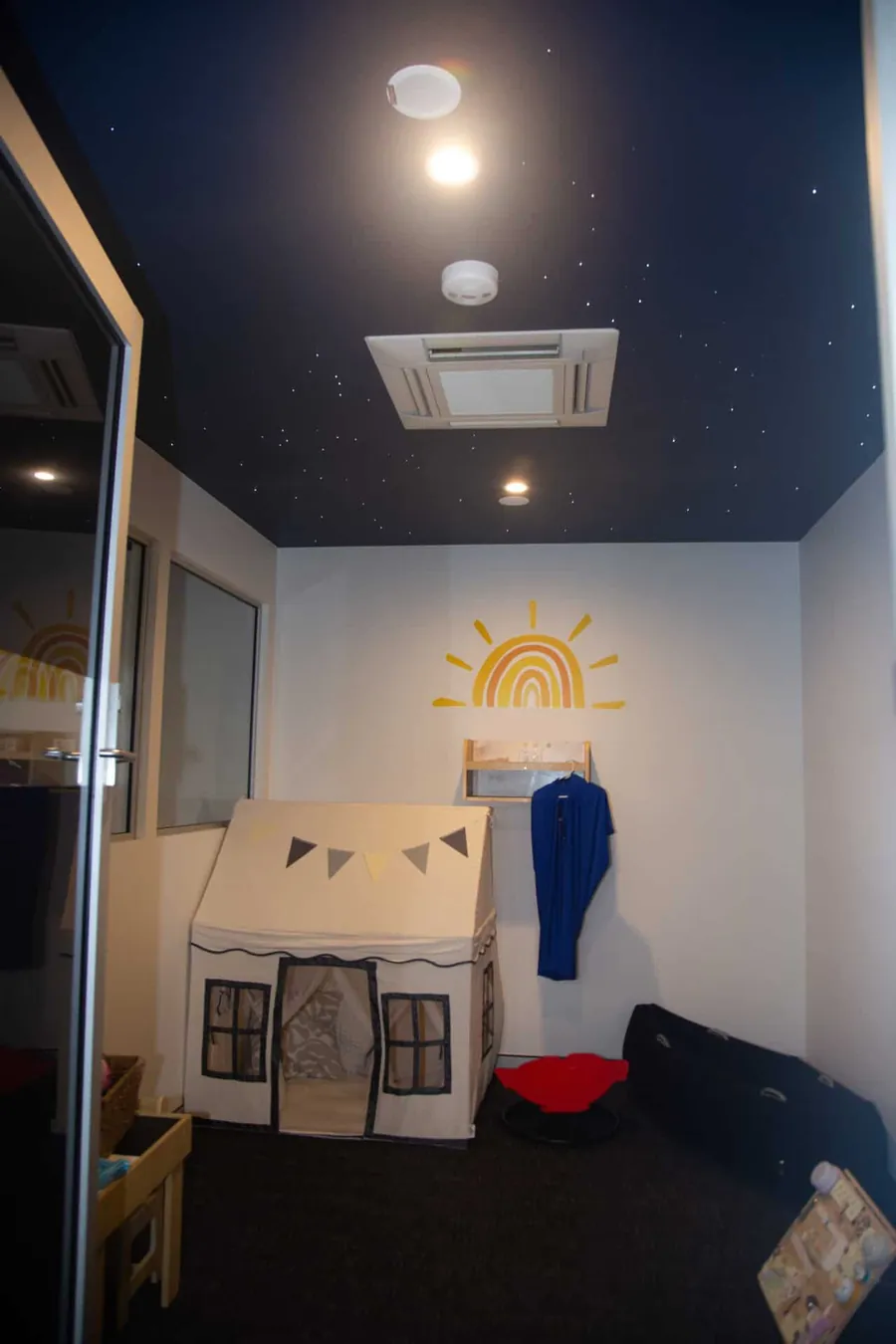
Sleep is one of the first things parents ask about, and for good reason. A well-rested child copes better with a busy day, and a disrupted nap can make the evening hard for everyone. Here is how rest works at our centre, and what you can do to help it go smoothly. More everyday guides are in our family resource library.
How rest time works by age group
Rest time changes with age. Babies sleep on their own schedule, often more than once a day. Toddlers usually have one sleep after lunch. Three and four-year-olds have a rest period after lunch where some sleep and others enjoy quiet activities, with the preschool rest a little shorter to prepare for school.
| Room | When | What it looks like |
|---|---|---|
| Explorers (nursery) | On demand | Each baby sleeps to their own pattern, usually with a longer sleep around midday, in the cot room. |
| Adventurers (toddlers) | From 12:15pm | One main sleep after lunch, with each child's own bedding and comforter. |
| Pioneers (pre-kindy) | From 12:30pm | Sleep for those who need it, quiet activities for those who do not. |
| Inventors (preschool) | From 12:30pm | A shorter rest, with books or drawing for children who no longer sleep. |
Times are a guide. A baby who fell asleep in the car on the way in may nap later, and a toddler who was up at 5am may need rest sooner.
The pace slows before rest, so children move from lunch into a calm, quiet space rather than straight from active play.
Educators stay with resting children throughout, and ratios still apply during rest time.
Safe sleep practices we follow
We follow Red Nose safe sleep guidance for every sleeping child. The Education and Care Services National Regulations also require centres to meet each child's sleep and rest needs, and to have sleep and rest policies and risk assessments in place. For babies, that means sleeping on their back, with face and head uncovered, in a safe cot.
Cots have a firm, flat mattress, with no pillows, bumpers or loose soft toys for babies.
Babies are placed on their back to sleep, even if they later roll over on their own.
Sleeping children are physically checked at regular intervals, and each check is recorded.
Room temperature and airflow are kept comfortable, and babies are dressed for the room rather than bundled.
Read the public guidance on the Red Nose website.
Safe sleep basics
- Babies sleep on their back
- Face and head uncovered
- Firm, flat mattress
- No pillows, bumpers or loose toys
- Regular, recorded checks
 Sleep tight, sleep safe
Working with your home routine
We work with your home routine by learning how your child sleeps before they start, then copying what works: the times they usually nap, how they settle, the words or songs that help, and how long they sleep. Where a group room cannot match home exactly, we talk with you about a middle ground.
Tell us everything that helps. Rocking, patting, white noise, a particular song or a dummy all make a difference.
Share changes quickly. Dropping a nap, a new sleeping bag or a run of bad nights at home all affect the day.
Some families ask educators to wake children after a set time so evenings stay on track. We can discuss what works for your family within safe sleep practice.
Our orientation page explains how we learn routines before the first day.
Children who no longer nap
Children who no longer nap still have a rest period, but they are not made to sleep. They lie quietly for a short time, then move to calm activities such as books, puzzles or drawing while others sleep. Resting without sleeping still gives busy bodies and minds a useful break in a long day.
Most children drop their day sleep somewhere between three and five, though the timing varies widely.
In the preschool year, the shorter rest time helps children adjust to a school day without naps.
If your child has stopped napping at home, tell us, and we will offer quiet activities instead.
Bedding and comfort items
Families bring bedding for rest time, along with a comfort item such as a favourite toy, blanket or dummy. Familiar bedding and a special toy help children feel secure in a shared room. For babies, comfort items are kept out of the cot in line with safe sleep guidance.
Label bedding and comfort items clearly, so they come back to your child every time.
Wash bedding regularly at home, so it stays clean and keeps that familiar smell.
Dummies are welcome. A spare in a labelled case saves the day when one goes missing.
Sleeping bags suit many babies and toddlers. Choose one without a hood, sized for your child.
For rest time
- Labelled bedding
- One comfort toy or blanket
- Dummy and a spare, if used
- A hoodless sleeping bag, if used
 A little bit of home
Communicating sleep information to you
We share how your child slept through daily updates in the KinderM8 app and a quick chat at pick-up, so you know whether to expect an early bedtime or a lively evening. If a sleep was unusually short, long or unsettled, educators will mention it so you can plan the evening.
Every family's daycare sleep routine questions are different, so raise anything that is worrying you, however small.
Tell us at drop-off about the night before. "She was up at four" helps educators respond if your child is tired early.
Ask questions any time. If sleep at care seems to be affecting nights at home, we can adjust together.
Curious about the rest spaces? Ring us on (02) 7238 8668 or come and see them on a tour.
Sleep and rest, answered
Will you follow our sleep routine?+
Yes, we follow your child's own sleep routine as closely as we can, especially for babies. Tell us their usual nap times, how they settle and what helps, and educators will copy it. In older rooms, rest happens after lunch, and we adjust for children who need more or less sleep.
What if my child does not nap?+
Children who do not nap are never made to sleep. They rest quietly for a short while, then move on to calm activities like books, puzzles or drawing while others sleep. A quiet break still helps children recharge during a long day at care.
Can I send a comforter?+
Yes, comfort items such as a favourite toy, small blanket or dummy are welcome and help children settle at rest time. Please label them clearly. For babies, comforters stay out of the cot during sleep, as Red Nose recommends.
Discover our St Ives early learning centre.
See where your child will rest
Visit the rooms and talk through your child's sleep routine.