Portable buildings Australia modern glass pod alternative
A portable building is a prefabricated structure that can be placed on a site without a permanent foundation and relocated when needed. The Portable Pod is a 6m x 3m glass portable building with a galvanised steel chassis, double-laminated glazing, insulated composite wall panels, earth-wool roof insulation, and a vinyl floor on fibre cement substrate. It ships flat-pack and assembles in 6 days. From $18,500 AUD plus transport to your site.
Most Australians picture steel cabins when they hear portable building. This is something different: a glass and steel structure built to residential design standards and delivered to every state.
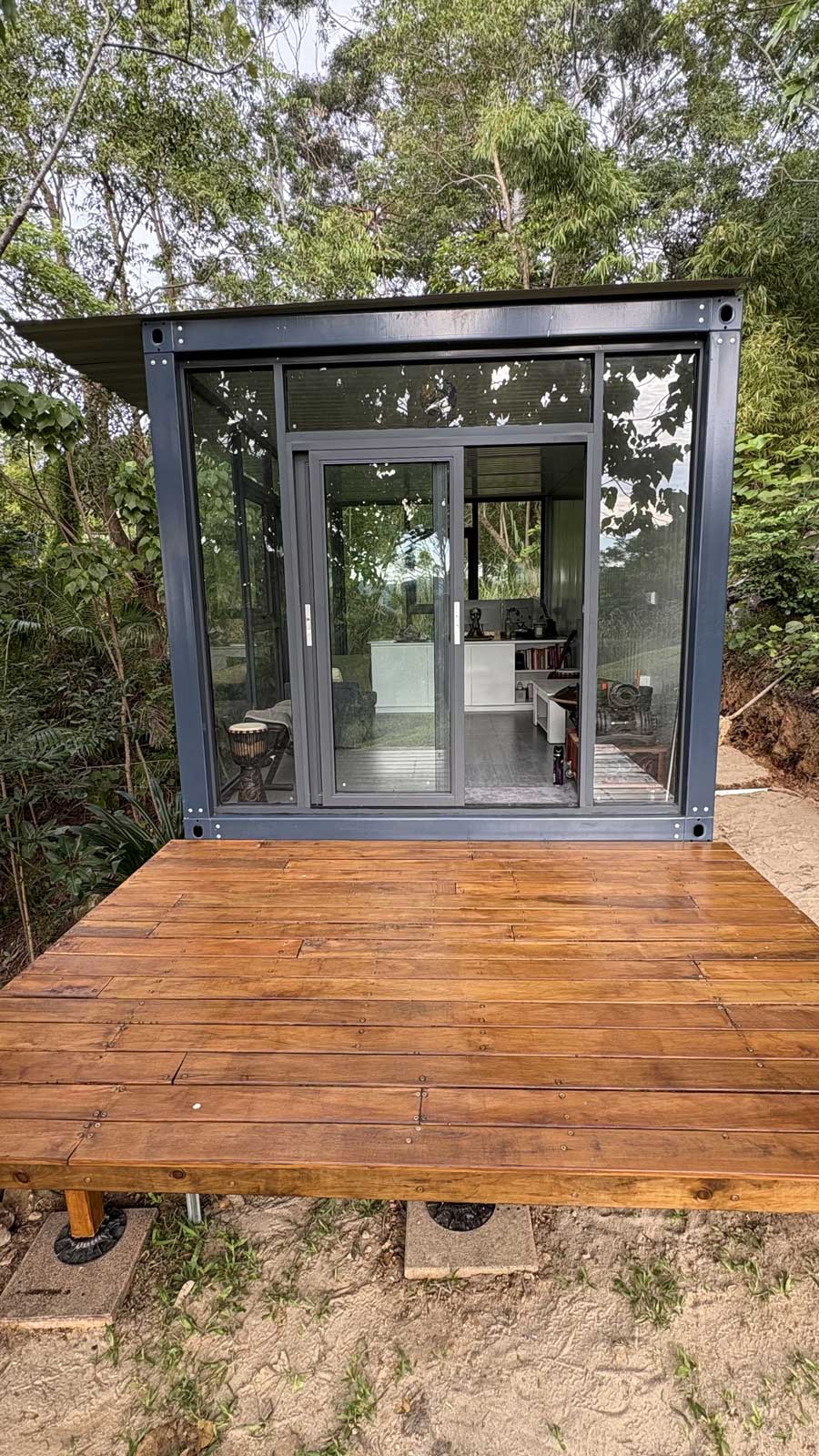
What is a portable building?
A portable building is any prefabricated structure built off-site and delivered to its final location. In Australian building regulation, portable buildings typically fall under Class 10a (non-habitable) or Class 1a (habitable) of the Building Code of Australia depending on intended use and council zone.
The category includes everything from basic steel site sheds to premium architectural glass pods. Materials, construction standards, thermal performance, and aesthetic quality vary widely across this range. The Portable Pod sits at the high end, built from the same materials used in residential construction.
Portable buildings in Australia categories and types.
The portable building market in Australia covers several distinct product categories. Understanding the differences helps buyers choose the right structure for their use case and budget.
Site sheds and cabins
Steel-frame and fibreglass structures used for construction site administration. Basic, functional, easy to hire or buy. Limited insulation and no architectural finish.
Garden offices
Timber-frame or steel portable offices designed for residential backyards. Range from basic flat-pack sheds to more refined designs. Quality varies considerably by manufacturer.
Modular classrooms
Purpose-built for schools and institutions. High volume, standardised, usually leased rather than purchased. Not available for residential or small commercial use.
Container conversions
Shipping containers retrofitted as offices, studios, or accommodation. Stackable and tough. Heavy (over 2,000kg empty), industrial aesthetic, insulation requires retrofit.
Glass pod buildings
Architectural portable buildings with double-laminated glass walls. The Portable Pod belongs to this category. High design intent, residential-grade insulation, modern aesthetic.
Granny flat modules
Prefabricated habitable buildings designed as secondary dwellings. Require council approval as Class 1a structures. Higher cost, plumbing and kitchen included.
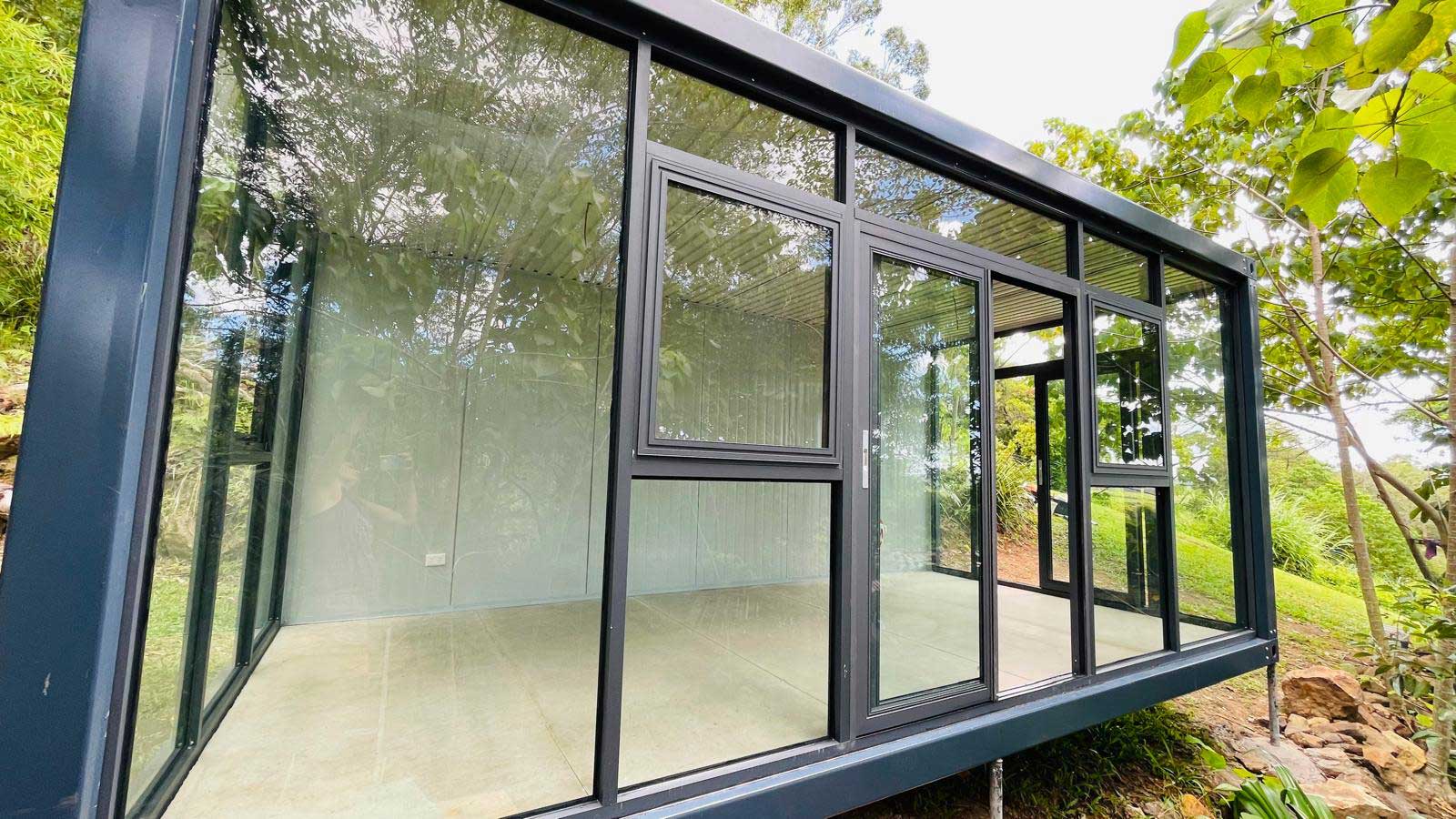
Our portable building, 6x3m glass pod.
The Portable Pod is built around a fully welded galvanised steel chassis with an aluminium external framing system holding double-laminated safety glass along the full long elevation. It is not a converted container or a dressed-up shed. It is a purpose-built glass building in a portable format.
Wall panels are insulated composite. The roof uses earth-wool insulation between steel sheeting and the internal ceiling. Smart LED lighting and two double power outlets are included. The floor is commercial vinyl on a fibre cement substrate.
Portable building council approval Class 10 vs Class 1.
Whether your portable building needs council approval depends on its intended use, size, and the planning rules for your zone. The two relevant BCA classes are explained below.
Home office, studio, gym
If you use the pod as a home office, art studio, yoga space, or similar non-sleeping use, it typically falls under Class 10a. In many councils this qualifies as exempt or complying development, meaning no development application is required.
Requirements vary by state and council. We supply a technical document pack and a council inquiry template to support your assessment. Most residential home-office builds do not need a formal DA.
Guest room, granny flat, Airbnb
If the pod includes a bathroom and sleeping area and is used as habitable accommodation, it typically requires Class 1a assessment. This involves a development application and may require a building certifier.
We supply the necessary technical specifications, drawings, and material certifications for Class 1a applications. The process is more involved but achievable in most residential zones.
Detailed council approval guide: /council-approval/
Why choose a glass pod over a traditional portable building?
Traditional portable buildings prioritise cost and speed. The Portable Pod prioritises function and design without sacrificing too much on either. Here is where the difference shows up in daily use.
Natural light and mood
Traditional cabins have small punched windows. Glass pods flood the interior with daylight, which improves focus, reduces the feeling of confinement, and makes the space more enjoyable to work in.
Thermal performance
Double-laminated glass provides significantly better thermal retention than single-pane windows in a solid-wall cabin. Combined with insulated panels and earth-wool roof, the pod performs comfortably across Australian climates without heavy HVAC loads.
Resale and property value
An architectural glass pod is an asset. A basic site cabin is depreciated to near zero quickly. The Portable Pod holds value as a desirable structure that buyers recognise as high quality.
Client and visitor perception
If your pod doubles as a meeting space, consulting room, or studio clients visit, the first impression of a glass building is professional. The first impression of a steel cabin is temporary.
Safety glazing
Double-laminated safety glass holds together on impact instead of shattering. Standard cabin windows do not offer this. For families with children or outdoor activity nearby, this matters.
Design life
The galvanised steel chassis, double-laminated glass, and insulated composite panels are all rated for long design lives. Traditional portable buildings use lighter-gauge materials with shorter service expectations.
Portable building pricing.
Three standard configurations. Customisation and delivery quoted separately.
Standard portable building
6x3m glass pod, full kit inclusions, flat-pack delivery.
Twin linked building
Two pods side by side. Internal opening between them optional.
Two-storey building
Two levels, 6x3m footprint. Structural stair included.
Full pricing page: /pricing/
Portable building questions.
Common questions buyers ask about portable buildings in Australia.
Call 0490 537 205- A portable building is a prefabricated structure built off-site and delivered to its final location without a permanent foundation. In Australian regulation, portable buildings are typically assessed under Class 10a (non-habitable, such as offices and studios) or Class 1a (habitable dwellings) of the Building Code of Australia.
- It depends on the intended use, size, and your council zone. In many residential zones, a non-habitable portable building used as a home office or studio qualifies as exempt or complying development, requiring no DA. Habitable buildings with sleeping areas typically need a development application. We provide technical documentation and a council inquiry template to support your assessment.
- The Portable Pod starts from $18,500 AUD for the standard 6x3m single-pod kit, excluding transport. Delivery ranges from $400 in QLD to $7,500 for remote NT. A fully installed portable building with partner-builder assembly typically comes to $25,000 to $30,000. Linked or stacked configurations start from $37,000.
- The Portable Pod uses a galvanised steel chassis rated for decades without corrosion treatment, double-laminated glass that does not degrade under UV, and insulated composite panels designed for a building lifespan. With basic maintenance, the pod should last 20 to 30 years or more, substantially longer than basic steel portable buildings built from lighter-gauge components.
- Yes. The Portable Pod is designed to be relocatable by crane truck. The kit is assembled using concealed fixings rather than permanent adhesives, meaning it can be disassembled, relocated, and reassembled at a new site. If you move house or want to repurpose the structure, relocation is a genuine option.
Get a written quote for your portable building.
Share your postcode and use case. A written quote with freight to your address lands within one business day. No hidden fees, no surprises.