Glass office pods Australia double-laminated modern design
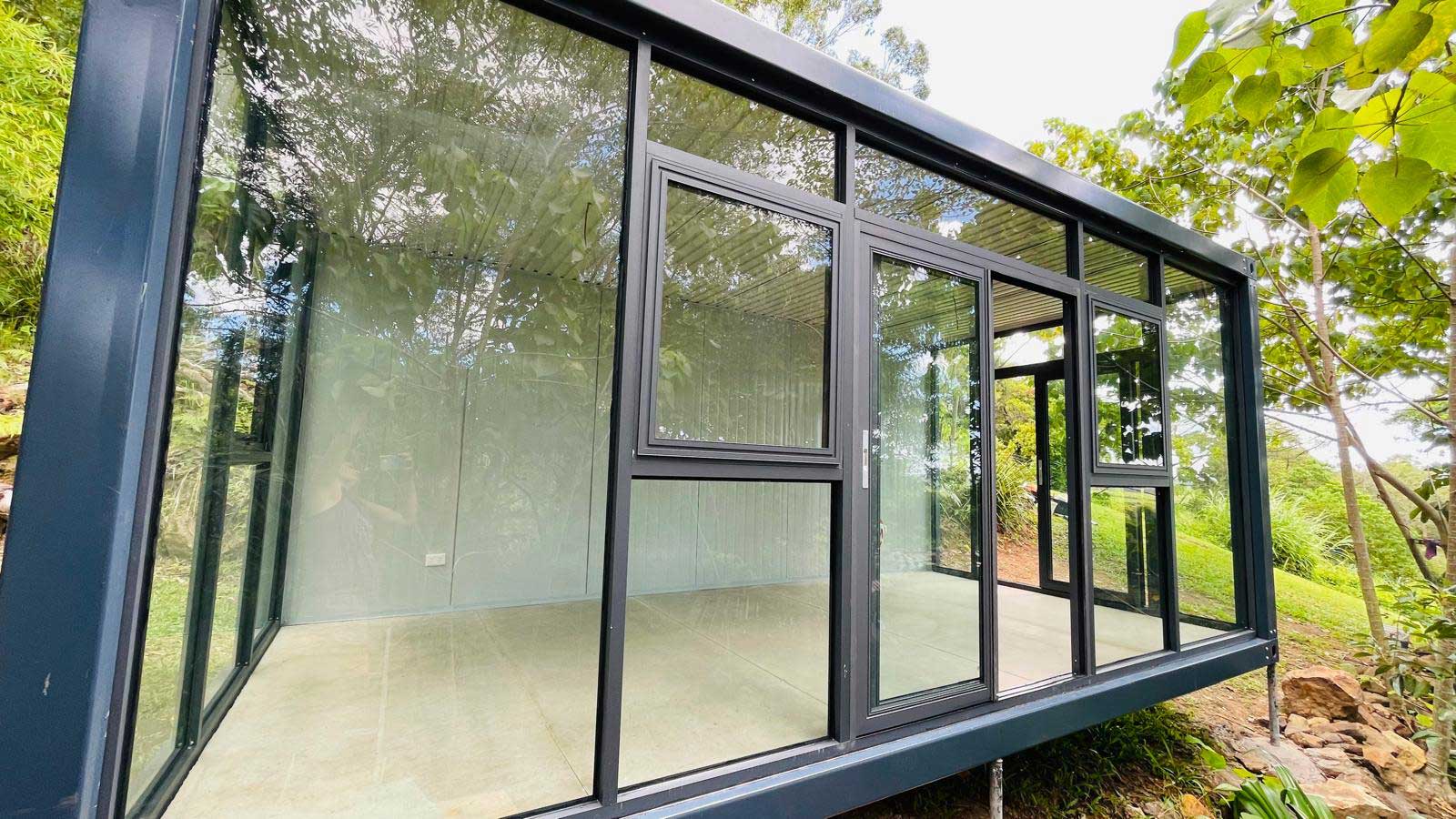
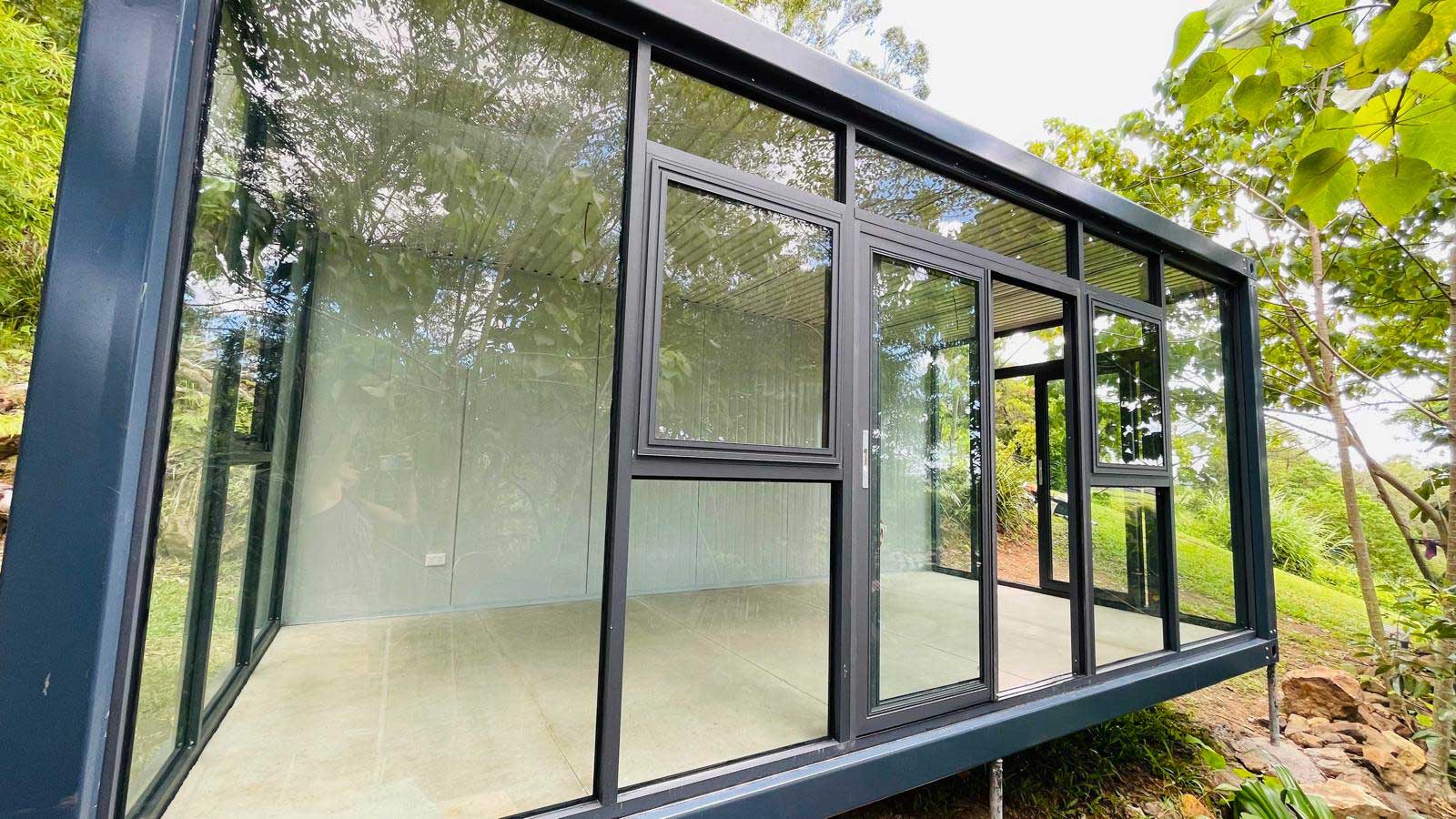
A glass office pod is a freestanding workspace with glass as the primary wall material. The Portable Pod uses double-laminated safety glass along the full long elevation, set in an aluminium framing system on a galvanised steel chassis. External dimensions: 5,950mm x 3,000mm x 2,800mm. Internal area: 18m². From $18,500 AUD. Flat-pack delivery to every Australian state.
Glass is not a design choice bolted onto this building. It is the structural and spatial logic of the whole product. More glass, more light, better workspace.
Natural light, outdoor connection, modern aesthetic.
Three reasons why full-glass walls work better for a workspace than solid alternatives.
Natural light improves output
Studies consistently link natural light exposure to better focus, lower fatigue, and improved mood during the work day. A glass wall delivers a full spectrum of changing natural light that artificial lighting cannot replicate. Most portable buildings with punched windows deliver a fraction of the daylight a glass pod provides.
Visual connection to the garden
Working in a sealed box, even a well-lit one, creates a sense of confinement over a long day. Full glass walls maintain a visual connection to the garden, the trees, and the outside world. That connection reduces the psychological cost of spending 8 hours in a small room.
The building reads as architecture
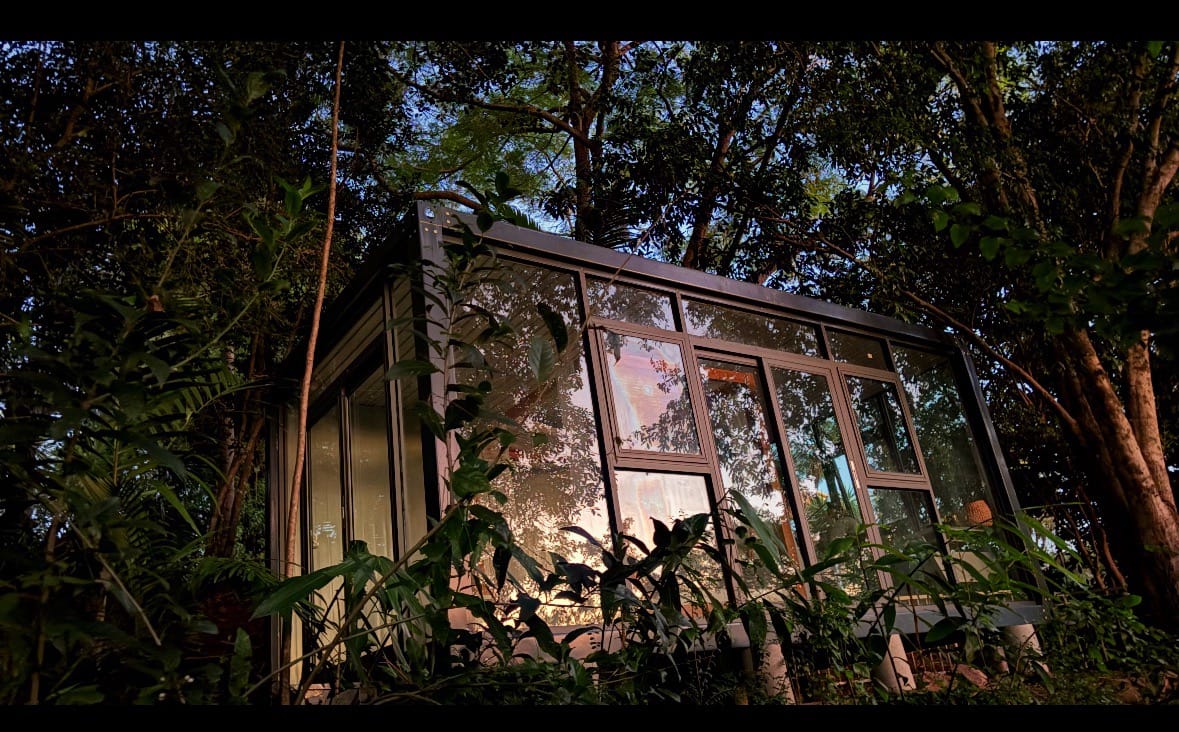
A glass-walled building looks designed. It reads as a considered structure, not a temporary cabin. Clients who visit, neighbours who look over the fence, and future property buyers all respond differently to a glass office pod than to a solid steel shed on the back of the block.
Double-laminated glass safety, sound, heat.
Standard glazing in portable buildings is single-pane toughened glass. Double-laminated glass is a different product with different performance across three critical dimensions.
Glass vs solid-wall office pods.
Both deliver a freestanding workspace. Here is where the practical difference shows up day to day.
| Glass Office Pod | Solid-Wall Pod | |
|---|---|---|
| Natural light | Full daylight through long elevation | Limited through punched windows |
| Visual connection | Garden view from desk | Wall in front of you |
| Sense of space | 18m² feels larger with views | 18m² can feel enclosed |
| Aesthetic | Architectural, designed | Functional, utilitarian |
| Privacy | Manageable with tints or curtains | Built-in by default |
| Heating | Earth-wool roof + insulated walls | Insulated walls standard |
Detailed comparison: /glass-pod-vs-solid-pod/
Glass pod climate performance hot summer, cold winter.
The most common objection to a glass office pod is heat. Here is the honest answer, plus the other climate questions buyers ask.
Won't a glass office get too hot in summer?
It can, without the right setup. Double-laminated glass performs better than single-pane on solar heat gain, but glass is still glass. The solution is airflow and shading, not better glass. Every pod ships with three casement windows that create cross-ventilation across the long axis. Adding a split-system air conditioner (pre-fit available) resolves it entirely. Buyers in Darwin, north QLD, and central Australia should budget for active cooling. Buyers in Sydney, Melbourne, and the southeast find good cross-ventilation and a ceiling fan sufficient for most of the year.
Will it be cold in winter?
The insulated composite wall panels and earth-wool roof insulation perform well enough in most Australian climates without active heating. The pod is not passivhaus-rated, but it holds warmth better than a steel cabin with no insulation. In cooler zones (Canberra, high-country VIC, elevated NSW) a small electric panel heater or a reverse-cycle split handles the coldest months at low running cost. The pod seals well when doors and windows are closed, so heat retention is good.
What about the glare from all that glass?
Glass on the east or west elevation creates glare during morning and afternoon hours. Most pods are positioned with the glass on the north elevation to capture gentle overhead winter sun while minimising direct morning and afternoon glare. Venetian blinds, external shade screens, or tinted glass panels address it where orientation is not ideal. We can discuss your site orientation when you call.
Does it fade furniture and flooring?
Double-laminated glass blocks a significant portion of UV without visible tinting. The vinyl floor included in the kit is UV-stable. For furniture, the UV reduction from the laminated glass is substantial compared to standard clear glass. Optional low-E coating (upgrade available) reduces UV transmission further. Most buyers find UV fading is not a practical issue in daily use.
Privacy options for glass pods.
Full glass does not mean no privacy. Five options that work at different price points and reversibility levels.
Internal venetian blinds
The simplest solution. Lower when you need privacy, raise when you want the view. Suits most home office uses. Installed after delivery.
Frosted glass panels
Specified before fabrication. Diffuses light while maintaining brightness. Permanent and architectural. Good for consulting rooms and therapy spaces.
Privacy tint film
Applied post-delivery. One-way daytime privacy: you see out, neighbours cannot see in during daylight hours. Reversible and affordable.
Bronze or smoke glass tint
Specified before fabrication. Reduces glare and softens the view from outside. Maintains full transparency but reduces the sense of exposure.
External shade screen
A tensioned fabric screen on the external face blocks direct sun and reduces visibility from outside. Reversible and effective for west-facing pods.
Strategic planting
A screen of fast-growing bamboo, lomandra, or similar planted along the glass elevation provides natural privacy within one to two growing seasons at minimal cost.
Cleaning and maintaining glass office pods.
Glass maintenance is simpler than most buyers expect. The exterior glass panels require a wash with a squeegee and glass cleaner every four to eight weeks, depending on your environment. Coastal locations accumulate salt residue faster. Inland dusty sites accumulate grime more slowly.
The aluminium framing needs no treatment. The galvanised chassis requires no painting or rust treatment. The insulated wall panels are pre-finished and require no re-coating. The roof sheeting should have the drainage channels cleared of leaf litter seasonally.
Total ongoing maintenance is roughly one hour every two months for a typical suburban or rural setting.
Glass office pod pricing.
All configurations include the same double-laminated glass specification as standard. Privacy upgrades and tints are optional add-ons.
Full glass elevation, all inclusions.
Two pods side by side, full glass both units.
Two levels, glass on both, 6x3m footprint.
Glass pod questions.
The five questions buyers ask most often about the glass specification.
Call 0490 537 205- The Portable Pod uses double-laminated safety glass with a PVB interlayer bonded between two glass panes. The exact panel thickness is confirmed in the specification document supplied with your quote. Contact us for the current glass specification if you need the technical data for engineering or council submission purposes.
- Double-laminated glass is a safety glazing product. If the glass is struck hard enough to crack, the PVB interlayer holds the broken pieces together rather than allowing them to shatter outward. This is the same technology used in car windscreens. Standard toughened glass, by contrast, shatters into small fragments on impact. Double-laminated glass is significantly safer in residential and high-traffic settings.
- It can in extreme heat without active cooling. Three casement windows on the standard pod create cross-ventilation that handles most east-coast summers adequately. For Perth, Darwin, north QLD, and similar high-heat zones, we recommend the split-system air conditioning pre-fit option. A 2.5 to 3.5 kW reverse-cycle unit is sufficient for the 18m² space and keeps running costs low.
- Six options in increasing cost and permanence: internal venetian blinds, privacy tint film applied post-delivery, external shade screens, frosted glass panels (specified before fabrication), bronze or smoke tint (specified before fabrication), or strategic planting. Most home office buyers use internal blinds or a tint film and find that sufficient. Consulting rooms and therapy spaces typically go with frosted panels.
- Standard glass cleaner and a squeegee. Wash the panels from the outside every four to eight weeks depending on your environment. A telescoping squeegee handle reaches the upper panels from ground level on a single pod. Avoid abrasive cloths that can scratch the glass surface. The aluminium framing around the glass can be wiped down with a damp cloth and does not require any treatment.
Get a quote for your glass office pod today.
Tell us your postcode, any privacy or tint requirements, and your orientation. A full quote with freight lands within one business day.