
Kahuna bodywork — Hawaiian-style massage.
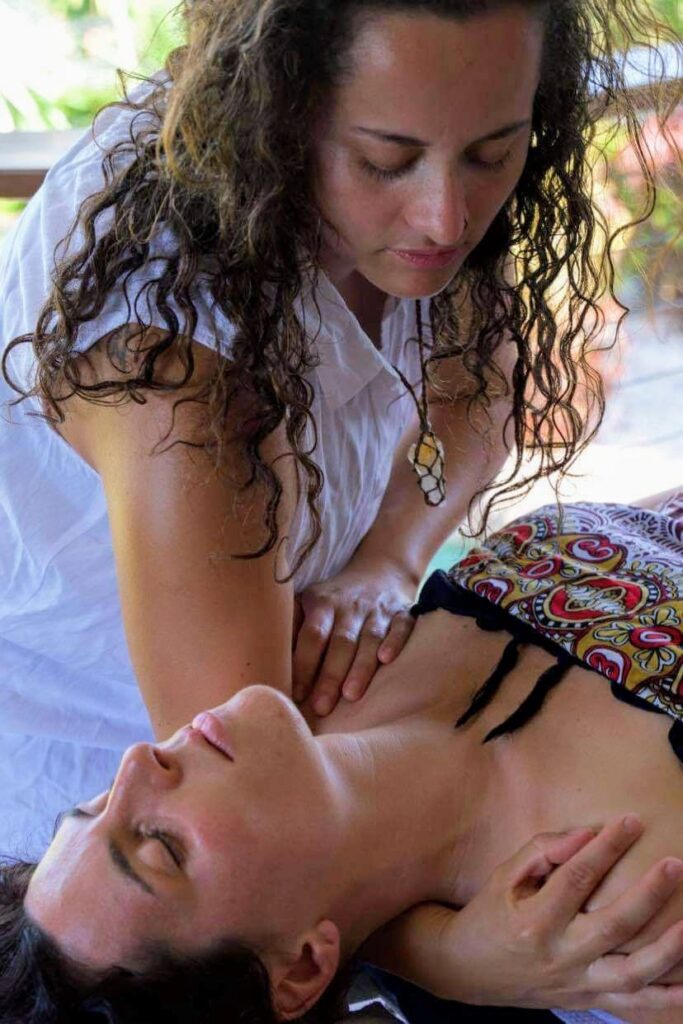
Long, flowing forearm strokes in continuous rhythm — a traditional Hawaiian modality that works the body and quiets the mind at the same time. Kahuna massage Sunshine Coast clients describe as "like nothing else they've experienced" — closer to meditation than treatment, but deeply physical.
What is Kahuna bodywork?
The honest answer takes more than one sentence, but here's the foundation. A fuller history and explanation lives in the blog if you want to go deeper.
Kahuna bodywork (also spelt Ka Huna massage) is a traditional Hawaiian massage modality using long, continuous, rhythmic forearm strokes across the whole body — restorative and meditative as much as physical.
"What is Kahuna massage?" is one of the questions I'm asked most often — partly because the name is unfamiliar to most Australians, partly because the experience is genuinely hard to describe second-hand. Where most styles work in sections — focusing on the neck, then the shoulders, then the legs — Kahuna massage moves in long unbroken sweeps that travel the full length of the body. The continuous rhythm is what makes it distinct: the body never quite registers an end-and-start, which lets the nervous system drop into a much deeper state of release than a stop-start session usually allows.
It's also energetic in a way that's hard to describe without sounding precious. Traditional Hawaiian practice considers Kahuna bodywork to be as much about moving emotional weight as physical tension, and many clients do find old grief, stress, or stuck feeling shifts during a session. You don't need to subscribe to any particular spiritual framework to experience it — but pretending the dimension isn't there would be dishonest.
How it's different from other massage styles.
Most clients arrive having had Swedish relaxation or remedial massage before — both excellent for what they do, but very different in feel and intention from Kahuna bodywork.
Swedish relaxation
Even pressure, predictable routine, focused on relaxation. Worked in sections (back, then legs, then arms). Goal: feel good for the hour.
Remedial
Targeted techniques (trigger point, deep tissue, stretching) chosen for your specific issue. Diagnostic, structured. Goal: resolve a problem.
Kahuna bodywork
Long, flowing forearm strokes in continuous rhythm. Whole-body, no stop-start. Energetic dimension acknowledged. Goal: deep restoration of body and nervous system.
My Kahuna training.
Kahuna bodywork is a teaching lineage — you learn it from a teacher who learned it from theirs. Here's the lineage I trained in and what each level covers.

Mette's Institute — Levels 1, 2 and 3.
I completed all three levels of Kahuna bodywork training through Mette's Institute, in the tradition of Mette Sorensen — one of the foremost teachers of Kahuna outside Hawaii. The training spans hundreds of hours of supervised practice, anatomy and energetics, and immersive intensives.
Each level deepens the technique, the awareness of what's happening for the client, and the practitioner's own capacity to hold the work. I keep my practice current through ongoing CPD and refresher work — this is a lifelong craft, not a checkbox.
What to expect in a Kahuna session.
A walkthrough of the rhythm of a typical Kahuna bodywork session — so you know what's coming and can drop in faster.
Brief chat
5 minutes setting an intention — what you'd like from the session, any physical considerations to know.
Settling
Music starts, you undress to your comfort, lie face-down on the table. Breath drops, body softens.
The work
60–100 minutes of continuous flowing strokes, mostly with my forearms. Prone, supine, side-lying. No stop-start.
Closing
The rhythm slows, the strokes shorten. A quiet hand-rest, sometimes a few words — never rushed.
Integration
Sit up slowly, water, a few minutes to come back. Plan to be gentle with the rest of your day.
What should I wear?
The most common question new Kahuna clients ask. The short answer: whatever feels comfortable to remove. The longer answer:
Your comfort, your choice.
-
Most clients undress to underwear or fully, then lie under a sheet which I move during the session — only the area being worked is exposed at any time.
-
The traditional Kahuna practice uses less draping than other modalities to allow the continuous long strokes — but I only work that way with your specific consent. Many clients prefer it, many prefer fuller draping.
-
Bring loose, comfortable clothing to change into afterwards. Many clients feel softer and more open after a session and don't want anything tight.
-
If you're nervous about any part of this, tell me. I'd rather adjust the session to your comfort than have you white-knuckle through it. There's no right or wrong choice here.
Who benefits most from Kahuna bodywork?
Kahuna isn't for everyone, and that's worth naming honestly. The clients who get the most from it tend to share certain qualities:
In a life transition
Empty nesters, recently retired, going through divorce, or sitting at an inflection point. Kahuna holds you while you process.
Burnt out or overstimulated
High-performers, parents, carers, anyone whose nervous system has been running hot for too long. Kahuna resets the baseline.
Carrying grief or loss
Not as treatment — but as supportive bodywork. The rhythm gives the body somewhere to put what the mind can't always articulate.
Finding clinical massage too intense
If trigger point and deep tissue work leaves you feeling roughed up rather than restored, Kahuna's flow may be the better fit.
Curious about holistic work
If you're drawn to practices that consider body, mind and spirit as one — yoga, breathwork, somatic therapy — Kahuna sits in that family.
Wellness practitioners needing their own work
Yoga teachers, therapists, healers, fellow bodyworkers. You hold a lot for others — Kahuna gives the body somewhere to be held.
Kahuna vs Lomi Lomi — what's the difference?
They get used interchangeably online. They're related but not identical, and the distinction matters when you're choosing what to book.
Lomi Lomi is the broader umbrella term for traditional Hawaiian massage — covering many distinct family lineages and regional styles, each with their own techniques and philosophies. It's the historical Hawaiian healing tradition writ large.
Kahuna bodywork is one specific contemporary teaching tradition that emerged from Lomi Lomi roots, refined and codified for broader teaching through practitioners like Mette Sorensen at Mette's Institute. The "Kahuna" name (referring to the Hawaiian word for spiritual healer or practitioner of a craft) reflects the lineage's emphasis on the energetic and intentional dimension of the work, not just the physical technique.
In practical terms: I'm trained in Kahuna bodywork specifically — through Mette's Institute Levels 1, 2 and 3 — not in Lomi Lomi as a separate or broader discipline. If you've had Lomi Lomi before, you'll find familiar elements in a Kahuna session (the long flowing strokes, the rhythm, the Hawaiian roots) but the experience won't be identical. As Hawaiian massage Australia options go, this is the lineage I represent. A fuller comparison lives in the blog. The history of how the modality developed is covered in a separate post if you want the full picture.
Pricing for Kahuna sessions.
Sessions start at 75 minutes — anything shorter loses the cumulative effect of the continuous strokes that defines the modality.
The minimum recommended Kahuna session — enough time to drop into the rhythm without rushing.
The most-booked length. Full nervous-system reset, deeply restorative, time enough to come back gently.
For deep work, big transitions, or simply when you need the time to fully unravel.
Kahuna sessions aren't claimable through private health insurance — they fall outside the ANTA scope. Mobile Kahuna sessions add ~$20–35 depending on length. Full pricing including packages →
Kahuna massage FAQ.
Is Kahuna bodywork the same as Lomi Lomi?
They share roots but they're not identical. Lomi Lomi is the broader category of traditional Hawaiian massage — covering many distinct family lineages and styles. Kahuna bodywork is one specific contemporary teaching tradition that emerged from Lomi Lomi roots, refined through teachers like Mette Sorensen. I'm trained in Kahuna bodywork specifically — through Mette's Institute Levels 1, 2 and 3 — not in Lomi Lomi as a separate discipline.
Will I be naked during the session?
You're in control of your comfort level. Most clients undress to underwear or fully under a sheet, which I move as we work — only the area being treated is exposed at any time. The traditional Kahuna practice uses less draping than other modalities to allow the full sweeping strokes, but I always adapt to what feels right for you. Sheet-free traditional practice is only offered with your specific consent.
How long does a Kahuna session typically last?
Kahuna sessions run 75 minutes ($150), 90 minutes ($165), or 120 minutes ($205). 90 minutes is the sweet spot — long enough to fully drop into the meditative rhythm without rushing. Shorter than 75 minutes loses the cumulative effect of the continuous strokes that defines the modality. Block out about 20 minutes either side of the session for arrival, brief consultation, and integration time afterwards.
Will my health fund cover Kahuna massage?
Honestly — no, not directly. Kahuna bodywork falls outside the ANTA scope of remedial techniques, so private health funds don't rebate it as remedial massage. If health fund rebate matters to your budget, book a remedial session instead — I can blend Kahuna-style elements into remedial work where appropriate, and the session remains claimable because the primary modality is remedial.
Book your Kahuna session.
Some experiences need to be felt rather than described. If anything on this page resonated, book a 90-minute session and find out what your body's been waiting for.