Bee and wasp removal without the stings
A nest near your door or deck is a risk you should not tackle with a can of spray. We remove wasp nests safely and relocate bees wherever possible.
Book a nest removalWasps defend their nest aggressively, and a disturbed nest can mean dozens of stings in seconds. European wasps in particular nest in wall cavities, retaining walls and the ground, and they sting repeatedly. If you have spotted regular wasp traffic around your home, the nest is usually closer than you think.
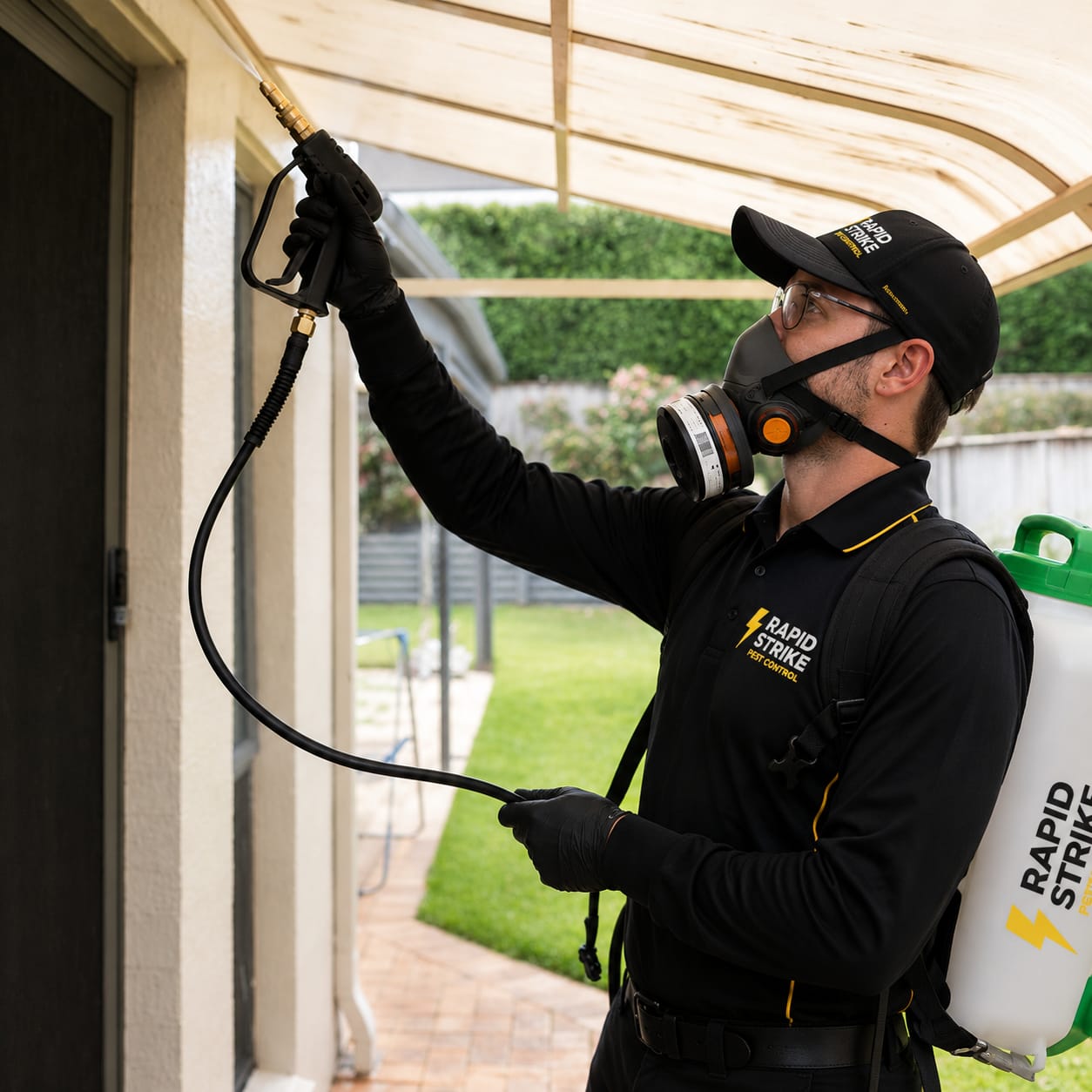
Our technicians treat and remove wasp nests with the right protective gear and products, then confirm the colony is finished. Honey bees are different: where a swarm or hive can be saved, we arrange relocation with a local beekeeper instead of destroying it.
Bees and wasps we handle in Sydney
We identify the species first, because the safe approach for a paper wasp nest is very different from a bee swarm:
Our bee and wasp removal process
A careful, safety-first process for nests around homes, decks and roof cavities.
Inspection
We locate the nest or swarm, identify the species and map the flight paths around it.
Safety plan
We choose removal, treatment or bee relocation, and let you know how to keep clear while we work.
Treatment or relocation
Wasp nests are treated and removed. Salvageable bee colonies are boxed for a local beekeeper.
Prevention
We check for other nesting spots and advise on sealing cavities so a new queen cannot move in.
Safety first, every visit
Stinging insects are the one pest where the wrong DIY move puts you in hospital. We bring the gear and the method.
- Full protective equipment and safe access
- Bee-friendly: relocation over destruction where possible
- European wasp specialists
- Nest removal, not just a surface spray
Frequently asked questions
Yes, wherever we can. Honey bee swarms and accessible hives are relocated through local beekeepers. Destruction is a last resort for colonies inside structures that cannot be salvaged.
Very, around their nest. Unlike bees they sting repeatedly, and a disturbed nest can attack as a group. Do not block or spray a nest entrance yourself, it makes them more aggressive.
Yes. Wall and cavity nests are common for European wasps. We treat through the entry point with the right equipment so the whole colony is reached.
Most wasp activity stops within 24 hours. We will tell you the exact window for your treatment before we leave.
Not to a treated nest, but new queens look for similar spots each spring. We point out the risk areas and can include a check in a regular pest service.