About Chauncey Sjostedt
I am a Gestalt therapist working in Surry Hills and Glebe, and for thirteen years before that I worked as a registered midwife. Those two things are more connected than they sound, and most of this page is about why.
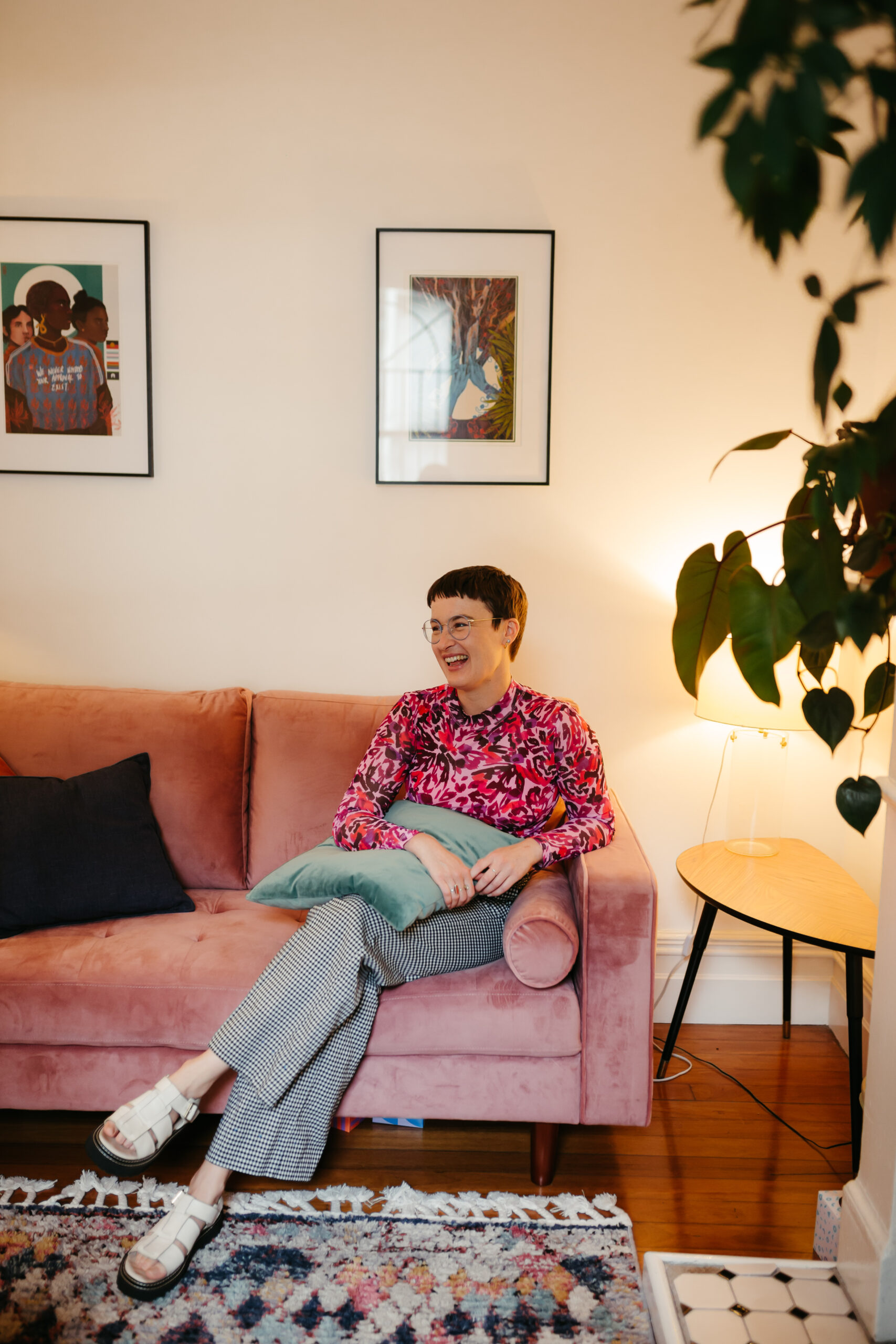
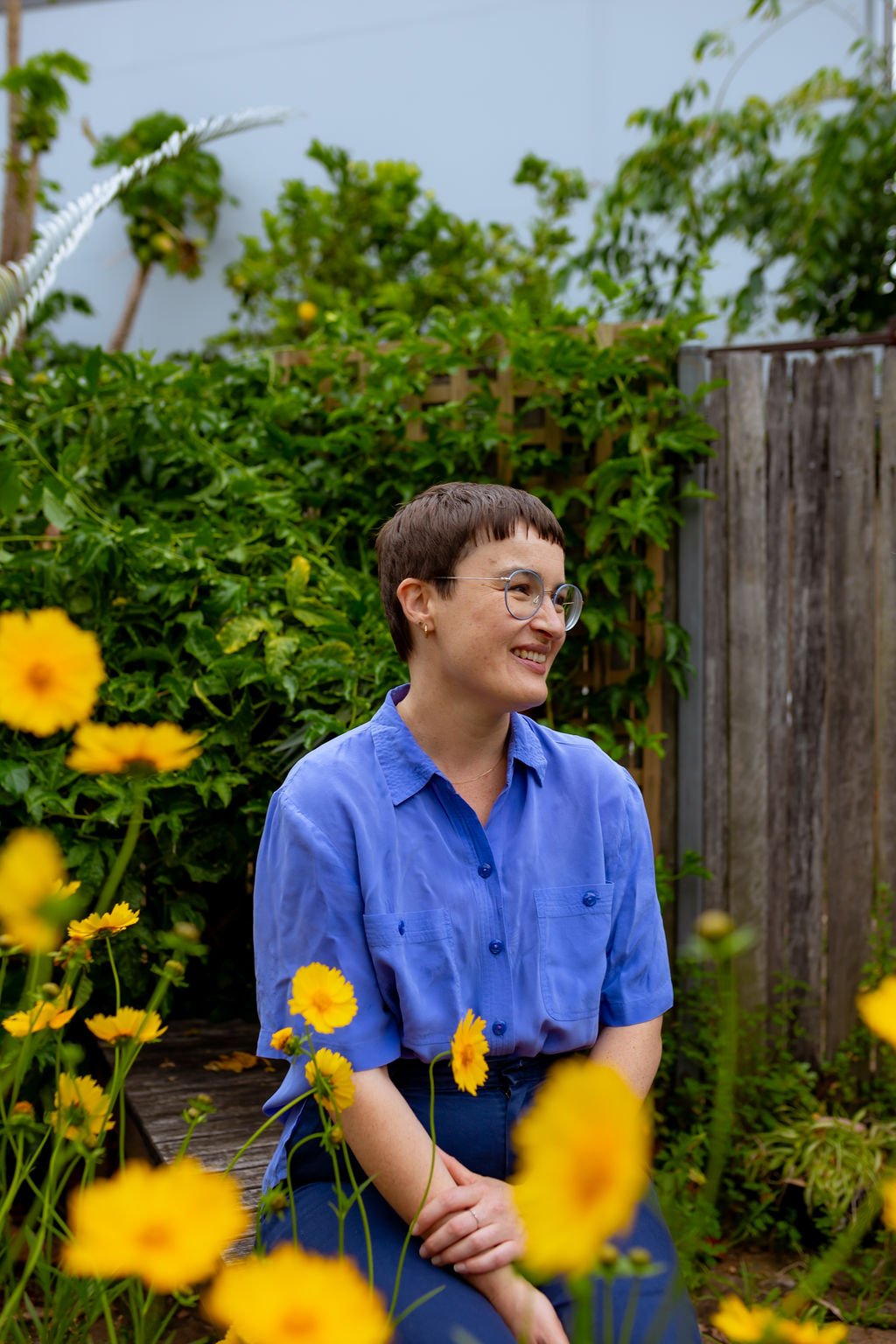
Thirteen years as a midwife
I was at a lot of births. Ordinary ones, frightening ones, and the kind that go from one to the other in under a minute. I sat with people during hours they will remember for the rest of their lives, and I watched what happens to a person when something enormous occurs and nobody around them has time to acknowledge it.
What stayed with me was not the clinical side, although I know it well. It was the gap. A birth could be written up as entirely routine while the person at the centre of it was quietly not alright, sometimes for years afterwards, because everything had gone technically well and there seemed to be no permission to say otherwise.
That gap is essentially why I retrained. Midwifery gave me a tolerance for being present during difficult things without needing to tidy them up, which turns out to be most of the job I do now.
It also left me with a fairly unglamorous view of bodies, which I think helps. Very little embarrasses me, and almost nothing about what a body does under stress strikes me as shameful or unusual.
Gestalt, in plain language
My training is in Gestalt therapy. Stripped of the jargon, it means I am interested in what is happening while you talk, not only in the account you are giving me. Where your voice changes. What you skip past. What your hands do when you mention a particular person.
This is not a technique I apply to you. It is closer to a quality of attention, and the reason it matters is that most people arrive already knowing their own patterns. They can describe them fluently. The description has simply never changed anything. Something else has to happen, and it tends to happen in the moment rather than in the analysis.
Alongside Gestalt I draw on Internal Family Systems, Somatic Experiencing, mindfulness and Polyvagal Theory. None of that arrives as homework. My undergraduate degree was in anthropology and gender studies, which is probably why I hear identity as something built out of culture and circumstance rather than something fixed at birth.
I am not a blank screen and I do not pretend to be one. I will tell you when something you have said lands, and I will say when I think you are talking around the thing rather than about it. You are allowed to disagree with me, and it is genuinely useful when you do.
What I am like to sit with
People ask this more often than they ask about qualifications, and it is the more sensible question of the two. Fit does more work in therapy than method does.
I am fairly direct. If you have spent forty minutes explaining why a situation is fine, I will probably say that it does not sound fine. I am not solemn about it, and there is more laughing in my sessions than people expect, including about things that are genuinely awful. Humour is not avoidance in my view. It is often the first sign that somebody has enough distance from a thing to look at it.
I am slow where it counts. I will not rush you into an account of the worst thing that has happened to you because we are three sessions in and it feels like we should be getting to it. And I will not fill a silence just because it has gone on a while. Some of the useful parts happen in those.
What I am not is a person who will tell you what to do, or who has a framework waiting that your life needs to be fitted into. If that is what would help most right now, there are practitioners who work that way, and saying so is not a criticism of them.

I am a queer woman
I mention it here because it changes something practical rather than because it belongs on a list of credentials. If you are queer, trans or gender diverse, you will already know the calculation you run before a first appointment with anybody: how much will I have to explain, and what will it cost me to explain it.
With me that calculation is mostly unnecessary. I am inside this community, not sympathetic to it from a distance, and I spend part of my week doing volunteer counselling at ACON. Terminology does not need defining, relationship structures do not need defending, and your gender is not the interesting thing in the room unless you want it to be.
The flip side is worth saying too. Plenty of my queer clients come about a bereavement, a manager, a parent or a decision they cannot make, and their queerness barely comes up. Being affirming means it does not have to be the subject. It just stops being an obstacle.
I should be honest about the edges of this. Being queer does not mean I automatically understand every queer life, and where somebody's experience sits a long way from mine, particularly across culture or race, I would rather say so and be told than assume.
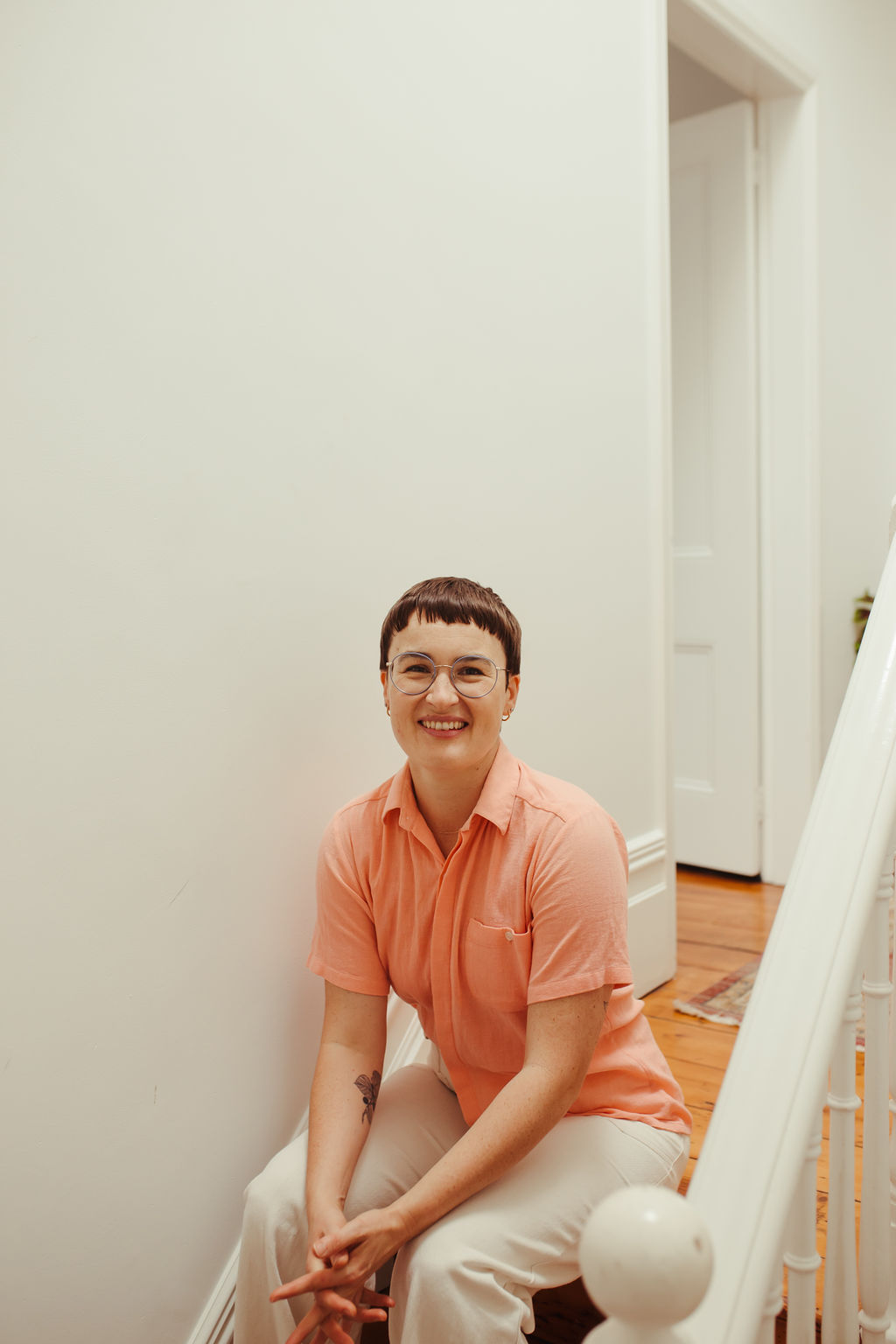
Qualifications and registration
Anyone in Australia can call themselves a counsellor, so it is reasonable to want to know what sits behind the title. Here is mine, and it is all checkable.
PACFA Certified Practising Member
Membership number 29367, the highest level offered by the Psychotherapy and Counselling Federation of Australia.
Gestalt psychotherapy training
An accredited programme in Gestalt therapy, which is the foundation of everything I do in the room.
Registered midwife, thirteen years
Clinical practice across fertility, pregnancy, birth and the first year afterwards. I no longer practise as a midwife.
Anthropology and gender studies
My undergraduate background, and the reason culture and context are never far from how I listen.
Ongoing clinical supervision
A condition of my membership rather than an optional extra, and confidential in its own right.
Volunteer counsellor, ACON
Part of my week goes to community counselling work in Surry Hills, unpaid and ongoing.

You are welcome to get in touch
No referral, no waiting list, and no obligation after a first appointment. A couple of sentences is a perfectly good place to start.